END EFFECTORS
A Zine on Painting in the Emergent Age of AI and in the Context of Money
Launch and Artists’ Conversation
Saturday 7 November 2026, 12pm
Green on Red Gallery, Dublin
Dublin Gallery Weekend 2026
With Damien Flood, Eleanor McCaughey, Susan Connolly, Enda O’Donoghue and James Merrigan
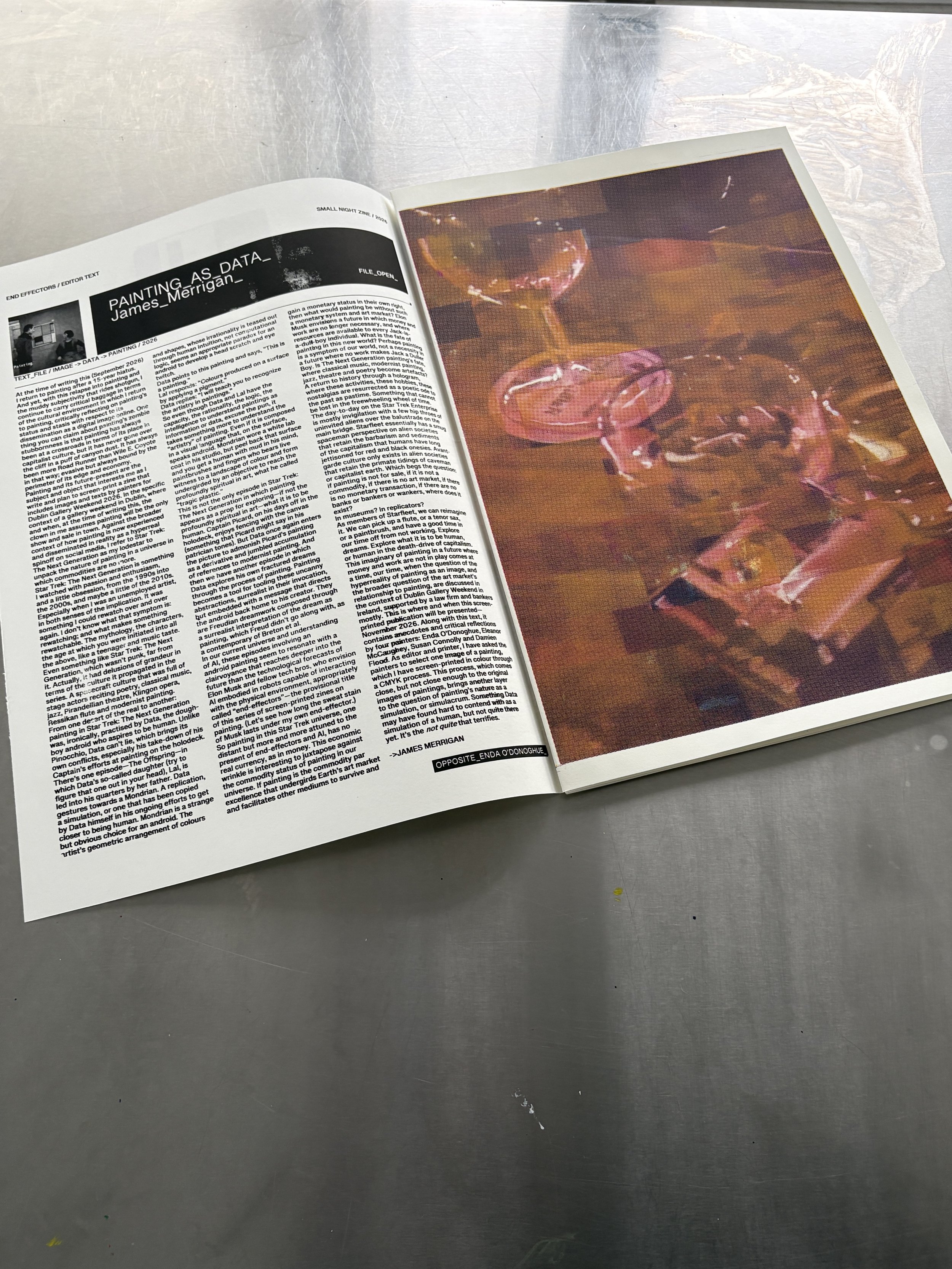
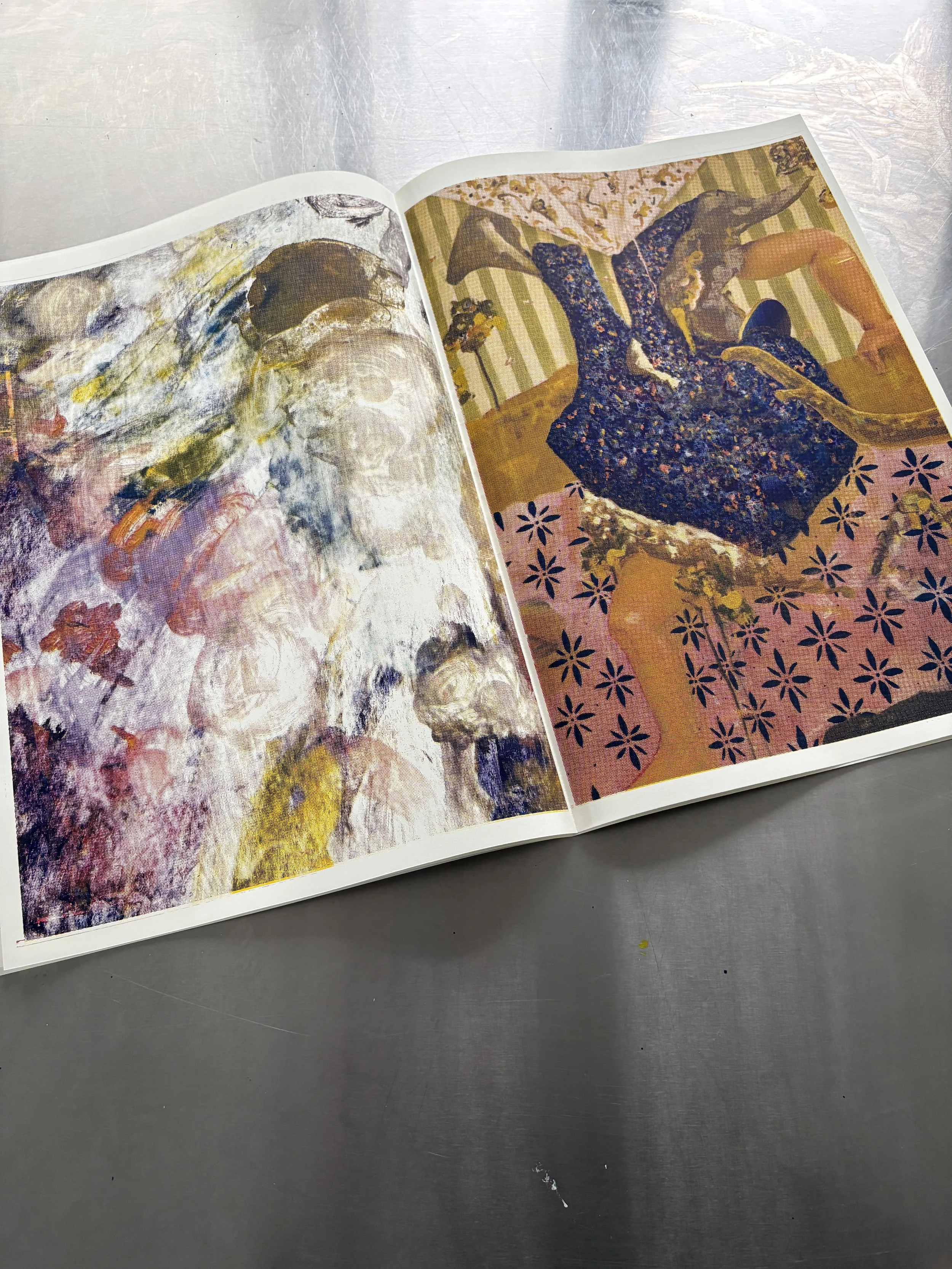
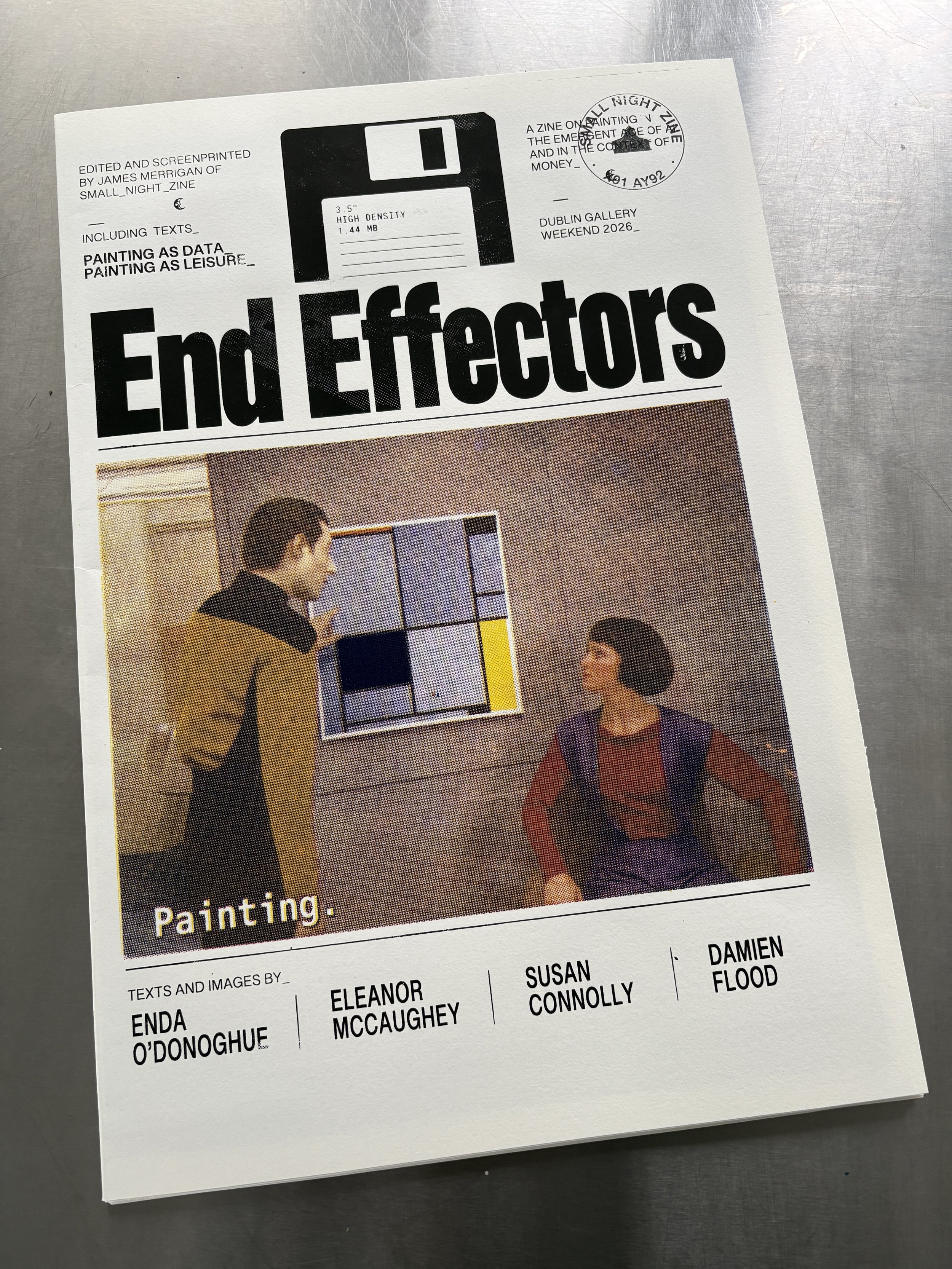
End Effectors is a new, large-format, 16-page, entirely screen-printed zine edited, designed and printed by artist and critic James Merrigan of Small Night Zine. Launching at Green on Red Gallery as part of Dublin Gallery Weekend 2026, the publication brings together four contemporary painters to consider the peculiar condition of painting in an age increasingly defined by artificial intelligence, digital images and the art market.
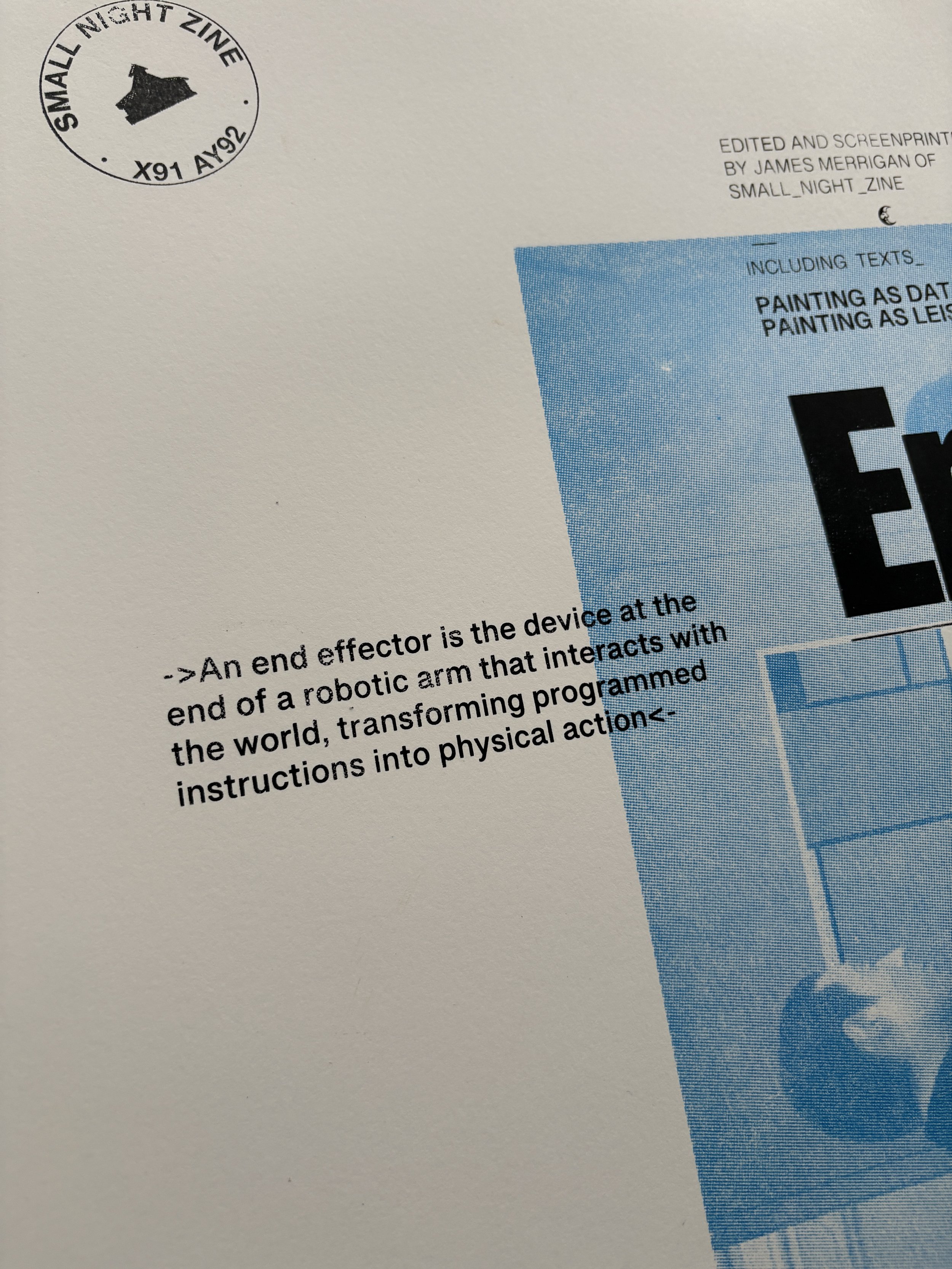
An end effector is the device at the end of a robotic arm that interacts with the physical world, transforming programmed instructions into physical action. It is a fitting, if slightly ominous, title for a publication concerned with painting, a practice that continues to depend on the human hand, even as its production, circulation and reception become increasingly entangled with technologies that threaten to make the hand redundant.
Painting has been declared dead so many times that its continued survival has become something of a running joke. And yet painting is everywhere. It remains one of the most visible and commercially desirable forms of contemporary art, even if much of our experience of it now takes place through the backlit screens of our phones. We encounter paintings as photographs, as data, as content, often long before, or instead of, encountering them as physical objects.
End Effectors approaches these contradictions through the voices and images of painters themselves, rather than attempting to resolve them through a singular critical or curatorial argument.
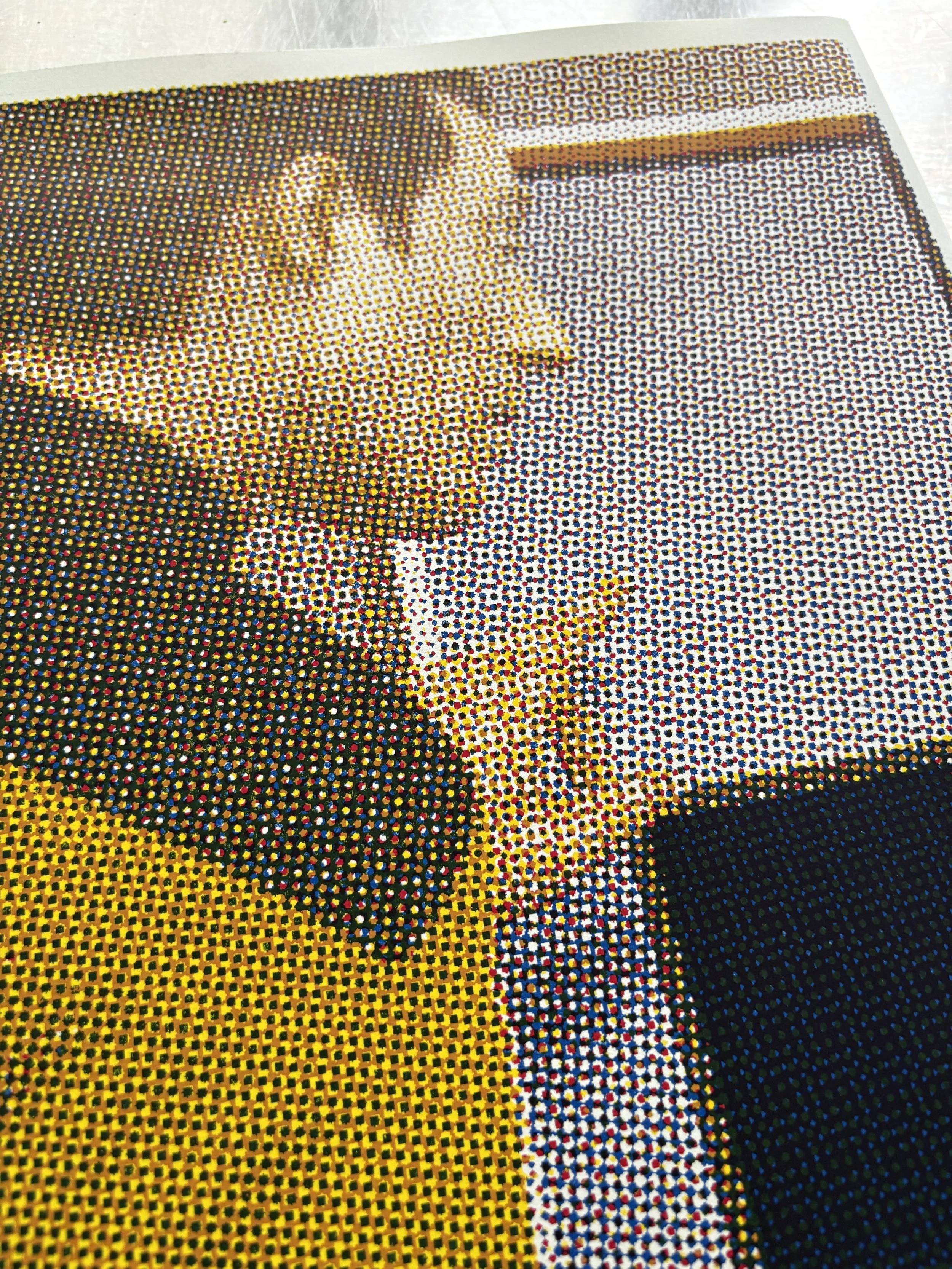
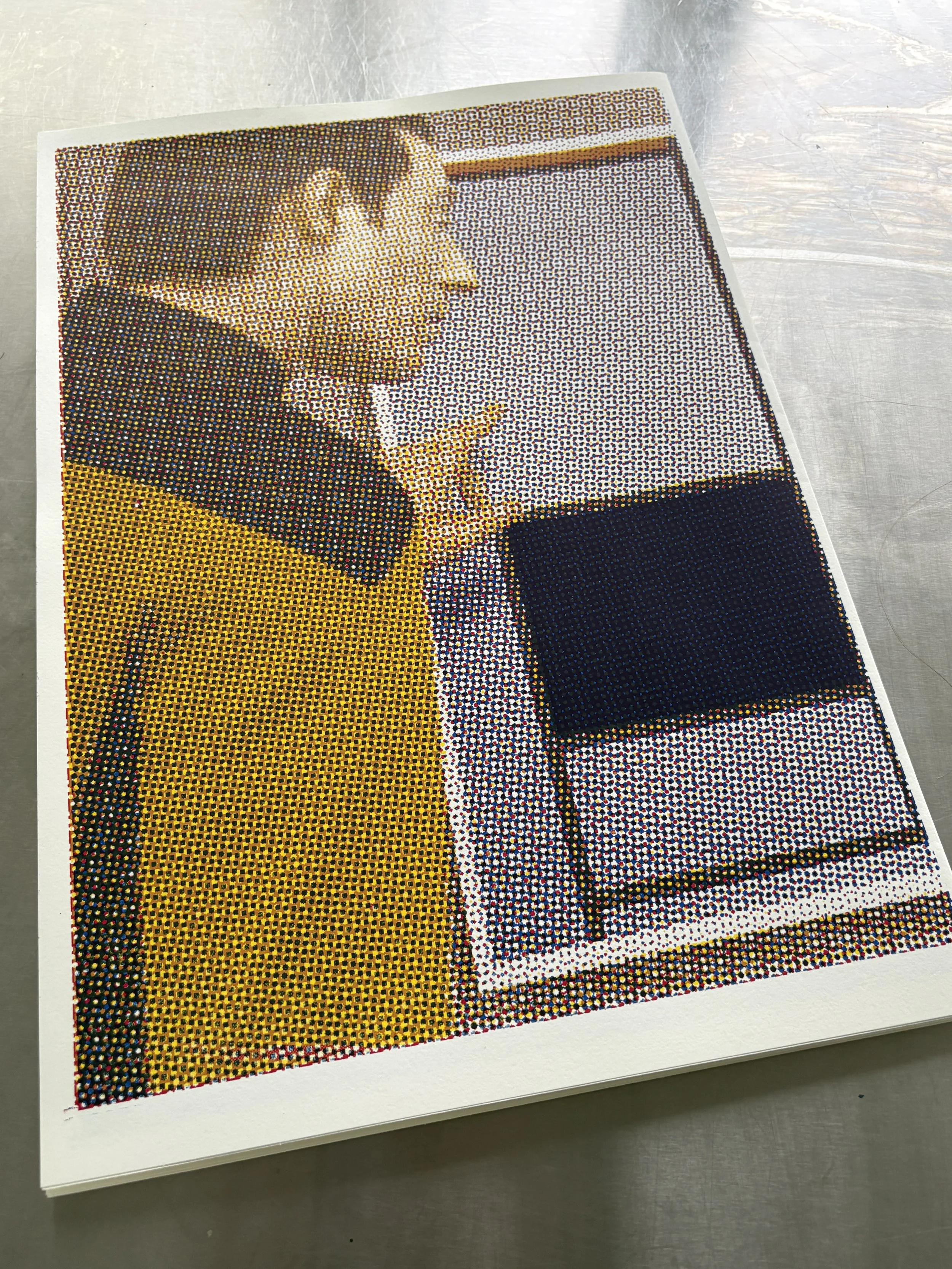
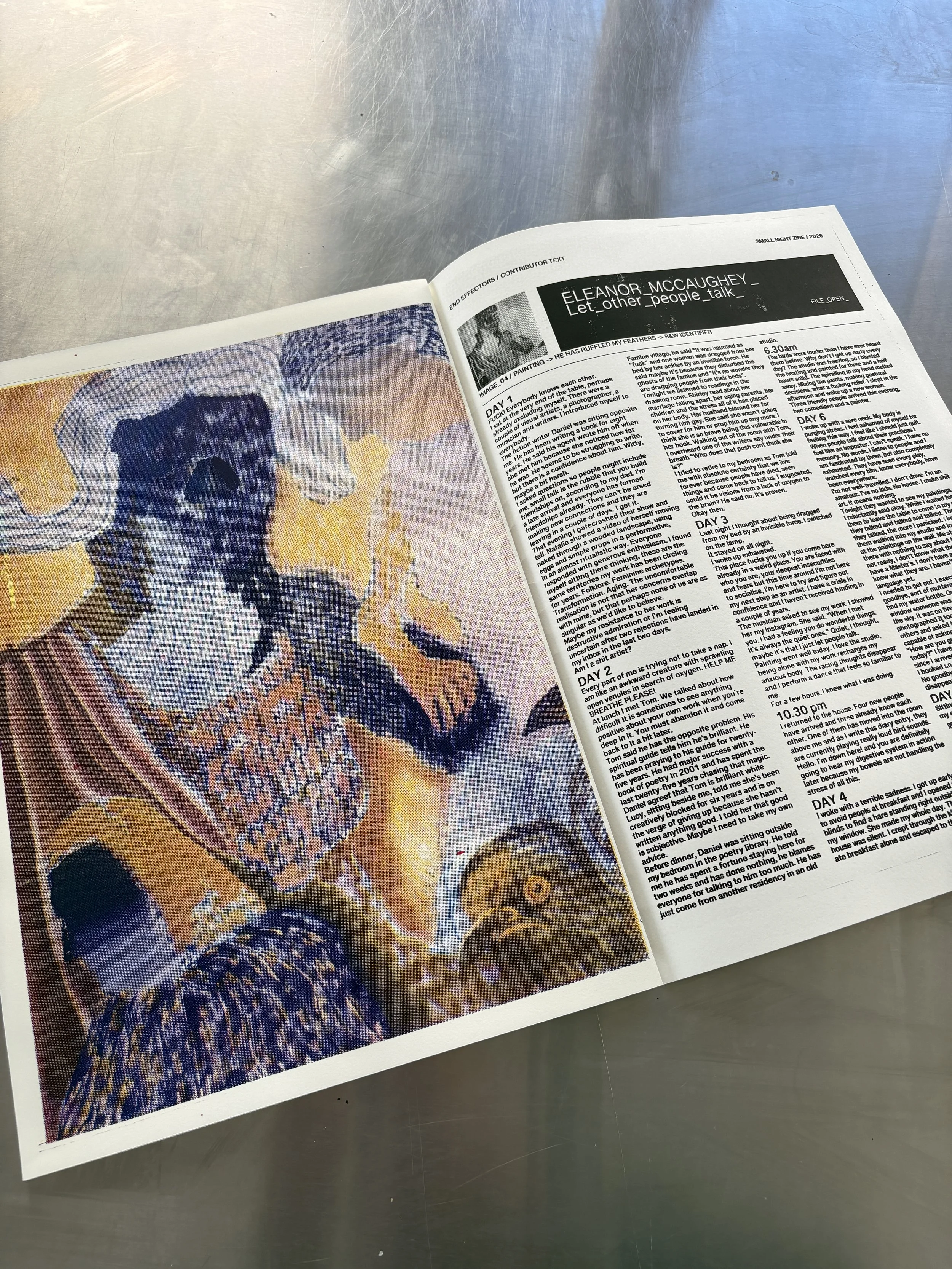
The publication brings together images of paintings by Enda O’Donoghue, Eleanor McCaughey, Susan Connolly and Damien Flood, reproduced through a labour-intensive process of CMYK screen printing by James Merrigan of Small Night Zine. The images are printed in cyan, magenta and yellow, with the accompanying texts printed in black. This mechanical translation of painting into a printed image, close to but never quite the original, is itself part of the publication’s enquiry into painting’s increasingly mediated existence.
The images are accompanied by texts that move between personal anecdote, artistic doubt, institutional critique and the sometimes absurd business of being a painter.
Eleanor McCaughey’s Let Other People Talk takes the form of a candid, often painfully funny diary of an artist residency, where social anxieties, professional insecurities and the solitude of painting compete for attention. Enda O’Donoghue’s contribution reflects on painting as evidence of a performance we never witnessed, while confronting the commercial expectations, social-media spectacle and occasional humiliations that accompany a painting career. Damien Flood’s The Night Before recounts a chaotic, hungover journey through London during Frieze Art Fair, reflecting on the formative experiences, chance encounters and relationships that shape an artist’s life.
These contributions sit alongside Merrigan’s two essays, Painting as Data and Painting as Leisure, which consider painting’s peculiar persistence in an increasingly automated, image-saturated world. Moving between Star Trek: The Next Generation, contemporary exhibitions, artificial intelligence and the art market, Merrigan asks what painting might become when its physical presence is increasingly experienced through digital images, and when human labour itself is imagined as something approaching obsolescence.
Taken together, the texts and screen-printed images offer no singular argument for painting’s future, but rather a collection of perspectives on its stubborn survival, its contradictions, and the human activity that continues to take place in front of the canvas.
There is also something deliberately anachronistic about the publication itself. At a time when images can be generated, reproduced and distributed almost instantaneously, End Effectors has been produced through the slow, repetitive and sometimes unpredictable process of screen printing. Each image is separated into colours, exposed onto screens and printed by hand, layer upon layer. The resulting images are neither reproductions in the conventional sense nor substitutes for the paintings themselves. They are approximations, subject to the limitations and accidents of the printing process.
The launch will be accompanied by a public conversation between the contributing painters and Merrigan, addressing some of the questions raised by the publication: painting’s relationship to money and the commercial gallery, its position within public institutions, the distinction between painting as an object and painting as an image, and what it means to continue painting in a cultural environment increasingly shaped by algorithms, automation and artificial intelligence.
The conversation will also consider painting on its own terms: the physical, intuitive and often inarticulate activity of making a painting, and the extent to which that activity can resist the demands of interpretation, explanation and the market.
End Effectors is edited, designed and screen-printed by James Merrigan of Small Night Zine, Waterford.
Launch: Saturday 7 November 2026, 12pm
Venue: Green on Red Gallery, Dublin
Event: Dublin Gallery Weekend 2026
Publication: 16 pages, A3+ format, screen-printed in CMYK
Contributors: Enda O’Donoghue, Eleanor McCaughey, Susan Connolly, Damien Flood and James Merrigan