NEXT: unMade Painting Assembly May 11 from 6-7.30pm.
AND: unMade Painting Assembly Questionnaire: https://forms.gle/sRhaEPDsRDSvibzC6
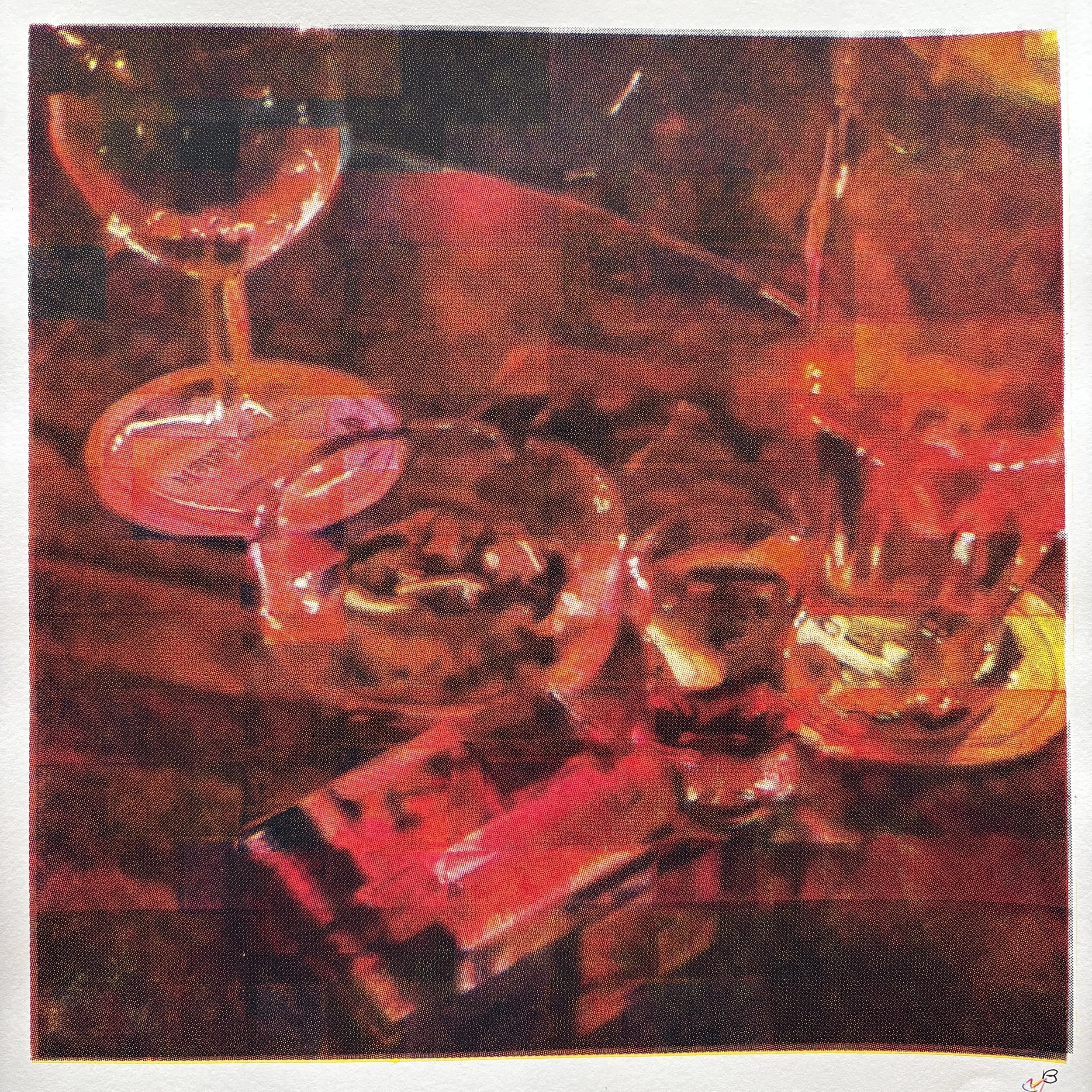
Small Night Zine's CYMK screen-print of Enda O'Donoghue's painting "Small Hours" (2026) Oil on Canvas, 70 x 70 cm (image sent by email April 2026)
Small Night Zine collaborates with Damien Flood on the occasion of his solo exhibition at Green on Red Gallery in an ancillary project-exhibition during Dublin Gallery Weekend, October 2026. Presented in the gallery’s Concrete basement space, it operates as both a legacy project and a speculative prompt to question the contemporary condition of painting: What does painting and the painter resist today in terms of how a painting is made? How it is talked or written about? How it is circulated and distributed online and offline?
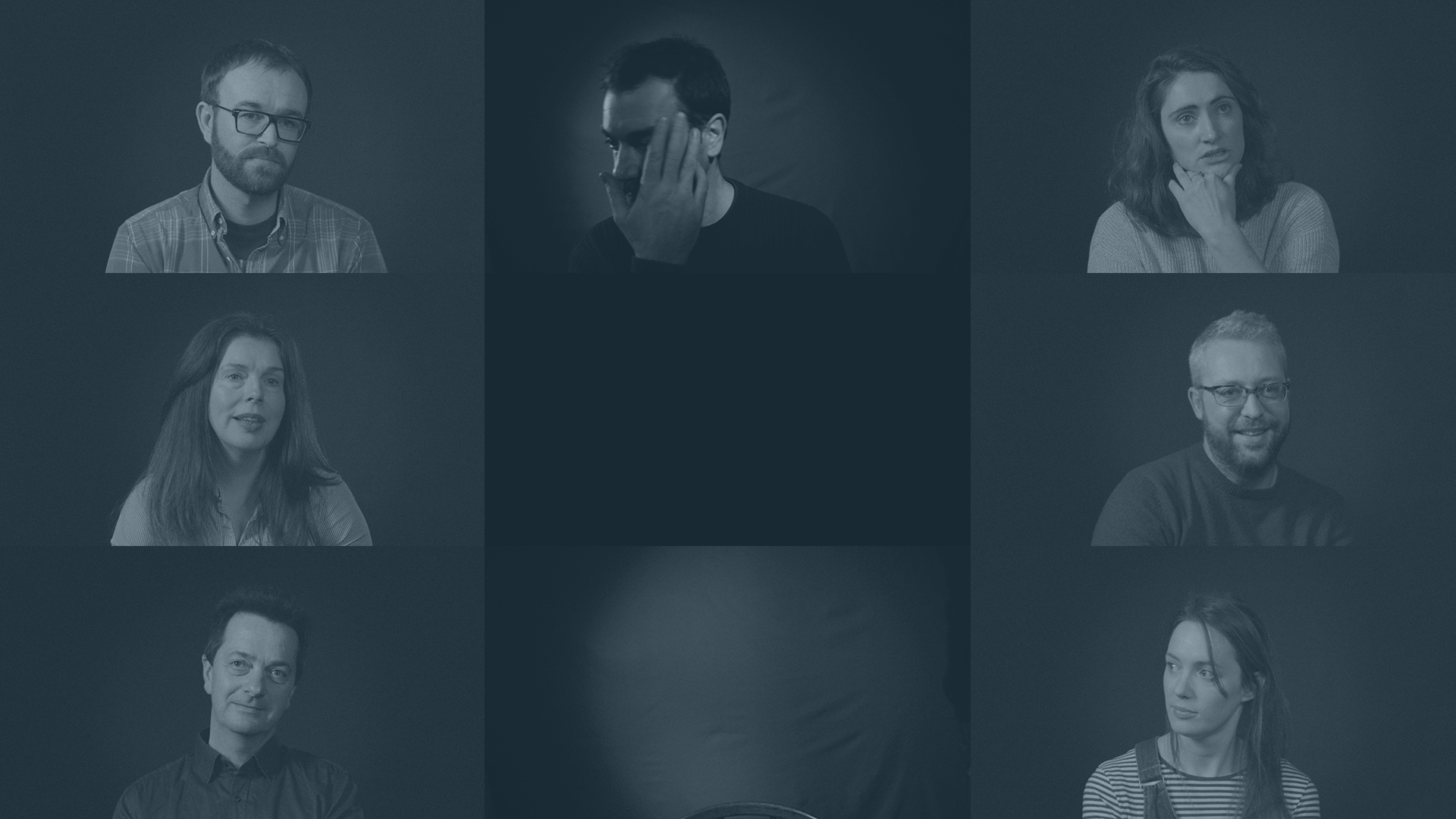
BELOW is a teaser (first edited by Gareth Nolan in 2017 and later edited by me in 2026) for the unmade film that myself, as interviewer, with Damien Flood, developed over a two year period (2016-2018). We worked with the brilliant Saskia Vermeulen and Gareth Nolan. It was self-funded. More soon…
For over twenty years Flood and James Merrigan have sustained a conversation around painting, bringing unwieldy language into the frame of unwieldy painting. That dialogue has taken many forms: Flood’s steady proliferation of printed publications accompanying exhibitions since 2010; and an unrealised film project (2016–18) in which Flood and Merrigan (with two filmmakers Saskia Vermeulen and Gareth Nolan) interviewed Irish painters, asking why they continue to paint. The footage, never resolved, left dormant on a hard drive, becomes here a point of return and screen-printed image.
Where Flood remained committed to painting both materially and conceptually within the commercial system, Merrigan drifted toward language, criticism, and the DIY art publishing framework of Small Night Zine/Projects. Unmade Painting brings these trajectories back into contact.
The exhibition will assemble screenprinted elements that awkwardly approximate painting: posters of legacy publications generated by Flood’s invitations to writers and critics; screenshots from the unmade film; and a new screenprinted zine, Tennis, which tackles painting’s relationship to its verbalisation and contemporary digital representation: philosophically, socially, theoretically.
The objective is simple and direct: To ask what painting has become in a digital world that further commodifies its already commodified status in the artworld. Can language still sit beside painting without the proclamation of “Too many words” extolled by the audience. As Flood said in a recent Zoom with Merrigan: painters' noses were once forced towards the grindstone of theory. Today, against the backlit screens of our habitual vigil of the painting that is not the painting, what if the grindstone of theory reappeared in the basement of its exile. Not as a pedagogical learning outcome, but as a sign, a tool, to sharpen our conceptual relationship with material painting.
ONLINE ASSEMBLY (APRIL 6th, 6 — 8pm, 2026)
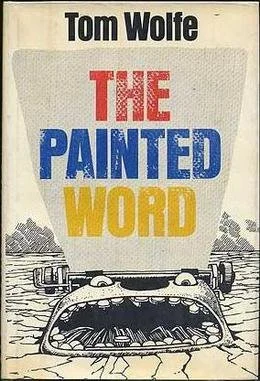
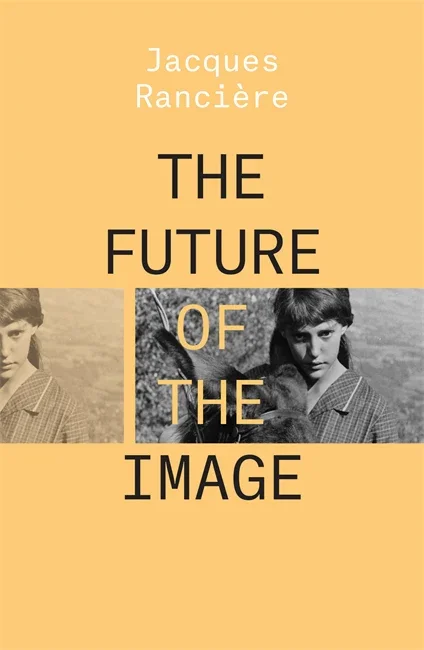
If the New Journalist and Bonfire of the Vanitiesauthor Tom Wolfe complained in The Painted Word (1975) that there were “too many words” around painting in the New York art world, that painting had become hostage to theory, to explanation, to critical language, then Jacques Rancière later offers a reversal of that accusation. In his essay Painting in the Text, Rancière proposes that language is not something imposed from the outside onto painting, but something already operating within it.
For Rancière, painting has never been silent. It always contained regimes of description, narration, and inscription. Titles, manifestos, criticism, and even the internal logic of images themselves form part of what he calls the distribution of the sensible, the way art organises what can be seen, said, and thought in a given moment.
From this position, text is not the enemy of painting. Nor is theory something that contaminates its purity. Rather, language becomes one of painting’s materials, as intrinsic as pigment, surface, or support. This creates a useful contradiction for painting today.
Because if painting now circulates as image before object — as JPEG, Instagram post, art fair preview, PDF, viewing room, auction result — then perhaps painting has not been overtaken by language and mediation, but has instead become fully embedded within them. Painting today might exist as much in discourse, circulation, and reproduction as it does in the studio.
Which raises a question: If painting now exists within networks of text, data, markets, and digital images, what does it mean to make a painting?
Or: What does painting and the painter resist today in terms of how a painting is made, how it is talked about, how it is circulated online and offline?
If modernism once tried to purify painting into medium, perhaps our moment disperses it again into context. This is one of the starting points of the Unmade Painting online assembly.
We are interested in gathering short texts, reflections, fragments, propositions, and questions from painters, writers, and thinkers who are trying to situate painting within this expanded and unstable field where painting moves between object, image, theory, market, and digital circulation.
We also invite references — to texts, artists, philosophers, and works that help frame these questions. These could range from Rancière, Isabelle Graw, David Joselit, to painters who complicate what painting is becoming under digital conditions.
Rather than trying to define painting, this project hopes to open a space where its uncertainties, in terms of theory and discourse, can be shared and discussed.
Proposed date and time of assembly is: APRIL 6th, 6 — 8pm, 2026.
IF YOU HAVEN’T ALREADY—Express your interest at: smallnightzine@gmail.com
check out @merrigan SubStack for ongoing info and conversation
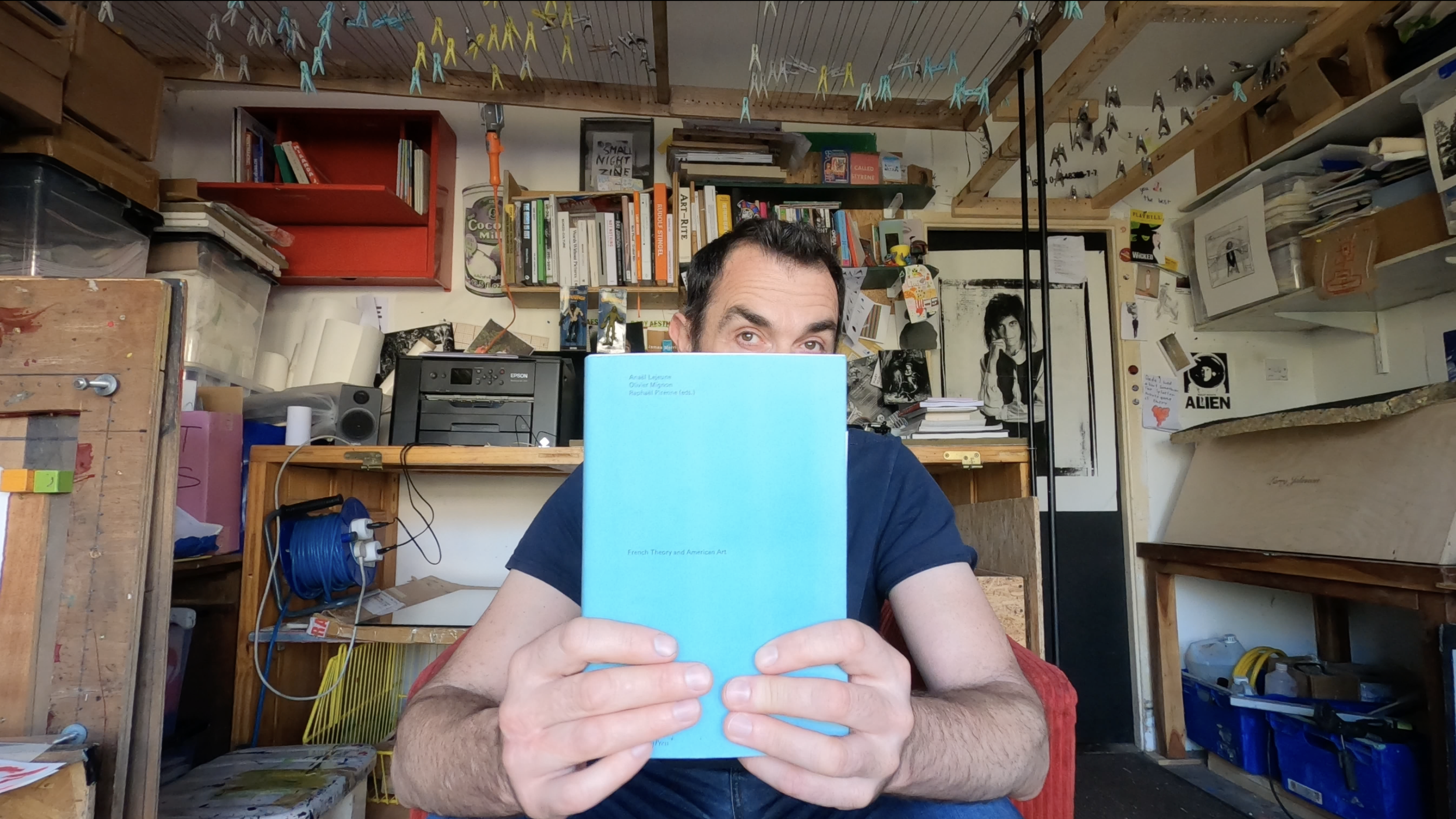
I made this Small Night broadcast to gather some thoughts around Unmade Painting, a project Damien Flood and I are developing towards an exhibition at Green on Red Gallery, Dublin, in October 2026. Damien will present a solo exhibition upstairs, while downstairs, in the gallery’s concrete basement space, Small Night Zine will collaborate with him on an ancillary project focused on painting’s relationship to theory, discourse, and its contemporary conditions of circulation.
What interests me is how painting now so often appears first and foremost as a digital image, flattened into social media, commodified through constant dissemination, and caught up in a marketplace that rewards visibility, competitiveness and individualism. The project asks what this does to painting as a medium, and whether painting has in some sense collapsed into its own representation. I’m interested in how painters might recover a more reflexive relationship to what they’re doing, especially in a moment when the image often feels more real, more seductive, than the thing itself.
A lot of this thinking has come from rereading Sternberg Press books I first encountered years ago, especially Canvases and Careers Todayand Thinking Through Painting. Those publications, and writers such as Isabelle Graw, Melanie Gilligan, Merlin Carpenter and others, were important because they treated painting not just as an object but as something entangled with the market, with institutions, with labour, with criticism, and with the artist’s own awareness of those conditions. That reflexivity feels largely absent now, or at least much less visible.
The phrase “Unmade Painting” came out of a conversation with Damien and also out of my memory of Uriel Orlow’s Unmade Film, which I encountered around EVA 2014. I’m drawn to that prefix, “un,” because it suggests something suspended, unresolved, in process, and not fully settled. There is always an unmaking in painting: revision, hesitation, overpainting, erasure, failure, return. For me that “un-ness” also connects to psychoanalysis, to Freud’s uncanny, to a strange in-between state where something feels both familiar and disorienting. Painting seems to inhabit that kind of unstable zone.
I also speak a bit about theory, because I think it has been misunderstood. In art school, theory was often treated as something oppressive or overly academic, but for me it became a way of thinking through practice rather than decorating it afterwards. Theory also releases the painter from the baggage and permissive contract with of art history. I return here to Sylvère Lotringer and Semiotext(e), especially the idea of theory as something immediate, present, vital, and usable, something that could be “inhaled line by line” rather than entombed in academic footnotes. Theory, in that sense, isn’t philosophy as a closed system, but something alive in the studio, in the artwork, in the present tense of making.
That connects to a recent trip to New York, where I came across French Theory in America in Strand Bookstore, and where I found myself thinking again about the role theory once played in art discourse. I also describe an anecdote from walking the High Line at dusk and spotting a painter in a studio, standing in front of large canvases while the city moved around them. What stayed with me was not the fantasy of a finished product or market success, but the idea that this painter might be continually unmaking the work, thinking through it as the world accelerated past. That image has become a kind of emblem for the project.
Alongside the exhibition, I’m also thinking about a publication or zine that would accompany the project, perhaps initially under the title Painting, in Theory, (and then Tennis for other un-reasons) as a way of opening up discussion around painting’s current conditions, its seductions, its losses, and the question of whether discourse can emerge again around it in a serious and generative way. Small Night, for me, has always been part of that impulse: using publishing and screen-printing as a space beside or against the white cube, a place where artists can think through their work in another register.
The immediate next step is an online assembly next Monday between 6-7.30pm which I see less as a formal event than as a space to gather thoughts, test ideas, and ask what role theory might still play for painters and artists now outside art school, outside Instagram, and outside the default circuits of production and promotion. The project is still open, provisional, and exploratory, but that is exactly the point. It begins from the question of where painting is now, what remains possible for it, and whether theory might once again become a source of energy, vitality and resistance rather than something artists feel obliged to defend themselves against.
P.S. 8 minutes in I lost the video footage which I have replaced with sporadic supplementary images of books etc.
Interested? smallnightzine@gmail.com
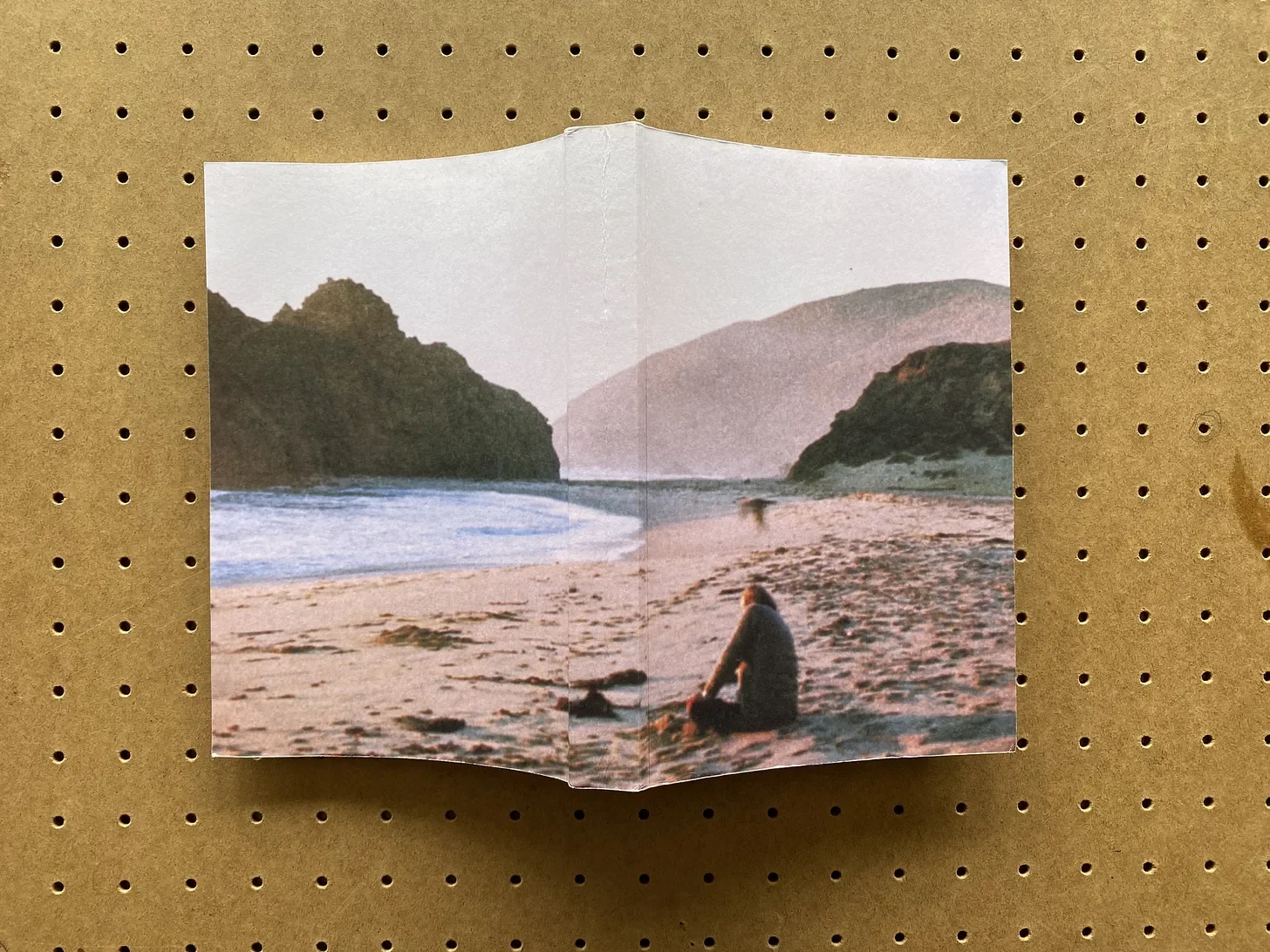
French Theory and American Art, Sternberg Press, 2013
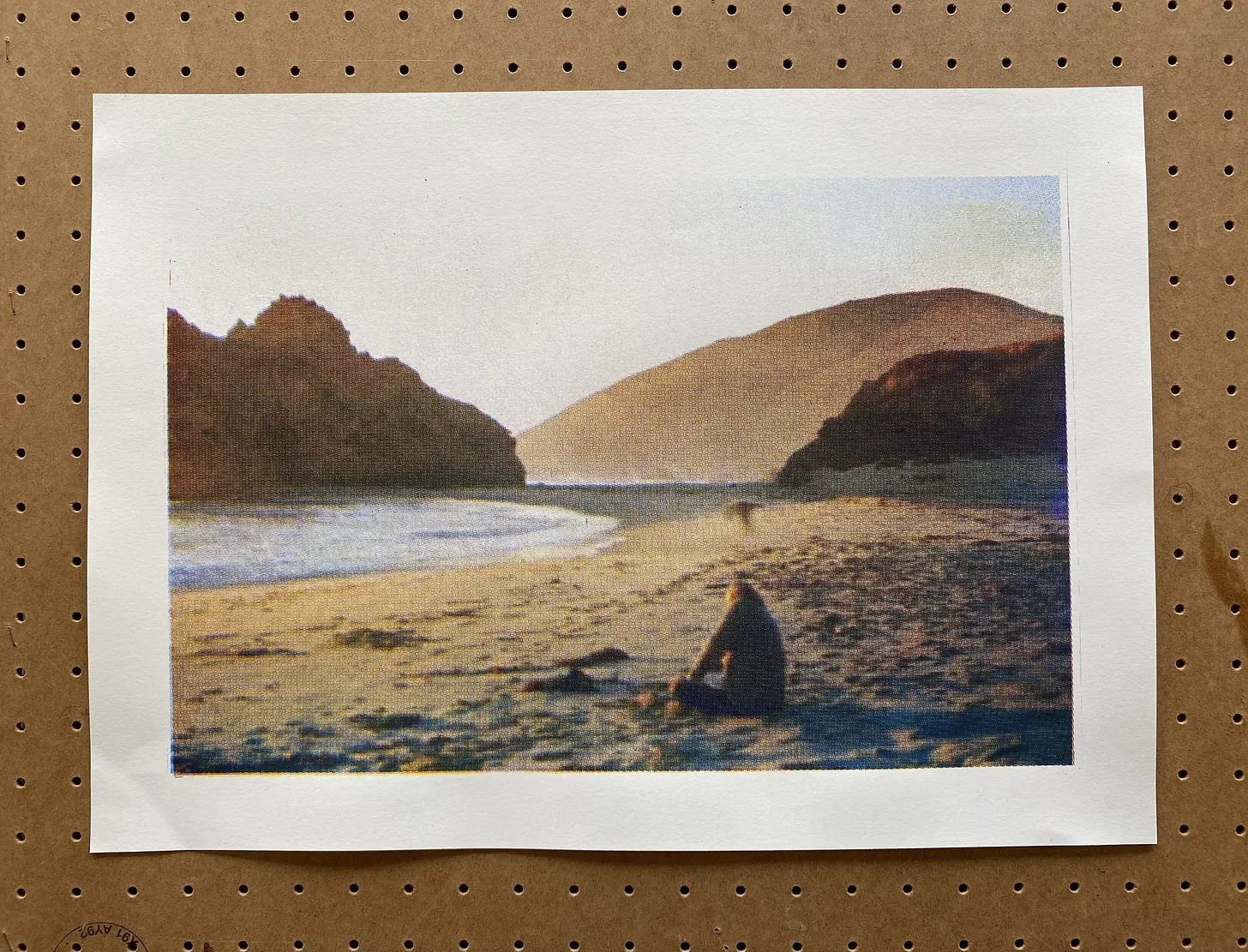
CYMK screen print of above photograph of Gilles Deleuze on Big Sur California in 1975 by Jean Jacques Lebel (March 30, 2026, by Small Night Zine)