Beeple & NFTs: The $69 Million Question

MICHAEL WINKLEMAN (aka BEEPLE) podcast interview, post-Christie’s auction, March 2021.

MICHAEL WINKLEMAN (aka BEEPLE) podcast interview, post-Christie’s auction, March 2021.

I feel like people have ruined [the label “artist”] by being pretentious douche-lords.
— Beeple, Interview, New York Times Sway Podcast
My fifteen-year-old son showed me your work a while ago, this is fucking great, congratulations, you’re awesome.
— Damien Hirst, text to Beeple
His images are not a deadpan commentary on the meaninglessness of social-media content, in the manner of Richard Prince’s Instagram replicas. They are an embodiment of it.
— Kyle Chayka, The New Yorker
It’s a unique one-of-one piece, which treats his Instagram page kind of as a Duchampian readymade.
— Christie's Auction House, March, 2021
This is basically a new era of art, participating in this auction is kind of making history.
— Justin Sun (second-placed bidder on Beeple's artwork), interview
In fact, one of the most profound tasks of art is to remind us that things, including people, can be understood for what they are in themselves, not just in terms of their exchangeability.
— Sebastian Smee, The Washington Post

MICHAEL WINKLEMAN IS 39. In the crypto-artworld Winkleman goes by the pseudonym “Beeple”. Up to recently he was primarily a graphic designer, with clientele including Elon Musk, Apple, Louis Vuitton, Nike, the Super Bowl. His day hobby, like most of us, is the churning of images on social media; in his idiosyncratic case, 5000 images day on day for the last 13+ years. He calls these daily social-media drops “Everydays” – in essence a creative-commons portfolio to build a client base for his designs (there's similarities with Andy Warhol here, whose career as a successful commercial artist preceded that of his shock transition into the New York artworld). In the crypto-artworld Beeple is a recognisable and revered artist, celebrated for his computer generated collages of ready-made models of everyday things, and his prolificacy and generosity in respect to sharing the how's and what's of his designs in the digital community. YouTube happy, Winkleman comes across as an open book in podcast interviews, wherein the interviewees have a tendency of first making the audience aware of his Midwestern modesty vs his predilection for the F-word. Winkleman refers to most of his art as “shit” with the promise it will one day get better. In 2020 – the pandemic has and will have much to answer for – he discovered NFTs. The rest is history (and perhaps the future). What happened next, in a matter of months, is what will be forever remembered as the infamous (and official inauguration of NFT auctioned artworks) Christie’s auction of Winkleman's mosaic jpeg for $69 million. 

BEEPLE (b. 1981) "EVERYDAYS: THE FIRST 5000 DAYS” 2021. (Non-fungible token (jpg). 21,069 x 21,069 pixels (319,168,313 bytes). Minted on 16 February 2021. Sold for $69,346,250.)

Popular on Instagram – two million followers – Beeple's marketability was the reason why he made an NFT drop (more on that later) in the first place, and why Christie’s and the future buyer took notice. As we know the 3 P’s popularity, prolificacy and proliferation equates with marketability and fame these days. Looking through Winkleman’s portfolio (in full on his website), his images are the type of thing that would wrap nicely around a sci-fi/fantasy role-playing novel. He started his digital diatribe on Facebook, Tumblr, Twitter and Instagram when he was a twenty-something adolescent. A boy, a geek, Winkleman was someone who wanted to get better through doing, which he did under the pinch of a diurnal deadline – one image a day without fail even when he didn't want to. With all the images Winkleman made over the past 13+ years laid out on the table, the Christie’s auction of his mosaic jpeg this month reveals an artist who, primarily via the captions that accompany his images, has been sometimes racist, misogynist, puerile or fantastical (or a monstrous hybrid of all the above). Learning this we are left with the image of Winkleman entering his bedroom and burrowing away in his computer since 2008, dousing his naked self head-to-toe in the Internet and news media with no one to slap his hand when he said something untoward.
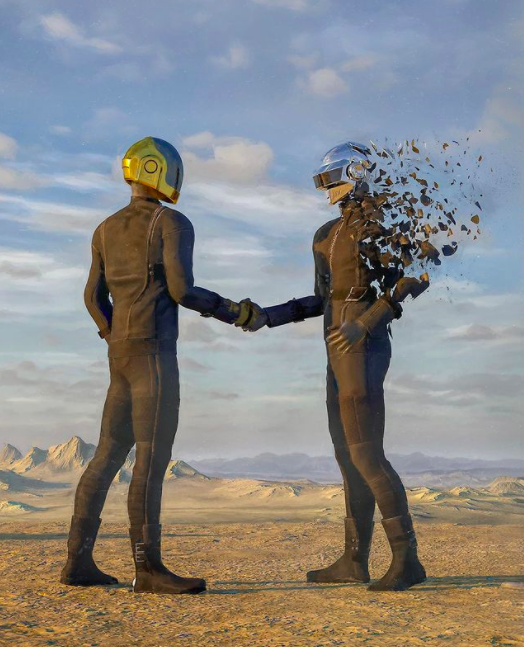
BEEPLE “THANK YOU” EVERYDAYS 23 FEBRUARY 2021 (DAY AFTER THE ANNOUNCEMENT DAFT PUNK SPLIT AFTER 28 YEARS).

BEEPLE “THANK YOU” EVERYDAYS 23 FEBRUARY 2021 (DAY AFTER THE ANNOUNCEMENT DAFT PUNK SPLIT AFTER 28 YEARS).

Most of the time “art shit for yer facehole” (Beeple), sometimes visually nuanced, generous, even sensitive (above), Winkleman composes and combines ready-made models into visionary landscapes with timetabled urgency and obsessiveness — Winkleman's head may indeed explode if he misses a day. You could say he devours and is being devoured by the medium that he is interacting with, the Internet. The urgency, the repetition, the surface-level depth is the embodiment of what we have become as online consumers and consumed. The green acne of vomit emojis that swarm the comments under Jerry Saltz's Instagram post on the matter of Winkleman's earlier racist and misogynistic juvenilia is the perfect descriptor for what this is, but not in the way those emojis are being used. If Winkleman is not making art (with “human values”) as most in the “traditional” artworld agree, perhaps he is the object that everyone is lamenting is absent in the brand new crypto-artworld of NFTs?

BEEPLE “DAY 5000” EVERYDAYS 8 JANUARY 2021

BEEPLE “DAY 5000” EVERYDAYS 8 JANUARY 2021

Winkleman lists Aphex Twin (who sold an NFT for €128,000 three days after Beeple) and his creative independence as an influence, a musician who started creating brilliant, abject symphonies in the privacy and freedom of his own bedroom. “What can one person and a computer do?... That has always been a really cool concept to me, because it’s the equalizer, in a way.” With no one looking over his shoulder, the PC police not knocking on his door, or good sensible friends to soundboard his ideas, Winkleman went all in and it all eventually came out. In February of this year – in yet another bedroom with a computer – Winkleman dreamt up the mosaic jpeg after Christie's rejected his first proposed image (above), which did not succeed in reflecting Christie’s “brand” in its vulgar singularity, but set as a tile within a diffuse and abstracted mosaic, did. The resulting artwork is constructed as a tabula rasa for the sole purpose of Christie’s auction; simply put, it was abstractly imagined with money and the burgeoning crypto-art market in mind. (The buyer did not preview the work!) With the sale Winkleman became the creator of the third highest sum paid for an artwork – all top three sold through Christie’s – behind Jeff Koons and David Hockney, but with a difference. Difference being: Winkleman's artwork is not an object in the “traditional” sense, but a digital file. Hence the reason for the criticism and confusion as to what this means for the art object in the, now, “traditional” sense.

BEEPLE “FIRST EMOJI” EVERYDAYS  2 SEPTEMBER 2021

BEEPLE “FIRST EMOJI” EVERYDAYS 2 SEPTEMBER 2021

Listening to Winkleman on the successive podcasts that have followed Christie's auction, he says he would not say the same things today as he has said in the past through his captioned images. But there is no regret or shame in his recollection of things he has said in the past, just dismissive responses about being “cancelled” by online culture. There is also no irony at play in Winkleman, irony being the artworld's way of being bad but not being really bad; irony being the scapegoat for political or social faux pas that might creep into the artist's work unexamined. Unchecked stream-of-consciousness is good and dangerous, especially when it is in full flow, uncensored, unperturbed, and with a validating audience. In this sense “Beeple” – a moniker repurposed from a toy Ewok which, when you cover its eyes it makes a “beep” sound – is more apt for Winkleman than he knows. There is something rollercoaster riotous about his 13+ years expulsion of imagery, as if, at the apex of a banked turn, Winkleman hopped onto an empty roller coaster pummelling downward through the Internet at enormous speed to become smeared in the colourful shit, piss, blood and protests of culture. Beeple is to the Internet what Michelangelo was to God. Like Warhol, is Beeple just an uncensored reflection or shadow of the present? Horrible to think. That said, we become the devil we admonish, the same way we wore clown makeup every time we named the ills of the world “Trump”. Beeple, also one word, could be named the embodiment of the media landscape that he devours. There is no critical reflection here in the onslaught and urgency of his output. When Winkleman talks about his images he refers to them as “weird” and “offensive” as if made during an out-of-body experience, a second self, or doppelgänger. Winkleman is echoing the words of psychoanalyst Donald Winnicott in such claims of “not me” possession, especially when working under the moniker of “Beeple”.

BEEPLE “BANNED” EVERYDAYS  9 JANUARY 2021

BEEPLE “BANNED” EVERYDAYS 9 JANUARY 2021

The contemporary art establishment has become “traditional” in the wake of this historical and perspective-changing sale at Christie’s; “Traditional” being the word that Winkleman repeatedly uses to refer to and defend against the furore from the contemporary art establishment, who have, in no uncertain terms, uniformly taken offence to the Beeple product and its market value, what is a revolutionary marker in the cryptocurrency art market and a white flag surrendering to the value of NFTs – non-fungible tokens, a “tool for providing proof of ownership of a digital asset”. Art critics have come out in a gaggle – Jerry Saltz, Sebastian Smee, Jason Farago, Ben Davis – to criticise the artwork, the artist (personally and professionally), and the provenance of the sale which, behind the traditional art facade of Christie’s auction house, looks like a pyramid scheme, the pyramidion being the buyer of the artwork, an “N.F.T. fund called Metapurse, led by Vignesh Sundaresan (aka MetaKovan), a Singapore-based blockchain entrepreneur” (New Yorker). In this flash flood of ink and talking heads, words and sound-bites have been regurgitated and bounced from one article to the next as critics fall over each other and fail to paraphrase this moment – monstrous or momentous – to exit the echo-chamber of what is a defining moment in culture: you can't see moments such as these if you are in such moments! 

BEEPLE  “VIBE CITY” EVERYDAYS 12 OCTOBER 2021

BEEPLE “VIBE CITY” EVERYDAYS 12 OCTOBER 2021

Always more critically nuanced in approach and with the added advantage of being always fashionably late, the New Yorker's Kyle Chayka cites and reflects on what the rest (New York Times, Artnet, New York Magazine) have to say after the fact, and by doing so, show the others up to be, in this instance, the same, in their reactionary and persecutors tone to what Saltz calls the “bald optimism” of Christie's, and the outright disavowal of Winkleman's artwork.

Farago decried [Winkleman’s] work itself for its “violent erasure of human values” and reliance on “puerile amusements.” At Artnet, Ben Davis placed the crude political imagery of the ‘Everydays’ within the “Trump-is-a-Poopy-Head/Cheeto Mussolini genre” that has flourished in recent years. 

Jerry Saltz's usual teenage-boy argo, with a prediliction for festishistic anatomical detail, zoom and crop in his art, historical or contemporary, is not far removed from Beeple's universe captioned “art shit for yer facehole” in his Instagram bio. Saltz lays blame on the agents of the art market, Christie's. Saltz has always been anti-establishment in his established role as chief and Pulitzer-Prize winning critic at New York Magazine, the paradoxical power position through which rebellion is confused with revolution, rebellion being a way in which to critique the game and the players while still staying a player in the game (Sartre). Winkleman is not dissuaded by this critical commentary which, for the most part, speaks his language. Subjects like Beeple packaged within the artworld – Like Jeff Koons, Kaws or Damien Hirst before him – form a critical free for all, one critic reading, assimilating and rebounding off the other in an effort to form new sentences (like me here) so as not to become irrelevant, creating an effervescent buzz, whereby the critic adopts the same language as their subject of critique, Winkleman being a subject who says things like this: “I feel like people have ruined [the label “artist”] by being pretentious douche-lords.” Both Ben Davis and Jason Farago point to themselves in an ironically self-effacing way in their articles, admitting that perhaps they are just being “sniffy” critics (irony, see!). Davis, who has written successive unbalanced critical blogs on Beeple as if he himself is being devoured by his subject, goes as far as aping Winkleman's own words to sarcastically describe his own opinion as ‘“fancy-dancy elite art homo” thinking’. This is what can happen in the school playground.
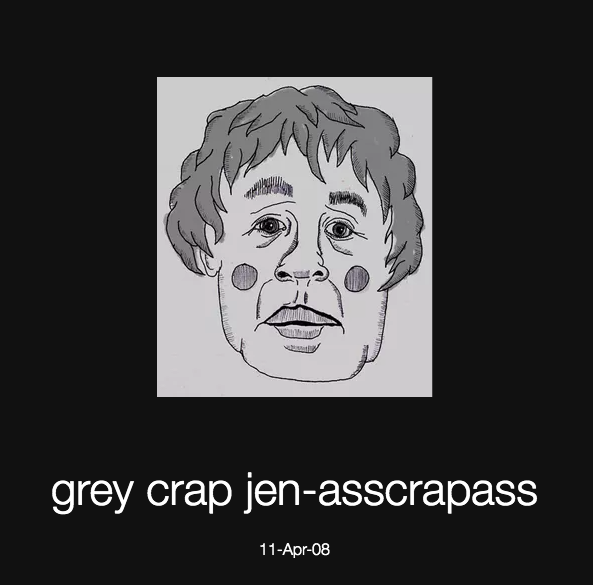
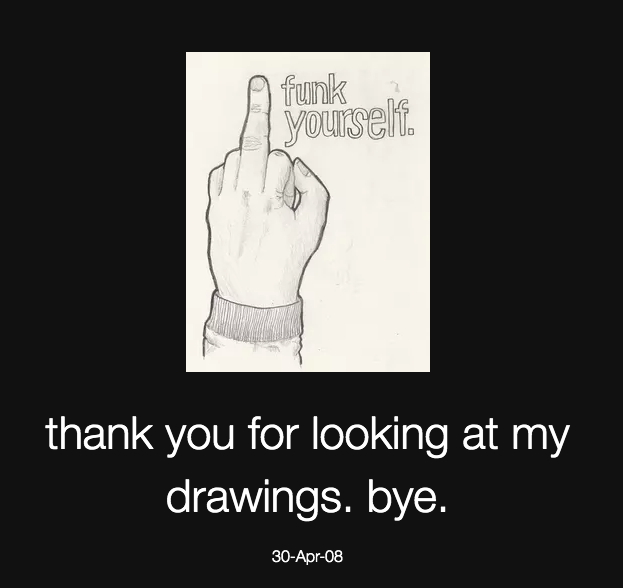
The New Yorker does not cite Sebastian Smee's piece on the Beeple sale in the Washington Post. Smee, a Pulitzer-Prize winning art critic, who, not in keeping with his usual turn-of-the-nineteenth-century tone, gets a little uppity in an effort to stoop down to his subject, by calling Winkleman's work a “Yawn” – Smee would not fair well in the same school playground as Farago, Davis or Beeple. Smee does not stoop far enough. Unlike Davis, who has perused inchmeal through the 5000 images that compose the mosaic, wherein, between the mouldy grouting, extracted one image after another from the whole to discover earlier drawings that were racist and misogynistic in message, resulting in Smee's “Yawn" turning into a collective grimace, from which the bit-part becomes the sum of Winkleman's message and medium. 

BEEPLE “TOM HANKS BEATING THE SHIT OUT OF CORONAVIRUS” EVERYDAYS 13 MARCH 2020

BEEPLE “TOM HANKS BEATING THE SHIT OUT OF CORONAVIRUS” EVERYDAYS 13 MARCH 2020

Remarking in one podcast interview that the later work is “more me” and being “not fully conscious” of how these images come into being, says a lot about Winkleman's process, a process that has been valued in terms of time by Christie’s (13+ years of work offered in one bundled sale), and a process determined by time in the reactionary day to day self-imposed deadline to not get rich but to get better at what he does. In a podcast interview on YouTube in 2018, before NFTs, before Christie’s, when Winkleman was living comfortably off his freelance design work, just after moving to the suburbs of Charleston, South Carolina, knowing no one, with a wife and two toddlers and a Wisconsin accent, he comes across as a little manic and dishevelled. His work around that time is quite impressive in detail, ambition and imagination no matter what world you come from. In 2018 he is not purely modelling his images per se, but integrating readymade models that he buys in online storehouses like TurboSquid, into these visionary landscapes that, if you were into this thing, you can imagine being inspired by the skill and fullness of his realised fantasies – Ben Davis, in his journalistic zeal to dig the dirt is wrong to see no value here at all. If you go back to 2013, what Winkleman describes as the abstract period of his work, but is really the anatomic and cellular micro-version of what would become the macro-vision later, you see an artist assembling the building blocks to his future world. Yes, his style has changed over the last decade, not because he “gets bored with one style” as he says, but because technology and his skill at rendering and taking shortcuts has evolved. But as Ben Davis underscores, the tone of Beeple’s hick message was set very early on. So getting better at this thing has been the only obstacle to Beeple getting bigger, more hedonistic, abject and, anything goes – the postmodern trope that speaks the language of his critics. Art school awaits.
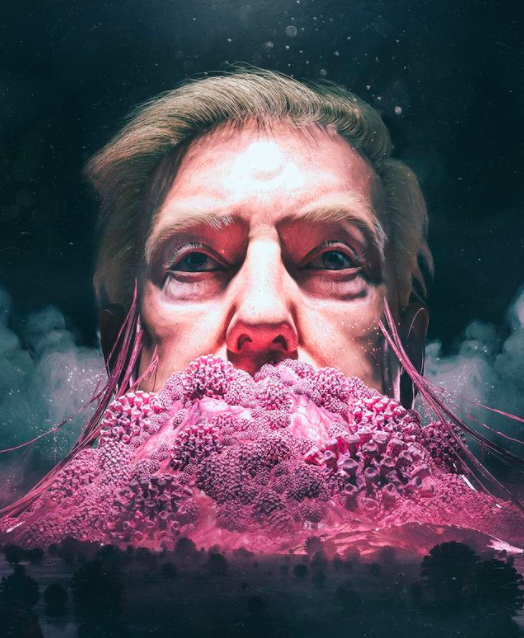
BEEPLE, SHUT THIS MF UP (VOTE)”, EVERYDAYS, 3 NOVEMBER, 2020

BEEPLE, SHUT THIS MF UP (VOTE)”, EVERYDAYS, 3 NOVEMBER, 2020

The anything goes of Winkleman's more recent work, what he calls his “weird period”, is a digital microcosm swelling and weeping with lactating and desiccated politicians in an orgy of technology: Blame the Trump administration. It's an abject fantasy with evolutionary ambitions to pick up its own glutinous body, walk and talk – to be real. I can imagine kids being mesmerised and elated by Beeple's landscapes, inspired even to do what he does. In a direct text to Winkleman, the so-called enfant terrible of the traditional artworld – Damien Hirst  – gave a nod of appreciation to the enfant terrible? of the crypto-artworld: “My fifteen-year-old son showed me your work a while ago, this is fucking great, congratulations, you’re awesome.” I can see my eight-year old son picking up a pencil after witnessing Beeple's images. This is not speculative, like the bubble in cryptocurrency, this is the truth. But would I show my son his recent images – the images that Christie’s particularise in their promotion? My son would probably just laugh first and then start to slowly upload the fascinating details, details that would get stretched, contorted and embedded in his brain, to become a worse version of what he just witnessed. This is what we do with images. We process them with other images. We relate and contrast one image with the next. We file them away; versions that fade or corrupt over time. We now can look them up to refresh those faded and corrupted images, but they never look the same way as we remember, they have changed, we have changed, the world has changed, everything has changed. Experience and our ability to skim and digest images gets easier and lazier with time and exposure. Like a kid, Winkleman wants to make a new image, today and every day that he has never seen before – to rediscover that wonder, that shock to the neurons, that will reset everything to zero and start again, to salivate again, to babble again. What does Winkleman's brain look like after 14 years of doing this thing, creating and uploading these images for the sole purpose of “getting better” and seeing something new and “fucking cooler” than before? Look for yourself.

BEEPLE, “MOMA $HIT”, 17 FEBRUARY, 2021

BEEPLE, “MOMA $HIT”, 17 FEBRUARY, 2021

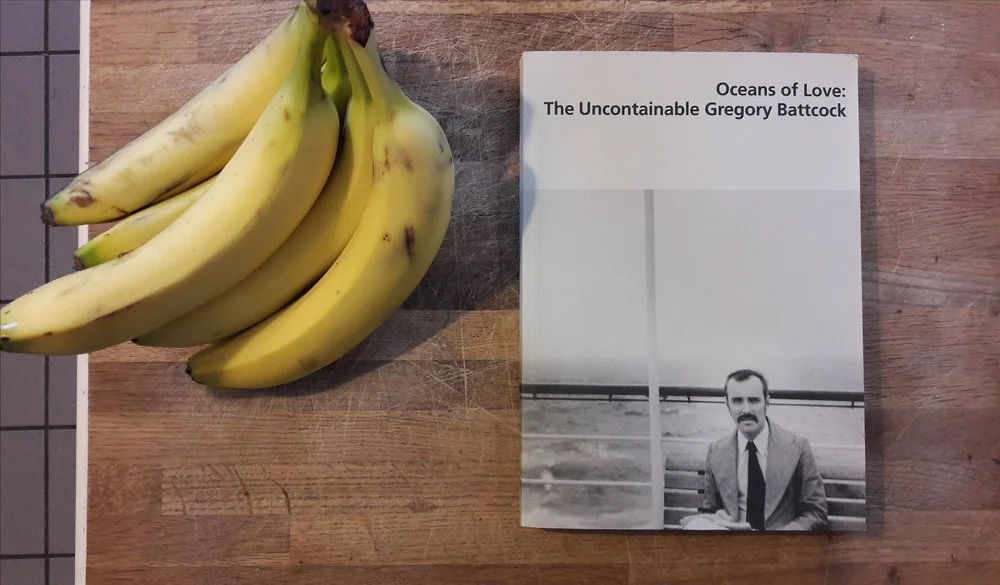
Beeple-bombed, critics have never ever been in such concord. House styles have become homogeneous over the issue. Entertaining? yes. Fascinating? Absolutely. Critics are pumped like never before, aggressively defending the traditional artworld while continually critiquing Beeple from the position of art history, something that Winkleman has no truck with, is as absurd as some of his digital topographies. The wrong questions are being asked by the wrong people. In the trenches, art is not subjective, it is communitarian in the worst way. The community, not the artist, dictates and defines what art is. Winkleman said somewhere that he wants to do an art history course next, something that he has become interested in because the critics won't shut up naming all these artists from history that Winkleman has never heard of (except for Jeff Koons and Kaws, who are also unacceptable to the artworld… oh… and he recently tipped his cap to banana man Maurizio Cattelan [above]). The critics have piqued his interest in history when all Winkleman was interested in was the present. As Smee writes in his offensive on Winkleman, and in defence of the artworld's historical innovation in respect to its casual embrace of the incorporeal object of ideas in the face of the emergence of NFTs: “The art world is used to assigning value to ideas. In fact, a whole genre of art — conceptual art — gives primacy to ideas over whatever actual forms they may take.” But Smee is missing a beat here, in that ‘the idea’ is always entangled in ‘the form’, the form speaks to the idea and the idea speaks to the form. Smee continues, the “conceptualists... thought that if you dematerialized art — if you took away the object and our urge to fetishize it — it would be an act of resistance against the art market and the whole capitalist system”. What's different, in Smee's opinion, is that NFTs are a way to commodify and festishise everything, even if the fetish is not an object that you can hold in your hands, “inscribing a new chapter in the annals of frictionless capitalism”.

[TODAY 30 MARCH 2021]

[TODAY 30 MARCH 2021]

Winkleman – pawing one of his works encased in a digital frame during a podcast – is quick to say he is in no way a cryptocurrency purist. He immediately converted his hard wallet of Ether into cash money following Christie's auction. Holding the digital frame while talking, he says the frame is a way to help people, not only hold their NFT artwork in their hands, but to transition them into thinking about digital art as an object (in so many words). NFTs are in their Minecraft infancy. Winkleman’s digital frame conceit once again sounds a lot like Winnicott and his “Transitional Object”, the object that helps the infant transition from the mother into the world. In this case, the frame is the dodie for transitioning into the digital world. Commodity fetishism has not died with the NFT, it has just taken a new form, one that, in the Freudian sense of the fetish, is equally if not more wrapped up in inflated desire and power. The desired or denied object is always displaced, out of reach, but, in its atomised or bit-part form, promises to become more than the image beyond the screen. And can we say Metakoven, the buyer of the work, is a cryptocurrency purist, a digital fetishist, anti-establishment, communitarian, gambler, or just another opportunist who loves money, things, ownership, legacy, power. We all have our thing for things. Especially art things, wherein lies an illogical exchange in value and satisfaction. “No fetishist ever loved an old shoe more than an art lover loved a work of art.” (George Bataille) Perhaps ‘ownership’ here is the festishised object, ownership being elusive in its digital form, and desired more for that reason. Digital ownership is the evolution of the festishised object. And as Winkleman says, “Having some sense of ownership over their digital selves [and the things we take with us]” is everything these days. But perhaps this is off brand, the way Winkleman’s first proposed lot for auction was off “brand” for Christie’s, who then disguised and diffused the off “brand” within the ‘on brand’ mosaic jpeg.

Modern art has always flipped the coin in terms of chance and form, but the coin has always landed on its rim so heads and tails are made visible. If we agree from the perspective of the “traditional” artworld that Winkleman’s work is not art, then perhaps, as an embodiment of society, Beeple, Winkleman, the auction, the reaction, is the art? If we think in these terms, with the coin resting on its rim, this is art with capital A. So if we flip the coin on Beeple's future: Winkleman goes to art school, gets all self-conscious, discovers irony and context as a way towards traditional art acceptance. Ben, Sebastian, Jerry, Jason et al are happy. Beeple is not. The end. 

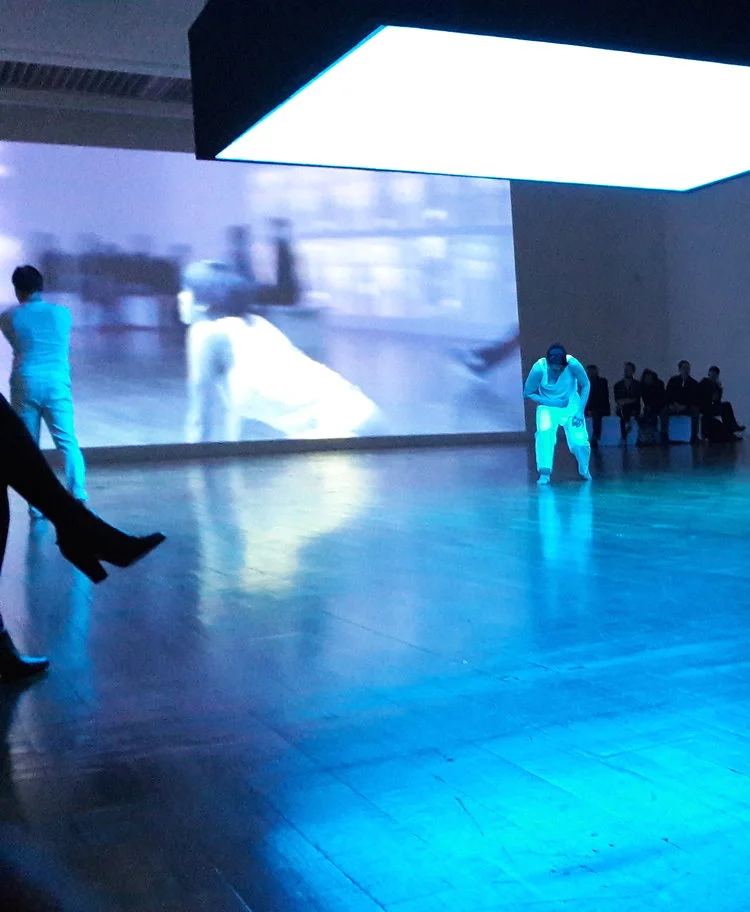
JOHN GERRAD, SOLAR RESERVE, 2014, SIMULATION, EVA INTERNATIONAL, 2018, PHOTO: OISIN MCHUGH

JOHN GERRAD, SOLAR RESERVE, 2014, SIMULATION, EVA INTERNATIONAL, 2018, PHOTO: OISIN MCHUGH

What does this all mean for the experience of art if we all become digital festishists in the future to inhabit virtual galleries to the disavowal of the physical? (Sometimes when I see my son play Minecraft I visualise his limbs spider-contorting and disappearing into the screen forever.) Some of my most memorable experiences of “traditional” art on this island and others – New York, Venice – have been the architectural simulations of John Gerrard, who has made two NFT drops, one in 2019 and the second in March 2021, the latter being the first “superneutral” NFT in the marketplace (“energy usage associated with the auction” will be offset by a regenerative farm founded by Gerrard also in March 2021). All the negativity surrounding Christie's auction and Beeple has distracted from what NFTs mean for digital artists (the resale commission of 10% for artists is something that doesn't happen in the art market proper/ transparency in trading/ and ownership can be easily divided and traded). Further, digital artists have, up to now, been forced to formulate and innovate “physicals” for the commercial market to make a living. We are now dealing in two worlds. It states in the press release for Gerrard's current NFT drop, Western Flag, “This project returns Western Flag to the digital community that made it famous.” Two communities and their separation is being unconsciously inferred in this statement in the strict sense of segregation, whereby ‘community’ is not being idealised as an holistic idea but a designation, an identity. And there is a lot of them vs us rhetoric surrounding Beeple: traditional artworld vs crypto-artworld, digital vs real, objects vs jpegs. And it is true, digital art has always had a glitchy labour into the physical world with a dependency on what device is available at any given time and place. But that glitchiness between contrasting forms is what artists utilise best in the relationship between human and digital, subject and object, things and thoughts, sensory and sense-making. Art, at its best, is awkward. Art in the truest sense is a toddler falling and getting back up. Beeple is a toddler in free fall.

Death to the Curator?

e-flux announcement for “Death to the Curator: Artist-run culture in the Nordic region” (original launch March 19–May 2, 2021/postponed till April due to new COVID restrictions in Norway)

e-flux announcement for “Death to the Curator: Artist-run culture in the Nordic region” (original launch March 19–May 2, 2021/postponed till April due to new COVID restrictions in Norway)

Curators have been condemned as agents of recuperation, polluting some imagined ur-form of artistic value; as gatekeepers, bureaucrats and middlemen; as agents of destructive interpretation and micrological study, of globalisation and conformity.
— from "Death to the Curator" press release
…it is hard to remember… how exhibitions ever got made without the animating figure of the curatorial magus behind them.
— from "Death to the Curator" press release
It is quite rightly the artist’s task to create unreasonable organisations.

— Honza Hoeck, cited in "Death to the Curator" press release
 

The press release for the collective exhibition of primarily Norwegian artist-run spaces reads, “Death to the Curator”. I laughed – an old joke but a good one. Beneath the title (embedded as a subtitle in the image of a ‘zombie’ curator) the byline reads, with little more force and indignation, “This means you were not real artists to begin with.” The context for this institutional thread-pulling within the artworld's administrational quilt is an exhibition announcement via e-flux, paid and presented by the Kunsthall Oslo (a non-profit art space located in the heart of Oslo, Norway). 

Elmgreen & Dragset, Death of a Collector, 2009, Mixed media, 100 x 600 x 200 cm: installation View, Elmgreen & Dragset, The Collectors, The Danish & Nordic Pavilions, 2009, 53rd International Art Exhibition - La Bienn…

Elmgreen & Dragset, Death of a Collector, 2009, Mixed media, 100 x 600 x 200 cm: installation View, Elmgreen & Dragset, The Collectors, The Danish & Nordic Pavilions, 2009, 53rd International Art Exhibition - La Biennale di Venezia 


Strangely, but serendipitously for this response, my associations with the Scandinavian artworld and the rhetorical death or dream of another art agent – the collector – is by way of Michael Elmgreen's and Ingar Dragset's installation Death of a Collector for the Danish and Nordic Pavilion at the Venice Biennale in 2009. The glee was instant then too. Met by Elmgreen's and Dragset's somnambulist vision, what I first projected as a curator not a collector floating face-first in a swimming pool, brought a brevity to what ought to have been a serious simulacrum of suicide or misadventure, as the art fashionista clinked around on the steps surrounding the pool which helped to Greek-up the ignoble stab-in-the-back theatre of the artworld.

To this day I still visualise a curator in that swimming pool in Venice. I am not going to lie and say ‘I'm not sure why?’ because I kind of do know why. My interactions with art collectors over the years has been brief and exclusive, involving being shown around domestic art collections that, on reaching the bedroom to view the painting above the headboard, became a little uncomfortable. My correspondence with curators, as both an artist and critic, has been productive and antagonistic in that order. Changing hats over the years has given me two perspectives on the curator. As an artist I knew I needed to stay on side with the curator if I wanted to engage in the art scene in a productive way, knowing curators were the gatekeepers for galleries, funding and influence (they simply talk and influence one another as evidenced in the consensus and double-booking that circulates one or two artists at any given moment of time in an art scene). 

As an art critic I got the chance to extract my teeth from my tongue from time to time to critique the enterprise of the group show, the modus operandi of curatorial practice. I found when I wrote critically on a curated group show I felt the curator's rather than the artists' breath on my neck – that's saying something! In the act of reviewing the curated group show, the critical stress is placed on the curator as if it is the curator's vision you are addressing not the artists' (which it is in the curatorial framework). Especially so if it is an idiosyncratic curatorial practice that synthesises the artworks of an otherwise ragtag and headless bunch of artists into some mutually exclusive thematic. You could say that the curator combines artists to commandeer a singular identity; the curator is fully formed via via; the curator is bi-proxy everything but still a product of singular value; the curator is the middle, but invariably not a man.

Now launching next month (due to new Covid restrictions in Norway), the "Death to the Curator" press release states what are the shared grievances of this collaboration between artist-run spaces, targeting the curator exclusively as a motivating factor for artists to, ironically, come together. The organisers are quick to acknowledge that this is not a death-wish/desire/ or dream pertinent to now in particular. Perhaps that is why the image of the zombie curator is so apt, dragged again from the metaphorical grave – for she has not died… yet, unlike the author who died during French philosophical avant-garde of the 1960s.

No need to read between the lines, this statement is arresting in its tone and pointed-finger delivery. Personally, their grievances are my grievances. That said, the figure of the curator has always been an easy target (I have now written a trilogy of critical pieces on the curator over the years – see link at bottom of page for a related article). Easy targets, however, like the late Trump administration, become easy targets because the wavering concentric bands of cause and effect that strangle fate to a pivotal point in time and place are harder to point the finger at, especially when it is time to point the finger at ourselves when we vote strongmen (power) in. 

These grievances regarding the curator are not local to Norway. They are grievances we have acknowledged and accepted globally, and continue to facilitate and play along with as artists. In our online image economy – one that has sedated the artist as a passive disseminator (and curator) of images rather than a disrupter and dissenting presence in public space – the curator's image cannot be filtered through her work, because her work is made up of the other, the artist or the institution she works for. That is why the curator's portrait becomes the linchpin of their Instagram feed; art surrounds their bodies while the artist is ventriloquised through their mouth. The curator is a cypher and a cheerleader for those artists that he wears and organises through selection and display. So even though, from the outside, the image of the curator is one of communitarian ideals, bridging the gap between the misconstrued, disorganised and glitchy individuality of the artist and its public, the curator's agency and social mobility bears the fruit of professional progression while the hops, skips and jumps of the artist's flat, stepping-stone economy never reaches the shore for reflection, as a sustained physical output and a pliable identity is needed to keep the artist from sinking and ultimately drowning. 

And yet this “Death to the Curator” declaration, embedded in a press release, must come from the lived experience of working and being with curators, and so at one point in time facilitating the curator's professional advancement that is now being retrospectively questioned and perhaps denied. (The adjective “professional” is explicitly used to distinguish the professional curator from the amateur artist.) The professional curator, who finds institutional shelter on the back of the artist, is being questioned in this statement from the self-reflexive position of the still amateur artist. In this regard the statement could be read as a document of betrayal, or a critical reaction based on broken promises or broken ideals (or nostalgia for something that never was?), from which emerges an amateur ethos antithetical to that of the professional agenda of the curator. However the seat of power is always up for grabs; and in the end it is the community that votes who takes that seat.  

In a recent Zoom conversation with an Irish artist, the subject of the curator came up. The artist had been asked during a Q&A following a presentation on her work “How she felt about curators?” Obviously, the person who asked the question had shown their cards by asking such a question. But the artist admitted to me that she was caught off guard by the question, and said nothing definitive in response. The artist then asked me what I felt about curators. The word “politician” immediately popped into my head, then my mouth, before I expelled it before thinking it through fully. Of course, the analogy fits in a curious way. The institutional maneuvering of the curator could be likened to the social massaging of the politician. There is also that political positivity, even in the face of cultural or economic downfall, that numbs the curator's and politician's lips as if they were lip-synching positivity. Even though, as tastemakers, the curator's hidden tongue has an equal amount of sour to offset the sweet (like all of us). And still, we vote curators in by inviting them into our studios to pick and mix as if a sweet shop. And we are candy-cane happy to do so.

The artist-run space was something that was common in my time as an exhibiting artist, especially in the Irish capital, Dublin. There was hope in their presence as a new artist, a presence that has since evaporated. That said, after graduating from art school I rejected an opportunity to exhibit at an artist-run space after being selected through an open-call process (by a curator) because I discovered I had to pay to exhibit. Later, I criticised this side of the artist-run project. Today, when no new artist-run spaces are being developed, I feel I have to retract that earlier criticism. The only way to achieve "unreasonable organisations" is amongst artists and artists alone. The second you invite in external bodies (with terms) you become more and more reasonable. Artist-run spaces that somehow transition from a temporary to an established existence eventually embrace the curator as a necessary and welcome agent within the field of the professionalised art scene – I miss the days of the Minecraft amateurism of those analogue artist-run spaces. The new breed of artist-run spaces are more self-conscious, professional and willing to ventriloquise the administrational argot, from "inclusiveness" to "community". Gone are the days of the artist counterculture on the ground; or perhaps the artist counterculture has gone underground, advised and hoped for by Duchamp in the 1960s.

The curator has been very much part of the artist-run space in the Irish art scene on my watch. Although it is difficult to determine the purebred curator from the hybrid “artist-writer-curator”, there are those whom are named and labelled curators whether they like it or not. These named curators work freelance or for established institutions. And even though they might flirt with writing or even, God-forbid, art-making, they are seen and objectified as curators first and foremost by their artist peers. If we were not to declare their death, what are curators good for? They organise, negotiate and manipulate funding towards concrete endeavours that involve the coming-together of artists in an art environment that is increasingly individualistic in its desires – some of the best art spaces locally have been curator-run. They thematise and corral artworks in a panoply of displays and sites that proffer new ways to think, view and read art. They procure access to offsite spaces for exhibitions that would never see the light of day if an artist was at the helm (of course there are rare examples of artists successfully taking the curatorial helm, such as the late Noah Davis or Damien Hirst and the YBA's right out of art school). They deal with the big guys upstairs so we don’t have to, which has a trickle-down effect with respect to funding if not whole-sale appreciation.

The press release states that “Such is the success of the [curator] model that it is hard to remember, or even to conceptualise, how exhibitions ever got made without the animating figure of the curatorial magus behind them.” True; especially for those artists that emerged out of the neoliberal era. The organisers also admit that artists have been playing along within this model as if there was “no other choice”, advancing the idea that the artist-run gives choice to the artist. However, we have to be clear how the curator is being defined here, 'being' being the definition of the curator being critiqued. Curation is not the problem per se; the curator is the problem. Being a curator exclusively is the problem. If you are an artist and you curate, fine.


Contra-curators the “real” artist is flexible and "unreasonable". This unreasonable contortionism sometimes leads the artist to bend over backwards before the curator whose mission is to organise the disorganised and disenfranchised artist, so that legs hook over shoulders and feet to become hands knotted in the dark within a white box. In Elmgreen's and Dragset's swimming pool the curator (sorry, collector!) is, as American punk band Minor Threat vocalised, “out of step”.


The Norwegian organisers are quick to temper their statement, admitting or accepting that they “consider themselves curators, even to the point of seeing curatorial work as an integral part of their artistic practice”. However, this is not a smoothing over of this death-to-the-curator declaration. Here the ‘artist-curator’ is been transformed into a good verb rather than a bad noun. Being an artist has always meant professional promiscuity. There is an explicit criticism being pronounced here, of individualism and careerism, as the curator becomes the scape-goat or perpetrator of the ills of the artworld, while the artist-run is a representation of everything ‘good’ that the artist has lost sight of in the interim of curator-fondling by the artist.

The curator tout court, who courts artists to sometimes go steady goes against the cultural norm of the step-stone artist. Curators represent individual and professional stability for themselves and the artists they work with. The artist has always had to work collectively among peers and institutions to get along in the real world outside the comfort blanket of art school or the studio. Art critic Peter Schjedhal writes that the first thing to do in art school is to form a group. The curator works with groups too but the artist is just a cog in the singular curatorial fusion and function of the curator. Curatorial practice is not a shared democracy. But when was art a democracy in the first place? Gore Vidal vehemently denied art ever was or could be democratic. 

That said, I am not sure that exclusively using the curator to rebound off, like a bad breakup, is the best way to separate from the purebred curatorial administration. It almost suggests that without the death of the curator the motivation to act and organise is just not in the makeup of the contemporary artist, or has been lost somewhere since the advent of neoliberalism when an administrational dependency took root. Naming the curator as the offspring of neoliberal tendencies in the arts is fair enough, but who put the curator in that position in the first place? Was there (as stated in this press release) ‘“no choice” but to “throw her- or himself and her or his work into this trap”’ (Daniel Buren,  Documenta V, 1972). Or are artists that easily led, waiting for the gimp collar to tie up their leaderless individuality?

The artist-run is definitely an alternative to the curator-run, but if the organisers are proposing a more communitarian art environment, doesn't the exclusion of one of the community (the curator) devolve this into what the curator is sometimes accused of as a producer of cliques? By using the curator as the sole excuse and motivation for the artist-run, the artist-run secedes more power to the curatorial project. The curator's presence becomes the very reason artists have organised themselves into one – the curator becomes the wolf that circles the sheep into their pens. Perhaps a communitarian project is all wrong for the artist in the first place. To fight difference with difference cliquehood would be a more powerful and punk claim, pulling away from the political promiscuity and public optics of the curator-run. More and more I think culture works out of necessity and antagonism. This Norwegian artist-run manifesto is posturing as punk. Calling out the curator and their death is kind of unreasonable; a way to get the party started, to motivate a movement that would have no friction otherwise. To call out the curator is a way of calling out individualism and careerism, so that the opposing force of collectivity and amateurism can be born again, unreasonably. 

"It is quite rightly the artist’s task to create unreasonable organisations." This is a beautiful thought, a task that is both the measure and means of a band of ragtag artists and antagonistic to the good organising principles of the curator. But is it just a declaration? It infers ‘rights' within it articulation? Why does it need to be said? Why is the curator's existence a motivator for it being said? Is it a declaration that is, in its punk opposition to the increasingly polite and professional agents of the art administration, counter-curatorial for the sake of being counter-curatorial? In the end artists have to be motivated from an internal drive not an external provocation. The latter will just not last. The difference between a curator-run art scene and an artist-run one is the difference between tastemaking and "world-making". Of late, there has been way too much tastemaking■

Read related article For Generosity; Against Speed-Curating'

Art Education: The Fast Lane for the Long Game

art school drop out.jpg
 

Jacques Derrida, on awakening from a dream, observed that the fear of writing was both a reflection on criticisms already written and criticisms to come, in the same way democracy, for him, is always to come. The way culture has been slowed, curtailed or partly destroyed by this uninvited and unexpected global pandemic, has brought things to the surface that may have been otherwise left to rest. Until now, until this big interruption, particular acts of criticism would not have surfaced due to the nature of life and work becoming seasonal, routine or numbed by the all too comfortable and familiar institutional blanket you will never acknowledge or accept has become your fulfilment and fate. 

Among notes handed out to his creative writing class, writer and so-called “grammar nazi” David Foster Wallace, shared one particularly idiosyncratic note that outlined the nuanced difference between the word “further” and “farther” (up until Wallace I never got the difference). “Further”, for Wallace, signified time, whereas “farther” signified space. This guiding principle was given local significance almost a year ago when “Further Education” made the headlines after the calculated Leaving Cert results went a little awry. Propped upon a news media couch the Minister for Further and Higher Education, Simon Harris, was quick to use the stopgap option of Further Education for those students who feared being left without a college place. If we agree with Wallace that “Further” denotes the temporal not the spatial, and that being an artist is a commitment to the long game rather than the careerist pursuit of institutional space, then you might begin to see the seed of my argument. 

I am a product of Further Education. I repeated my Leaving Cert at Pearse College of Further Education, Crumlin. When the notion of art school first skirted the horizon I attended Sallynoggin College of Further Education which led to securing a third-level place at Dun Laoghaire (IADT). These first, slow steps through Further Education, towards a life in art, was fundamental to how I progressed in third-level and beyond. Further Education gave me the grounding experience for what I have come to know as “the long game” of art. And this long game has nothing to do with academic plaudits; being in art school was my chance to be around like-minded people for as long as possible before making my way alone in the world as an artist. (It’s funny how recent art graduates declare in their bios that they achieved distinction in their studies as if that matters to the long game – Hands Up! I did!)

Four years ago, following a HDip with a focus on Further Education, I started teaching at Gorey School of Art (GSA). A small permanent staff of four, supported by a couple of part-timers, GSA was where I wanted to teach after being accepted for a period of teaching practice there, and where I fortunately continue to teach today. This pathway to teaching in Further Education was influenced by, first, a lack of opportunities at third-level; second, living beyond commutable distance from Dublin; and third, administrational experiences I had as a class representative during my BA and MFA at IADT and the National College of Art & Design (NCAD) respectively. Simply put, the behind-the-scenes third-level administrational landscape, as I experienced it, although only a snapshot supplemented by off-the-record critical conversations with lecturers I had grown close to, was beset by a self-serving politics that was all about keeping one's job, medium-specific territory, or climbing the ranks of the broader administration. Understandable, and dumb to think an art school would be any different from any other institution is your logical response. An institution is an institution after all. I disagreed – at the time. I believed that art institutions might work differently to other institutions. Even though, as Noam Chomsky always begins his counterargument to the dumbfounded and soon-to-be-glazed-over receiver, history tells the real story

As a class rep in two third-level art institutions it was curious to witness teaching staff around a board table with the same body language and ventriloquism of the political class. Don’t ask me why I ended up as a class rep. Perhaps I understood early on that rubbing shoulders with the faculty would be important somehow. Further, I was young and dumb and idealistic, but still… I began to see artists differently around those managerial board tables; they wore different hats and faces. They became those. Those in charge were demonised, and in retaliation to this latent demonisation, acted in kind. Worst of all, there was staff that saw nothing wrong with the hierarchical status quo, and in some cases were cheerleaders for the institution, putting their not-so-secret agenda second to the institution so they could come first later on. Of course this story of being institutionalised is an old and familiar story and drug; familiarity and safety the drug of choice for those who become fully institutionalised, not being able to squeeze out of the institutional vice. And yet we are all institutionalised, while temping as freelance; doing the job so we don’t have to do the job. Further, in the under-resourced and under-appreciated sector of art, the opportunities are low, the competition high, the stakes highest. 

So Further Education was where I placed my pedagogical hat. Soon enough the politics that was very much part of the snapshot negative of third-level education I carried around in my pocket was perfectly exposed. I discovered that Further Education is irrevocably tethered to higher education, being partly a feeder school in the preparation of portfolios for entrance into third-level. We were partly dependent on each other: third-level supplied the goal, and we supplied the prospective students and the methods for reaching that goal. Everyone was relatively happy with this institutional interdependence. But things change, especially when it comes to the fluctuating trends in “fine art” education vis-a-vis the fluctuating trends of the economy. 

Art is always having to prove itself in the institutional setting, whether that is foot-traffic in the publicly funded art institution, or certified progression from one course to the next towards industry. This has led art education to being either fast-tracked through third-level or the development of an over-worked syllabus at second-level. For instance, in an effort to improve the Leaving Cert Art syllabus – albeit transformed from the fugitive subject it was in my day – the subject has become burdened by an over-ambitious workload. I have been informed by teachers in the sector that there are easier subjects for students to accrue points, subjects that take up much less time and effort. (Last year's virtual Leaving Cert results brought up my personal experience of almost failing Leaving Cert Art with a D- after achieving A's in the classroom.)

Some unfortunate decisions were made in recent years in terms of third-level art education, one being the three-year degree. This was the oddest truncation; the biggest lie. What I found after graduating from art school both times was the fear of "What fucking next!?" I even went back in the door of the institution to talk PhDs but only got as far as the interview, thank fuck. The most recent shortcut proffered to would-be artists is the “drawing day”, rolled out by some third-level art institutions, offering prospective students a fast-track entrance. This is an aggressive and short-sighted move. I get it: no students, no school. I work in an institution that worries about student numbers year on year as the student demographic changes, fast and distracted. 

Aside from the pragmatic reasons and decisions for changing the small game as the big game changes, what can be done that does not place institutional self-preservation before everything else? What can be done to address the shortfall in students applying to, in particular fine art courses, and the ways in which an ever-changing culture is looking over the stooped shoulders of fine art as a career pathway to be an artist? What can be done that is more symbiotic and communitarian in our shared need and passion for keeping art in the hearts and minds of a new generation, instead of the me vs them mentality that has always segregated and hindered a more collective approach to art education?

I believe that good secondary and Further Education institutions play a significant role in the matrix and chain of art education. Further Education is a place where, on the one hand, you find mature students who have been derailed in life or work, or have casually retired from a work-life that stalled a latent or active drive to make art and are in no hurry, exploring the possibilities that a given medium may offer them; and on the other hand younger students who don’t know what they want but know they are in the right place for them, among people who think and see differently. Without a love and awareness of art fostered early on in the secondary school classroom, and the ease of transition that Further Education facilities those students (and parents) unsure of what art can offer them (and their children); or those students returning to art after life and responsibility got in the way of fulfilling that desire or dream, third-level art institutions will no longer be able to sustain fine art study under a regime of desperate thus compromised ‘recruitment’. 

You cannot stop institutions from lying to you or themselves – being institutionalised is a delusional entanglement. Institutions are going to keep peddling their bullshit, with their mission statements and ethos and heeled toilet-paper in tow. All you can be certain of is, being an artist involves work and time, and is only progressive in the privacy of your studio, garage, kitchen, bedroom and your own head if you trust the electrical impulses from those fucked-up neurons you have. You get by as an artist, you don’t get anything. Where did you get the notion that art owes you something? Art owes you nothing! 

Some 50 years ago in Paris France, in the educational context of philosophy – a vocation close to fine art – Derrida wrote a critical article for the French newspaper Le Monde, advancing and arguing against the new measures taken by the new government, especially in secondary schools, where the hours of teaching philosophy had been reduced massively to three hours, writing “the philosophical capacity of a child can be very powerful”. The would-be artists of the future should not be recruited, convinced or even strong-armed into art education. It's a long game not a short one, and most of it spent alone. And this long game begins in art education without a fast lane♠️


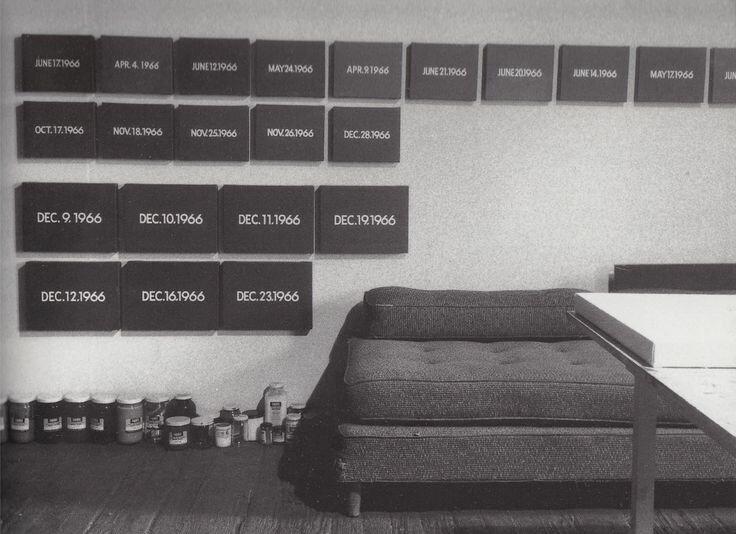
IMAGES: On Kawara; Frances Stark.

On Being Recognised: The Artist

🕷Arachne was a spinner in Greek mythology. Such was her skill and pride in her art that it provoked someone of equal skill and pride, Athena, goddess of crafts and other things. Cue face-off: Athena wove a tapestry depicting the gods in majesty, wh…

🕷Arachne was a spinner in Greek mythology. Such was her skill and pride in her art that it provoked someone of equal skill and pride, Athena, goddess of crafts and other things. Cue face-off: Athena wove a tapestry depicting the gods in majesty, while Arachne portrayed the gods abusing their power, which included rape. Athena’s tapestry represents the artist as cheerleader to the institution of the gods of which she belongs; Arachne’s represents the artist as subversive critic. Arachne was transformed into a spider for her trouble. IMAGE: Diego Velázquez, Las Hilanderas (“The Spinners”), oil on canvas, 1655, 220cm × 289cm (87 in × 114 in), Museo del Prado, Madrid

There really is no such thing as Art. There are only artists.
— Ernst Gombrich 
The artist is a myth. 
— Andrea Fraser
Vasari, what a dickface…
— A marginalia by Venetian painter, Anaballe Carracci, found in a copy of Vasari’s Lives (1568) after he was offended by Vasari's promotion of Florentine painting over Venetian painting 

My Instagram profile reads  A R T I S T; the spaces between the letters represent the sharp intakes of breath followed by the irretrievable gulps that form such a rubicon crossing. Don’t bother counting, there’s five GULPS, including the opening GULP, wherein a sharp intake, long and oval like a pill, is swallowed past a relaxed tongue for the throat to do all the work, leaving me already breathless before the work of  A R T I S T  is done. Calling yourself an artist is hard work, especially if you are aware of the mythology of the artist passed down since Plato's expulsion of the poets from The Republic. The self-belief, self-regard and social confidence needed in living up to the claim of 'artist', a pronouncement yearning an echo from a peer community that will believe the pronouncer, and furthermore, legitimise such a pronouncement through public recognition or reward, is mythic. 

The myth of the artist mediated throughout history (and mythology as mentioned in the tale of Arachne), from Plato to Pollock, is a myth that was hard fought for. “It’s a contested identity. It’s hard won. You have to fight for it. “Anyone can be an artist !” We know that’s not true !" (Sarah Thornton) The artist has been many things, from menial labourer to aggrandised or misunderstood genius. Under church patronage god was the auteur, the artist the artisan. Under the art market the artist has become an insecure pawn under the new god of capitalism. The overly famous phrase “art is what the artist says is art” might be true in the privacy and security of the artist's home or head, but institutions legitimise that private thought by transitioning the artist from the safety of their home or head into the public sphere, where the artist has to wrestle with equal amounts of recognition and rejection. It's a big and scary leap, and there is no way back when you jump, just up or down or a genial slow crawl. 

The title of 'artist' today is equated with institution: “the artist is an institution” Andrea Fraser says with a knowing smile as queen of institutional critique. And, as one artist provocatively said among his own paintings and students in a gallery, “Art is something you exhibit.” Some 'artists' will take serious issue with such a claim, an idea that intimates the exhibiting artist is the only true artist. For an artist to proclaim that in a gallery standing among their paintings is a little exclusive. The exhibiting artist is part of a very small and exclusive club. That said, there is no better way than exhibiting to garner recognition, with the added potential for something more permanent and monetary to stave off literal hunger. 

Artists hunger for something less substantial and necessary than bread and water, or the body and blood it will never become. Artists hunger for recognition. And this recognition must come from those that do, not those that don't do. Vasari was an artist; artists wanted to be in his “Lives”. Artist Andrea Fraser quotes Pierre Bourdieu when she says “recognition” for the artist “is to be recognised by those the artist recognises”. Recognition here is conflated with mutual respect. Everything outside this society of mutual admiration is arbitrary. The artist does not want to amass popular consensus for their work amidst the “looky loos” – those that look but don't participate. Artists want their peers to recognise them. It is other artists' observations (not opinion) that matters to the artist, even though it is seldom given.

Take for instance the Artists Support Pledge rolling out on Instagram, through which artists sell their work for €200 or less, and if and when they accrue €1000 sales, they buy a work from another artist under the same Pledge. I bet it is a lot sweeter if the buyer is an artist, especially one the artist recognises. However, there is risk in this goodwill economy, and that is the risk of not being recognised by either those you recognise or, at the very least, those you don't recognise. Unsurprisingly it seems painters are the ones that are benefiting most from the Artist Support Pledge. In a public conversation with the “painter” Philip Allen, I asked, "Do you consider yourself a painter or an artist?" He replied, “I wish I could call myself an artist”. Painter or artist, artist or painter, I can't help but think Philip Allen's wish to be an artist is not conciliatory, consciously or not. There is something special about being a painter recognised by another painter, painting being as pure as the driven snow in comparison to the bad aim of the pissing contemporary artist. There is a purity in how painters attend to other painters. As one painter said to me, “I paint for other painters.” 

In Sarah Thornton's book 33 Artists in 3 Acts she divides the definition of the artist into three chapters, one of which is “Kinship” (the others “Politics” and “Craft”). Through “Kinship” Thornton hoists words like “empathy” and “affinity” to illustrate the social relationships and behavioural patterns in familial and social groups in this micro-world of the artworld. Artists find acceptance within a very small coterie of individuals who get them, mostly. After a return to art-making after an eight-year lapse, I'm beginning to empathise once again with the plight of the artist in terms of being recognised. Contra to the notion of empathy being something positive, the empathy I'm feeling in the studio is making me think I will be more (not less) critical when I return to writing on *Live* art again post-pandemic. You really can't empathise with art or the artist until you feel the plight and pleasure of the artist in both your head and hands. This is something I forgot. That's why artists make the best critics when they weave the critical sentence. Artists empathise with art and the artist coldly and in secret when things don't ring true in their eyes. Nevertheless, empathy and affinity are communitarian drivers, whereas the more instrumental drivers of being and living in the world as an artist are irrevocably tied up with institutions, from education to art market. In a world where white walls have eyes, the dance of hyper-visibility and ladder groping gets a little tired.

After completing the first phase of my art education, my CV was a mere half a page, a quarter of which was, white lies. I first realised institutional support was important when I tried to join Visual Artists Ireland and found they had criteria for their membership which divided those artists that had achieved institutional support under the incongruous “Professional” member, and those that didn't under “Associate” member. To be recognised as a “Professional” member you had to fulfil specific criteria that was exclusively connected with recognised institutional support in the form of solo exhibitions, collections, commissions and so on. My confidence was shattered, but my route was mapped out by institutional ambition. “Confidence” has been a big part of what it is to be an artist since Vasari's “Lives” portrayed the artist (specifically Michelangelo) as someone with god-given powers imposing his will on the world and not the other way around. As Gombrich claimed in The Story of Art, “There really is no such thing as Art. There are only artists.”

Perhaps I am arguing to reclaim the old idea of 'artist' away from the institution all the way back to the poet whom Plato wanted to kick out of the Republic because they were disruptive in their mimesis of reality which, in Plato's terms, is just a representation of a representation that leads us in the wrong direction away from the plane of ideal forms. I am placing a lot of emphasis on language here (the word 'artist') to save the day, but I believe language is a defining factor in defining the artist's position alongside the institution, which artists cannot ignore in order to survive or just feel valued through institutional support, which is sad, but the way it has always been. The artist is defined and reclaimed here in the face of the institution. Andrea Fraser's “The artist is an institution” seems rhetorical, like, let's say, “The artist is an island.” It doesn't ring true. For me the definition of the artist is pragmatic: The artist asks What if? and then does What if? Artist is a word that catches on the tongue rather than rolls off it. And not every 'artist' is an  A R T I S T  according to other artists – "Art is not a democracy" Gore Vidal proclaimed with a smirk. Nevertheless, some artists seem to attribute nothing really special to the role of the artist outside of saving themselves:

I don’t know what art does for people who look at it, but is saves people that make it.
— Maurizio Catellan

Bit Part: On Art & Kids

evan+and+juliana+mm1.jpg
The concept of family is almost too much of a convention for the art world.
— DIS
[Jane] Gallop’s maternity had rotted her [Rosalind Krauss’] mind—besotted it with the narcissism that makes one think that an utterly ordinary experience shared by countless others is somehow unique, or uniquely interesting.
— Maggie Nelson, The Argonauts
Literature has more dogs than babies, and also more abortions.
— Rivka Galchen
Ree Morton’s iconography was composed of the very clichés—bright, almost childlike colors; the presence of playground objects like seesaws—that critics might have used to condemn her, as they were those associated with a wife and mother, already into her 30s, who had domestic duties and a
parochial life.
— Alice Gregory
The point of art is to unsettle, to question, to disturb what is comfortable and safe. And that shouldn’t be anyone’s goal as a parent.
— Gina Frangello

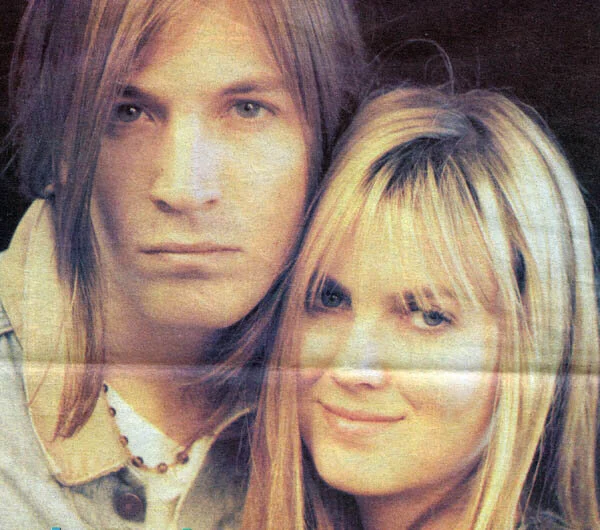
HONEYMOON PERIODS destroy every other relationship, so much so that if honeymoons lasted forever the world would not last. Evan Dando’s plea to Juliana Hatfield in The Lemonheads’ Bit part is reasonable for the needs and wants of two realists, two musicians, two artists. Anything more than a “bit part” will need “reprimanding” as the last lyric promises. See, a “bit part” is all we are willing or can afford to give to the Other as artists. Anything more than less is too much. Indeed the percentages are a little bleak when it comes to self-obsessives. Obsession is good for the artist, necessary even. Obsession is something “you cannot will” according to artist John Baldessari, the same way free association in psychoanalytic practice cannot be willed. In other words, if you are not afflicted by obsession, by the ‘big part’, then you might as well give up on being an artist. Without obsession art is a hobby, a break from the day job, the kids, a marriage. It is not a commitment. Being an artist is about keeping the honeymoon period going and the marriage (and children) at bay, even though the sun has gone down, the croissants are hard, the coffee cold and the shower too hot. (We all end up being married in the end, to ourselves if not someone else.) If you cannot “will” obsession then it’s something you were born with or something you are running from. Either way obsession separates those that do and those that don’t do. Perennial honeymooners (real artists) don’t ‘think’ about doing like Eva Hesse is accused of by her close friend Sol Lewitt, honeymooners “DO!” as a recourse to thinking too much and not doing enough. The difference between honeymooners and hanger-ons is the former keeps turning the soil of their art while the latter hopes the one crop of work will never need harvesting. Evan Dando’s lyrics are realistic enough to proffer nothing more than a “bit part”—to save himself from himself and a “walk-on would be fine”. There’s something desperate and selfish about his plea, whether as bait to achieve a bigger part later, or the limits of his devotion. Our devotion to ourselves through our art as artists makes us casually devoted to everything outside ourselves and our art. But what happens when devotion for something outside ourselves and our art becomes the ‘big part’?

Juliana-Hatfield-and-Evan-Dando-of-The-Lemonheads-juliana-hatfield-26721312-510-672.jpg

Psychoanalyst and essayist Adam Phillips wrote in the Penguin Freud Reader that his relationship to psychoanalysis is one of “casual devotion”, and that anything more would mean being part of the “cult”, adding that psychoanalysis, and by implication, any relationship, is best when it conspires with something else, in his and psychoanalysis’ case, with literature. Art critic Melanie Gilligan said something similar in relation to a split in devotion at a conference on art criticism, where she advised or advocated having one foot out of the artworld is a necessity, one of critical fortitude and survival—Gilligan’s other foot is planted firmly in finance theory, which makes perfect sense when you think of what a powerful hold the art market has on the hydraulics and mentality of the artworld. Texte Zur Kunst founder Isabelle Graw in an interview for Spike Magazine devoted to the secret subject of “Kids in the Art World”—the said title intimating the artworld and lifeworld are separate—shared her personal split in devotion to art after becoming a “so-called older mother” in 2006, “I had, after all, devoted myself passionately to writing or, more precisely, to theorising about artistic practices and I subordinated everything to this primacy. One consequence of this focus on work was that my social relationships were largely instrumental: I would scarcely have concerned myself with anyone who didn’t interest me in relation to my work.” Graw’s example interests me most here as a fellow parent and art critic who found my full devotion to art split in 2012 when my wife and I decided to have children, and I decided that my art practice would not survive the financial or emotional demands of being a new parent, but somehow writing on art would be more mobile and conspiratorial with parenthood. Looking back it seems like a cynical, almost nihilistic move on the part of an artist who achieved high visibility and worked hard and unapologetically towards that end for five years rolling, following an MFA in the midst of the financial crash. Strangely, it was a move and decision made with optimism and retrospectively, no regrets. I knew the artworld that I had come to know intimately would not accommodate parenthood. Donald Winnicott and his ‘good enough mother’ comes to mind when I think of how, not just the mother, but also the father adapts to parenthood, especially the first five years, when the parents’ relationship with the world as they once knew it and existed in, free and wheeling, becomes “good enough”, becomes a “bit part” relative to the “big part” of parenthood. The paradox of choosing to have children is you don’t know what it is like to have children until you have children. And being a parent or not is not a case of being selfish or selfless; parents and non-parents are greedy in their own ways. Christopher Hitchens in a late interview at the time he knew he was dying from oesophageal cancer said his life and writing would be quite arbitrary if it wasn’t marked by having children, even though in the next breath he admitted that his children were only a bit part of his life, especially in the infant years when he stood back and marvelled at the natural capacities of their mother to “know what to do”.

evanjul.jpg

Being a parent is essentially a breakup with the world. The Lemonheads’ songs always feel like breakup songs. Like: “I still care about you,” s/he said, before the break up in a universal heartbreaking moment when love is demoted to “care”. To “care for” someone in other moments of life, life being momentous not monstrous, such as to care for someone who’s ill, or dying, means giving yourself over, offering yourself to someone who is in need, for a moment in time at least. And yet moments can become monstrous, changing us on a molecular level, forevermore. Thing is, breaking up with someone is a case of inflicting injury upon them, inflicting trauma even, so “care” is the appropriate word after wounding them in the most cruel of ways by revoking your once-upon-a-time love: the end of the fairytale as it were. I broke up with art some eight years ago. Not art per se, which I still love and also ‘care for’ through writing; I broke up with my artist-identity which I loved and cared for since the age of ten when my 4th class teacher said there was an artist in me after I painted some landscape one early afternoon amidst freewheeling childhood and Autumn chestnut fights and noticed love and regret in his eyes. Twenty years later I became an artist with two feet in the game attaining visibility and agency. I attended everything and anything of relevance to art. My appetite for art was always satisfied. I was never hungry for more, maybe less, much less. My appetite for production was informed by the privilege of procrastination and boredom. I was always at a loose end. We decide to have kids. I tentatively shared the news with close artist-friends knowing what the response would be, from concerned “What about your art?” to cynical “See you in twenty years?—maybe not!” Neither response bothered me. My bags were already packed. I knew that being the artist I once was needed my full commitment and attention; anything less was less. I was a parachuted dreamer leaping into a new life for everyone involved. Eight years on from the birth of my son and daughter I raise my head above the trench of parenthood to see the field is furrowed all the way to the horizon, although the trench is not as deep. This is parenthood: it’s phasic, it’s chronic, both wonderful and worrying. Since their birth I have been greatly affected by moments in film and literature that portray the so-called successful visual artist or writer as detached parent, especially the mother. For example, you have the young Susan Sontag leaving her seven-year-old son to head to Oxford for a residency after a period of “domestic imprisonment” and “intellectual stultification”, and then to Paris to write, to love and appear in a French New Wave film, detached, smiling and self-conscious. Parent to parent, it’s the “self” in “self-conscious” that jumps off the screen when I look at Sontag. The self is something pissed and soiled upon when you become a parent: “an object which is violently cast out of the cultural world, having once been a subject” (Julia Kristeva). Early parenthood is a stew of emotions where language is heated in a slow cooker so the stink mists you day and night, bathroom to bedroom, memory to dream, in abject wet and want, in a home turned womb, hot with anxiety and love where windows are blinded day and night and day. There is no time or energy for the self as you once knew it so intimately, so all-consuming. You and not you, the infant self is so big and narcissistic and compelling and monstrous that it strangles the Other. In one sense it is you, or the memory of you and the environments and contexts that swallowed you and embraced you as a child, as an adult, as a dream; in another sense, it is pure, unadulterated self, id., turning inward, overlapping itself, folding, inging, a baroque incestuasness that finds warmth in its own florid embrace and fold. This what confronts you as a parent, a self more committed to itself than you were to you. And this is just a father talking from the outside of the maternal embrace. Fathers are mere voyeurs of pregnancy behind an ajar door that partly obscures the abject embrace of mother and child. A father’s view is a warped iPhone view, a scrunched parallelogram of blind spots and black spots, granting the emotional and perceptual objectivity to describe it in language that still manages to fail at every milky fold of its realness. Language is never so-called real here; it’s colourless and flat and late to the real that it decides to decode and attend to, grafting itself on to the real like a slippery Band-Aid hiding and mending the wounds that squirt and ooze stuff that words cannot stick to. Language is shit here, this “thoroughfare where ‘nature’ confronts ‘culture’” (Giovanni Bellini). As a stay-at-home father my language changed in this environment where relationships swim together in air that breathes and touches and cries and weeps and ejects. How could an artist survive in this abject sweat, man or woman? You have heard parents talk about tiredness, victims of this unhappy animal that weeps and screams from every orifice, day and night, without respite. But proclamations of tiredness is just language failing again. It’s not tiredness; it’s how day and night, dream and reality, past and present, time and space and memory become the same. The child’s abject gravity face plants you in this environment, bruised cheek to slobbering jowl, where the walls of privacy dissolve and skin grafts to skin, forgotten memories forming new memories and vice versa. The world becomes fragmented and you start to notice sinewy tendons holding the everyday together. The round world becomes flat again, made primal and mythological by a prelinguistic child that shifts the perspective from distance to detail. The infant forces this new way of seeing, feeling, that is both horrifying and pleasurable, maybe close to what Lacan described as “jouissance”. It’s the turning inward, due to an inflated need for privacy because you and it are vulnerable, at your most vulnerable, ever—‘vulnerability’ was just a theory, a word before, before you entered this lair. You are not the same, you are not doing the choosing, this wordless animal the navigator. This is an environment where words are not enough, where words fail dramatically, as we try to inflict words, graft words, onto this animal that twists and turns on its own volition and violence. We never bond with the things and institutions of self in the world but, if lucky, we bond with ourselves and those we make abject contact with in the world. The bond is terrifying, however, because when the bond is forming the sutures hurt and when the bond loosens it hurts even more. The push and pull, closeness and distance of familial life and relationships perennially flirt with pain and pleasure at the threshold of being. You give yourself to your child. Skin to skin is the first procedure; it physically wrenches you out of a world where bonds are not biological but instrumental, their strength constructed in memory and routine, self-preservation of mind and matter being the motivation. Being at a loose end is not freedom to do anything; it’s the unravelling of a system that you have constructed over time to stave off nature. Nature is chaos; the artworld is the nursery. 

tumblr_m6ut6pgbm51qd418mo1_500.png

Spike Magazine’s artworld parent interviewees for their “Kids in the Art World” feature were, unsurprisingly, already high profile artists when they fell pregnant, so reflections on a loss of productivity and social mobility—as a productive and creative means to work and success—are the main neoliberal grievances. Art and life (without kids) according to their rare experiences and privileged positions, are interlinked socially and professionally, so that a real fear of disappearing and losing agency is felt by artists who fell pregnant. Isabelle Graw is the most articulate and at her most open, sharing “That this sort of life dedicated to the requirements of work came at the cost of other needs, such as emotional attention or human sympathy. Initially, the idea of becoming a mother, and consequently no longer being able to operate in the very front ranks, was certainly frightening. When you have a child, you can no longer participate in all the events, which reduces your presence and visibility.” Graw’s gain in “emotional attention and human sympathy” is singed by the loss of instrumental sociability, that place where care and truth is replaced by agendas towards greater agency and fluidity within the extremely conservative and formal parameters of the artworld. Sometimes I think the artworld that we are breeding is not the right world; that the artworld, a world that we didn’t name ‘artworld’ when we first tripped on the dream of becoming artists, is so distant a memory as artists become more entrenched in the way things are that we have forgot the dream; the dream being, art and life—not art and professionalism—actually need each other; that oxymoronic terms like ‘social practice’ did not have to exist out of a polluted outlook to re-territorize art away from the big bad artworld, but in doing so making art and life separate; that art and life was one big part not compromised bit parts. But here we stand, divided, 

rehearsing all the time.  .......

Against Inhibition: Jordan Wolfson

Jordan Wolfson, from the documentary ‘Spit Earth: Who is Jordan Wolfson?’ May 2020

Jordan Wolfson, from the documentary ‘Spit Earth: Who is Jordan Wolfson?’ May 2020

“I don’t know if Jordan [Wolfson] has serenity yet. I would suspect he will never get it. I never got it.

— Erica Jong, 'Spit Earth: Who is Jordan Wolfson?' documentary, 2020
The politics were all wrong, yet no one could look away.
— Frieze editor
Lolita has no morality in tow.
— Vladimir Nabokov
He is a psycho. He is a monster.
— Stefan Kalmár, ICA Director

In his essay ‘Against Inhibition’, psychoanalyst & writer Adam Phillips illustrates through the liberal arts that Sticks and stones may break your bones but names will never hurt you. Poet Kenneth Koch, as a child, is Phillips' psychoanalytic case study. In one early piece of poetry, Kenneth Koch wrote of the urge to “step on a baby's head because it was so big and round and soft like a balloon, and would go squash under my feet”. His teacher, Katherine Lappa, “who had undergone psychoanalysis... remained unflappable. ‘That's very good,’ she said, ‘that's just what you should be feeling – part of what you are feeling. Keep doing it.’” Adam Phillips is not advocating breaking bones, but he is advocating 'words' (vis-à-vis art) of all shapes & sizes & implication, as long as those words don't emerge from a crawl, straighten, & walk off the page in a Darwinian evolutionary sequence & inflict physical pain & hurt in the real world. The use of a young Kenneth Koch, a poet of later exuberance & joy, is interesting, because to “step on a baby's head” infers what I call the ‘dark register’ of art. However, the metaphor of the “balloon” brings a lightness to the image, something that Kenneth Koch alongside the New York School's Frank O'Hara & John Ashbery became known for in their poetry. So it all worked out for Kenneth Koch – he was given enough rope to expel or express his desires by a freeing teacher & didn't end up using the rope on himself or on other people. 

Jordan Wolfson; the past.

Jordan Wolfson; the past.

Over here, in Ireland, for the last decade, it has been in art schools in the form of undergraduate end-of-year exhibitions where I have witnessed art that is less inhibited than in the parent art scene. This trend, of course, is rare: the student-artist, disinhibited, naive, playing with object-subject relationships without shame or defence but an efflorescent sophistication, in the face of artist-lecturers that are setting the rules, handed down by the experience of exhibiting in the art scene proper. Jordan Wolfson, the subject & fillip for this essay, is an example of a disinhibited artist (roleplaying or not?) transitioning from art school into the artworld proper, emerging first with a conservative art practice, albeit selected for the Whitney Biennial in his early 20s, & then transforming into the controversial artist he is today. Painter David Salle says, in defence of the American artist & so-called “enfant terrible”: “I feel someone going direct, taking the germ of an idea and running with it in an uncensored way that might only be available to an artist in their youth, where self-criticality hasn’t kicked in.” 

Jeff Koons.

Jeff Koons.

Jordan Wolfson is the twisted offspring of arcane Bruce Nauman & populist Jeff Koons. We are told he “adores” Koons. What better artist to adore and introject (the unconscious adoption of the ideas or attitudes of others) than the most hated artist? The stage of antagonism is set! The Plastic is married with flesh, pop culture with psychological horse- and word-play. Putting Jeff Koons aside for now (an integral influence on Jordan Wolfson), my wife said it best regarding Bruce Nauman in a diner two minutes from MoMA PS1 New York, where, just after experiencing the Bruce Nauman Retrospective of 2018, she pointed out how many rapist vans were lurking around Queens – no doubt a physical & mental association to the Nauman experience she just had, & said, “I need to wash my brain.” 

Bruce Nauman.

Bruce Nauman.

While Bruce Nauman's legacy is untaintable in the eyes of art institutions & artists, Jordan Wolfson's art is all about the ‘taint’. Between personality & artworld at large, Jordan Wolfson has real issues. These issues are made manifest in his strange & disinhibited virtual, video, photographic & animatronic works, that hold eye contact with you, recite poetry to you, confess the artist's most intimate & violent thoughts to you, dance for you, baseball-bat pummel some white guy in front of you for you, drink piss for you, confront race for you, wear anti-semitism for you, perform privilege for you, display misogyny for you, adore homosexuality for you, hump everything for you, share a naked ex-girlfriend pic in an art fair where the ex & new beau will see it for you. (Well, these are the counts Jordan Wolfson has been accused of – his only defence, plausible deniability, held under the gaze & smirk of a sociopath.) Jordan Wolfson does this all for you because he wants to show you what “freedom” & “fear” look like in an artworld that he calls “conservative” & “policed” in the 2020 documentary ‘Spit Earth: Who is Jordan Wolfson?’ He’s right.

Jordan Wolfson, from the documentary ‘Spit Earth: Who is Jordan Wolfson?’ May 2020

Jordan Wolfson, from the documentary ‘Spit Earth: Who is Jordan Wolfson?’ May 2020

To sum up, poetic, artistic, philosophical, scientific, or political progress results from the accidental coincidence of a private obsession with a public need.
—  Richard Rorty, Contingency, irony and solidarity


Once an art school lecturer said to me, “It was lucky Gregor Schneider found art” & dropped the mic. In the 1980s Gregor Schneider built a suffocating & psychologically rooted warren within his family home, where he hoofed, crawled & breathed into the camera that recorded the episode for the artworld to fawn over for the next decade – he was awarded the Golden Lion at the Venice Biennale in 2001. Jordan Wolfson is in the same category of artist as Gregor Schneider, digging up his ‘house’ & head afflicted by private not-yet-worked-through desires. That's all fine in the privacy of your home or head, but the artist is not satisfied with just an internal dialogue with himself in the family basement; the artist has to show it to the world, an artworld that facilitates the artist's want for public empathy & affirmation in the aftermath of such outpouring of deep-seated desires, desires which are not set, but ever exploratory & evolving & ultimately dangerous. Jordan Wolfson is trying to find himself, his sexuality, his... something, through art-making, which makes his art alive with presence. His work is the definition of the fetish in its magical, commodity & sexually driven replacements & displacements. His vocal & bodily impressions of Jeff Koons is a substitute for the unbearable prison of the nagging self. It’s always easier to be someone else.

JW8.jpg

Some people might think the issue is, he has issues, like Hans Belmer, Gregor Schneider, Edvard Munch (who whipped his paintings but not found on the popular art history curriculum), Forrest Bess, Robert Gober, Mike Kelley, Paul McCarthy, Louise Bourgeois & others before him, artists who look deep inside themselves while exploding outwards in failed self-containment. You might be surprised that contemporary art prankster par excellence, Maurizio Catellan, gives the most sensitive & introspective definition of the artist in this psychological vein: “I don't know what art does for people who look at it, but is saves people that make it.” All artists want to be saved; Jordan Wolfson is no different. “‘He always says he was my rescue dog... He did seem very puppyish. He wanted to find a home.’” (Sadie Coles, London dealer) Jordan Wolfson refers to Sadie Coles & his New York dealer, David Zwirner, as “Mum” & “Dad”. Artists like Maurizio Catellan disguise themselves better in their work. They do their best to mask themselves while hoping to unmask their inbred desires & ambitions. Biography or any connection with the artist's state of mind are set aside, erased, so the artwork is autonomous & untethered to the artist, existing by itself, orphaned, while the artist hangs back in the aisle & does her nails, so viewer & collector & passerby can vomit up their own autobiography & fantasies & anxieties before the work. The artist is clean, the viewer is dirty; the artist supplies the desire & the dirt, the viewer laps it up. Jordan Wolfson's hands & voice are dirty with the effort of digging & rummaging around in the back of his brain, the lizard brain, with its tongue licking the centres of instinct & intuition rather than political correctness & self-censorship. 

JW6.jpg

That voice & those dirty hands smear his seminal work of 2014, Female Figure. A life-sized animatronic barbie doll gyrates in front of a mirror to a pop song. The pop song is not slowed down or sped up or altered in any way that might make its mainstream provenance more palatable for the artist & art audience, an audience who cannot bear the mainstream leaking into the artworld undigested by the intestinal enzymes that make art into art. Jordan Wolfson's Female Figure dances to a pop song. She is dressed in cliche. She wears a white négligée & stripper moves. Her eyes arrest through an oily green Venetian mask. She is sexualised but negating sex. She is a spoiled heterosexual fantasy, the moment when wet dream turns nasty, Dorothy becomes the Witch, and yet you cannot look away. Jordan Wolfson's desires are not cloud borne but earth borne. The eyes “ground you”: she watches herself dance; she watches you watching her dance; the other three people allowed in the gallery at one time watch her watching you watching her dance. It's an orgy of eyes with Jordan Wolfson as the mumblecore director speaking & spitting desire, sweet & sour. He is giving you what you want & don't want at the same time, positive negation. Kenny Schachter says in the documentary that the 1980s was the “me me me” era & Female Figure is of the #metoo generation. For me, Female Figure is only partly externally motivated by the social foment that proliferates under protest hashtags. Writer Erica Jong, whom Jordan Wolfson's mother's brother is married to, is the most insightful & open contributor in the documentary (although infantalising the artist as a little boy merely playing with himself): “People who are not uncomfortable in their skin do not become artists – Can I say that? – I mean Jordan had to find a way of being comfortable in his skin, which he wasn't. And that is a strong drive.” However, the post-critical world of ‘cancel culture’ & moral sensitivity is a trigger for these internal drives. In one arresting moment in the documentary, Jordan Wolfson embodies his fist without doll or ventriloquism, rotating it while projecting the different censors that represent the subjects that the conservative & policed artworld tell him not to touch as a white privileged male, such as race, anti-semitism & so on. “Sensitivity is his material” says Sadie Coles. Artnet described the documentary as a “psychological portrait”, but Jordan Wolfson's work is the portrait, down to the very flesh & bone & marrow & mind of Jordan Wolfson. Where does the artist end & the art begin? is the wrong question. 

Erica Jong, from the documentary ‘Spit Earth: Who is Jordan Wolfson?’ May 2020

Erica Jong, from the documentary ‘Spit Earth: Who is Jordan Wolfson?’ May 2020

Artists, of all people, are not inhibited. The professional artworld in which artists navigate & negotiate the terms of their art, awaiting acceptance or to be saved, is. Artists who are interested in free will & the dark register, which doesn't mean stepping on a baby's heads, need permission to explore the depths so they might manifest lighter & more brilliant in the light of the gallery. Art is not a consolation for the suffering in the world; or worse again, a distraction from the lifeworld's ills. “I’m not here to heal the world,” Jordan Wolfson said, “I’m an artist. My job is to see the world….I am affected by the same things you are affected by.”

Jordan Wolfson, ‘Real Violence’.

Jordan Wolfson, ‘Real Violence’.

Morality has to do with relieving suffering. The aesthetic has to do with knowing what you do when the demand to relieve suffering lets up for a while.
— Richard Rorty, Contingency, irony and solidarity

In Richard Rorty's estimation, morality & the aesthetic are separate. The aesthetic that Rorty values is one of bliss. For example, Vladimir Nabokov's Lolita, where the subject of morality plays out in the denaturing of innocence in a little girl, offset by the best & most beautiful language language can be. Vladimir Nabokov's language, his beautiful art, relieves the suffering of the subject in the book, but is not consolation for the real-life little girls groomed & hunted by monsters. In aesthetic terms, Jordan Wolfson's work doesn't relive anything, but compounds the question of morality. There is no aesthetic conceit or veil to lure the observer in, no art for art's sake – slap, bang, wallop & it's done. The moral-aesthetic distinction is entangled; cruelty & contradiction shift gears in violent outbursts that have a childlike agility in terms of mood & its swing. Jordan Wolfson turns you on & off at the turn of a switch. “Ha” is followed by “Eww”. You are not allowed the time for relief or pleasure, Friends Artists Racists (an artwork that displays a fluttering fanfare of racially sensitive images, including & making complicit artists, friends & peers as conditioned conspirators in the array) come without commas. 

Jordan Wolfson, ‘Coloured Sculpture’.

Jordan Wolfson, ‘Coloured Sculpture’.

To ‘disavow’ in psychoanalytic jargon, is to witness something new & different & potentially traumatic, & continue on with those suppressed images & feelings in a repressed mode of living, which manifest in manifold violent & creative ways in a substitutional system that includes the fetish. Artists have the luxury (or need) of letting it all go, or letting it all rip. Jordan Wolfson's aesthetic tirades in the gallery setting is more on the side of an aesthete's private perfectionism (his works take years to extract from his head) than a moral crusade against the ‘police’ for freedom of speech & expression in the artworld. The police is his therapist. There is a strong sense that Jordan Wolfson has to get these images out of his head, perfect the dance & stage-setting, achieve momentary satisfaction, until the next bad-tooth extraction. Vladamir Nabokov uses the metaphor of bad teeth in the mouths of his monsters to bring you deep into their decay. It's a good ploy for good plot. Jordan Wolfson's voice, inside & outside his work, is from the same mouth. There is no real censorship. Most artists hold something back for themselves. Jordan Wolfson is his work; his work, him. How many times have you said that about an artist in a lifetime? 

WHEN GENIEVE FIGGIS WENT AWOL TO DISCOVER ÉMILE ZOLA'S MILK & MARZIPAN


Logo Design by FlamingText.com
 

EDITIONS

 
GENIEVE FIGGIS, MFA SHOW, NCAD, 2012.

GENIEVE FIGGIS, MFA SHOW, NCAD, 2012.

To the Reader.

Re: ‘Desire: A Revision from the 20th Century to the Digital Age', Irish Museum of Modern Art (IMMA), September 2019 through March 2020.

*As local newspaper reviews focused on the unattainable & evasive "big other" of desire (referencing the go-to guys of desire from Freud to acolyte Lacan), I felt justified & free to write on the most desired Irish artist among this 100 artworks mirrorball extravaganza, who, up to then, hadn’t exhibited in Ireland for over 5 years, & where speculation was ripe concerning the trajectory of her career & what it's like to experience her paintings in the flesh. Enter Genieve Figgis💎

Genieve Figgis.JPG
The goddess, drowned in a sea of milk, resembles a delicious courtesan, but not of flesh and blood – that would be indecent – but made of a sort of pink and white marzipan
— Émile Zola quoted in the Musée d’Orsay, Paris

HERE, THE ART MARKET, IS ALWAYS ELSEWHERE. Irish audiences are beginning to catch up with the Genieve Figgis fairytale narrative & the 'gravity' of her painting style, which has developed significantly in terms of consistency of surface & texture since her MFA show at the National College of Art & Design Dublin in 2012, when oil paint sank, appropriately bone-dry, into toothy canvases of her now online-familiar skeletal gentry. For the first time in 5 years, Genieve's paintings were experienced in person in Ireland at IMMA in late 2019 through early 2020 (cut a week short by the COVID-19 crisis) within a packed group show under the title & theme of "Desire". Her paintings were found towards the conclusion of what was an excessive & spangly group show – "Desire" being an easy excuse & reason for the excess & spangle. Therein, within this density of desire, Genieve's paintings came fully dressed in nineteenth-century décolletage, marked by the overwhelming presence of a four-poster bed &, a shade more coyly, peekaboo'd naughtiness from an alcove-situated display case. 

Portrait of a Lady.jpeg

First, however, let's get this out of the way.

In 2013 I wrote the following: ... it is the artists that get swallowed up by the ‘Gasgosians’ and ‘Zwirners’ of this world that become invisible, appearing now and then at secondhand bookshops in inflated monographs; or if you regular the private domestic basement galleries of the wealthy where the artists are placed in pull-out shelves. Ok, we all have to make some bread and butter, but is this the destiny that the next generation of Irish artists should aspire to? I arrived at this conclusion in a review of Genieve's solo show at the artist-run Talbot Gallery & Studios Dublin in the Summer of 2013; a review staged against a newspaper article written by art critic Cristín Leach in the UK Sunday Times, that hinged painting (& the seeds of Genieve's efflorescence) upon the swinging saloon doors of art market push & push. As the above infers, I didn't value this implication or aspiration for the artist. Art, in this small, localised, no-art-market-as-such art scene, is an amateur sport, and to fantasise that it should be more in commercial terms is a fantasy that's no good for the soul of the artist & something very few artists will ever experience anyway.

Pink-Sky-2-1010x1024.jpg

Genieve showed at the Gagosian New York in 2019, one of the biggest gallery chains and historically respected market players in the artworld for the last 40 years. Today she is represented by Almine Rech, with exhibition spaces in Paris, London, Brussels, New York & Shanghai. On the Almine Rech Wikipedia page "Genieve Figgis" is listed first in "Related Articles", indicating a popularity in online search terms above the stable of established & canonical artists Almine Rech represent. Things have played out the way they have regarding Genieve's international visibility & growing blue-chip reputation far from the publicly funded art scene here in Ireland. Although it's been over 5 years since her work has been experienced in public on these shores, this does not mean there was no institutional support over here during that period; more like there wasn't a meeting of minds in terms of the disparity between a growing reputation internationally, & the slow uptake & appreciation of that fact here. The fact that Genieve's work has not been exhibited here for that period of time, combined with the recent 10-fold art market inflation of her paintings during the course of the IMMA show, makes for good newspaper copy, which continues apace in that distracted vein. But what of the work? Can we separate the fairytale from the paintings? Does blue-chip designation convince? We know what we like & don't like in contemporary art? I like a Christopher Wool text painting as much as the next lover, but my eyes don't clock $30.000.000 when I'm looking at a Christopher Wool text painting.

article_810x.jpg
At the age of 70, I belong to the last generation that could spend time in a museum without ever once thinking about what the art might cost.
— Robert Hughes, The Mona Lisa Curse, Documentary, 2008

It all comes down to what American philosopher Richard Rorty calls “stage-setting”. Rorty is a birdwatcher in his free time. Without what Rorty calls conceptual stage-setting, formed by reading birdwatching books as a child, the sight of a Snowy Owl or Waxwing would never elicit in him what Vladimir Nabokov (author of Lolita plus a butterfly guy) called “aesthetic bliss”. Those in the know, with the benefit of stage-setting, borne out of a curiosity about Genieve's progress in art & the market, visited the Desire show at IMMA when it opened to the public on the last week of September 2019. They wandered the large hall & small rooms of the museum wing to fall upon Genieve's paintings, comfortable in their snug, anachronistic stage-setting, and comfortable in the knowledge the paintings were priced between 10 & 30 grand. Today Genieve's paintings could potentially fetch a quarter of a million. No matter how independent of mind you are, or how good you are at compartmentalising the world due to some long-term sequelae of mind, it is hard to separate art from its stage-setting. Rorty talks about “rarity” as an important factor in stage-setting; the high price of an artwork is another stage. When it comes to art we are influenced by the contexts that shape & stage the work as much as the work itself.

almine-rech-gallery-7questions-with-genieve-figgis-capture-d-ecran-2020-04-13-a-180203png.jpg

Today biography & character profiles colour the chips blue (art market darlings Christopher Wool & Albert Oehelen cases in point). The stage has been set here for Genieve Figgis for the last 5 years, while her work took on a ghostly & enigmatic over-the-shoulder presence in newspaper features dedicated to the artist's biography – early mother/ late artist. Speculation & the drift of snow-globe fantasy has replaced physical evidence in her absence. If you are none the wiser of the contexts that shaped Genieve's career, none of this matters to your reception. You have the privilege or loss of judging the paintings on their own terms, as painted subjects. However, with the foreplay tantric, speculation has been the only release for those who look at art within a continuum. There's been too much talk about everything but the work.

12a.jpg

What was interesting about the context that framed Genieve's work at IMMA, is the scale of desire being outpoured in over 100 artworks did not obstruct my desire to go straight to the source of my personal desire & why I am here: Genieve Figgis. The rest is scenery. So I skip down to where they lay – there was no need to pretend & continue to do the tantric thing. They came upon me, not me on them, abruptly. The paintings in the flesh are nothing like the images of paintings I have come to know on social media for the previous 5 years. Nothing like. I don't know what people are Liking online. Not these. The images here are ghosts; the surfaces corporeal. Once again speculation trumps evidence. People are Liking something else online, imagining something else online, desiring something else online – desire defined as something always & forever out of physical reach. The image of Genieve's paintings has always been put before the real thing, that's how they were discovered by artist Richard Prince (her first & most commited collector), & then assimilated by others, online, as images of real things; that's how I have experienced them for the last 5 years. Before then they were at arm's reach, today they're not. Still we judge Genieve's paintings based on Instagram images rather than the paintings. People have speculated about their physical presence since the beginning because the image that was being presented was immediate & translatable without the real thing in front of us. The narrative was something already inside us.

13a.jpg

These are the meta-narratives of our lives, from fairytale childhood to grave in waiting. How these meta-narratives are represented by Genieve in paint, however, is different. It's not a whimsical or metaphysical portrait of history; the fantasy is decomposing before our eyes, melting away like the documentary evidence of some betrayal in the burning hearth of literature, of history. Who wouldn't want to imagine those who believe status & power is everything under a pillaring X-ray machine smiling back with the dumb rictus of ambition from the implied or real grave. We all die; riches to rags. In front of Genieve's work we are the technicians behind full-body scanners in the airport looking at the history & private lives of the rich & famous carousel by, flayed & fake, catching the artist's reflection in the drunken stream that rounds the mansion. These are the images of other people's lives, lives we can objectify & speculate upon (like Genieve's) without looking at ourselves under the same X-ray machine.

Screenshot_20200501-061711_Instagram.jpg

Online, Genieve's paintings are images of images. They arrest our attention as desired physical objects that we can imagine holding but never afford. In person they are more about paint. How paint, when you mix it, bubbles form deep down in the admixture, and when poured on canvas to set, begin to pop & leave pinprick pockmarks in the pillowy paint, like some studded sofa in one of those grand estates that was borne of colonialism & always out of time but perennially grave-robbed because of the investment we place on the concrete past no matter its provenance.

The provenance of these paintings is flat on the ground, paint poured to pool & flood the edges where stumpy fingers of yellow & mauve & almond overflow. These are paintings that you imagine lying your head on, to dream [the four-poster bed is not needed], invoking what Zola said critically of Cabanel's La Naissance de Vénus [The Birth of Venus] as "The goddess, drowned in a sea of milk, resembles a delicious courtesan, but not of flesh and blood – that would be indecent – but made of a sort of pink and white marzipan". Genieve's work stands between Cabanel & Manet, riffing on Cabanel's creamy & sweet surface while also degenerating it in agate pools that vibrate outward into the present, like Manet did through Olympia's unveiled & unrivalled gaze in 1863. Coinciding with the Desire show at IMMA, the brilliant Derek Jarman was being promoted as the British Andy Warhol. If anything, Genieve is filling those wigs (redacting the "British" of course) in the immediacy & overwhelming consistency of her gaze & the gaze of her work. Like Warhol, Genieve does one thing well. 8 years ago or more she discovered her subject. Since then she has been accumulating processes to express that subject in paint. This is not a soul-beating or breakdancing process, it's cumulative, towards some refined end that beats Zola with his own marzipan. The time for tiptoeing around Genieve Figgis has ended. Lismore Castle Arts and Venice are the obvious nexts here. The stage is set■


*Read 2013 review of Genieve Figgis at Talbot Gallery & Studios here 


Madder Lake Editions

TOWARDS SCULPTURE

IMG_20200313_103745_646.jpg

IT’S 2018. I'm a final year MFA student at NCAD. We are huddled in a dark seminar room awaiting a presentation on "Sculpture" from the then inspirational head of sculpture, Philip Napier, who is fresh back from the 5th Berlin Biennale entitled 'When things cast no shadow.’ Memory serves as the moment is strangely vivid, considering the context of the dark seminar room, my naivete in terms of a personal definition of sculpture, and the focus on Aleana Egan's offsite Biennale contribution which, by most reviewers' accounts, was the one work that could easily be missed or forgotten, standing, as it did, grey and bow-legged in the grey German scrub against grey German industry – a Roadside Picnic if you will. I resurrect this not-so-grey memory because the heated debate that took place in that room in NCAD 12 years ago concerned the nature of contemporary Irish sculpture. Contemporary Irish sculpture was being defined (or cemented) in front of students who'd been sheltered in the institute for two years and knew no better. Egan's contribution stirred feelings in that dark room that day. Her sculpture wasn't grounded in what was being posited as contemporary Irish sculpture that day. It was more detached, unearthed, literary, removed from context – "context" being something that seemed so important to the definition of sculpture being delivered to students in NCAD that day. And yet Egan's example was the definition of sculpture I took away that day, because it was ill-defined; it was neither aesthetic nor moral, private nor public, this nor that. It would form a personal appreciation of sculpture from that day onwards that was somehow otherworldly, art that held a mirror to reality without being grounded in the heavy, rhetorical, deliberate, socially engaged purpose of sculptural ambition I came to know at NCAD. The following decade my eyes were open to 'sculpture' that excavated rather than built, staggered rather than postured, multiplied rather than solidified, popped rather than farted from an embalmed husk of the exclusively casted or carved—such as the original Basic Space Dublin exhibition 'Underground' where the very ground of the temporary warehouse space that the collective of individual artists inhabited, was dug up to form unidentified holes and walls and piles of labour in a defused environment made possible by a fog machine; or months later at a Project Arts Centre also doused in fog, where Sam Keogh's styrofoam mountain arrived excavated, generating sculptures in a meta-birthing pool of process and production; or Marcel Vidal's early expanding foam totems of black and organic globular forms upon which pencil and painted portraits perched in a collision between the fetish of representation and colonial Heart of Darkness; or Eoin Mc Hugh's resurrected dream of an animal carcass on unsteady deer legs as if just birthed from a tar pit at Kerlin Gallery; or David Beattie's Cloudmaker comprised of three timber legs ending in a pyramidal point where water dripped from an upturned 5-gallon plastic container to fall to a vaporiser life on an electric hob at Oonagh Young; or Niall de Buitléar's concentric mounds of card that perpetuated a fossilised world through obsessiveness over craft at The LAB; or Caoimhe Kilfeather's mined sculptures of carved and polished coal that generated imitators by the scuttle-load at Mermaid Arts Centre; or Cliodhna Timoney's colourful and upbeat amorphous forms that inferred music without sound at Eight Gallery; or Hanna Fitz's slapstick world of slanted furniture, rainbow bright and wagging beneath drooping ears and quirky sadness at TBG&S; or Teresa Gillespie's intestinal abjection wounded and wound around the dregs of stillborn liveliness and joy at Wexford Arts Centre; or Maria McKinney’s monstrous catch that formed a hanging garden of tumorous stalactites bejeweled with fake nails at Artbox; or Tom Watt, Tanad Williams and Andreas Von Knobloch's concrete stoop with pool and crawl space for the adventurous at Project Art Centre; or Magnhild Opdøl's glutinous pink serving of stacked donut boxes at Butler Gallery; or Ruth E. Lyons' monumental timber structures that directed our eyes through, up, down, within and without the institution; or Brendan Earley's failed Modernism as flatpack furniture at DHG; or Siobhan Hapaska's penitent and willow-ashen monks that kissed and suffocated at the moment of immolation at Kerlin Gallery. Back in 2008 as a painting department student I looked at the sculpture department as being too concerned with the world, especially the lowly socio-economic world close by in the neighbouring Liberties; while the sculpture department looked at the painting department as a complete waste of time. This was no secret; we knew where we both stood, separate: sculpture grounded in the social and political present, while painting continued to embrace the irrational and private aesthetic of the individual. Aleana Egan's work was an antidote to how sculpture was being defined that day in NCAD. Her work bridged the small gap between the departmental land-grabbing in the institution. It didn't intrude on an already crowded world in Peter Schjeldahl's estimation of sculpture. It stood back like a painting, a material Egan would later embrace in her now trademark loopy skins of paint. Painting was my thing. I had no real idea what had happened to sculpture between the Greeks and Modernism, never mind sculpture in Ireland. My watch began after the MFA as an artist and art critic, and my definition of sculpture was cast by Aleana Egan's shadowless signature in the rough, the dark and the spit of argument. The rest is history🖤

Still in Motelville: Jaki Irvine's Ack Ro'

A3 silk-screened zine (front cover)

A3 silk-screened zine (front cover)

PART 1: NUTS AND BOLTS

This is a first time show; a one time show. Those that went to the opening, those that saw it coming together, missed out, forever. If you are an artist or you want to love art outside your own art, outside yourself, never be a technician, administrator, and so on in the gallery setting. The nuts and bolts of art in the gallery ought to stay out of sight and mind for art to be respected, loved or bottom-line experienced. I'm not talking about some fascist purity—the experience of art in the gallery is always impure (whereas the experience of art in the studio is the purist you are going to get). The gallery is purgatory for the artist, where art is held in abeyance before the ups and downs of the public mood.  The experience of art in the gallery has to surmount all unforeseen obstacles before it can be attended to fully. And in this small art scene you are probably going to run into someone you know in the virtual or the real real, if you've been around the block a few times. Either way circumstance is either going to get in the way or enrich your experience of art in the gallery. The variables are tantamount to a tragedy. So when you ask someone "What did you think of Jaki Irvine at Kerlin Gallery Dublin?" what you are really asking is "Did everything fall into place the day of your visit?" "Did you bring your best game?" "Did you leave your shit outside the door?" "Did you fuck it up in some way that was not in the artist's or artworks' favour?" Or was the stage-setting perfect and the art just didn't work out or live up to its promise? This can happen. The promise of art usually ends up a lie. Timing and other stuff got the artist here and timing and other stuff will determine the experience of her art here. What I am saying is, for art to have a chance of changing you chemically, and it has that power, the dumb intuitive process of putting art on a wall or floor cannot be your preview, neither imagined nor thought about at all. Those whom I now casually refer to as the art administration, because they make up the most part of the visible art scene, sacrifice their experiences of art in their places of work. (They go elsewhere for the high.) To see art rolled out before you without the scaffold and masking tape and paint caught in the wind-wipers is art's best chance of remaining enigmatic and equal if not stronger than its observer. This is especially true of Jaki Irvine's current immersive exhibition at Kerlin Gallery who, it must be known by the reader, was in the gallery with a group of friends when I topped the stairs after slipping past the ajar office on the first floor to find myself bathed in pulsing light and reckless sound as if sealed in the clam of a sun bed with headphones on. I didn't blush—it was the light. I don't know Jaki personally or her me, which was best for the art in this instance, as anything more would have meant fawning social protocol where the unsaid is smothered in hugs and kisses and cliched gulps of enthusiasm. Especially with this work that dispenses the art gallery ethic of distance, silence and pause for a more head-back convertible joyride, where body not just eyes become the receptors of the gravity of art experience.

A3 silk-screened zine (back cover)

A3 silk-screened zine (back cover)

PART 2: SPLINTERVILLE

Sometimes I come out of an exhibition and feel like I have taken something significant, changing my chemistry. My jaw replaces my skullcap, my teeth gnaw on my brain, speaking memory, feeling, sensation. It all happens in one instant. I am coming down now as I write this two days later. The big stairway entrance into the mothership of motherships flooded in pink twilight and chattering rhapsody before, as mentioned in passing earlier, I rounded the corner. That jab of light and sound and I was already goofing off on the stairs. Then the clarity issued from the screens, too many screens, too much neon text, too much colour… the way you see things more clearly underwater, colour saturated, edges smudged with a kind of saturation of colour that isn’t found in reality, maybe painting, or at animal level when the sun comes crashing down and the light flares between trees and midges in an extinction burst before everything settles into itself, the cymbals of nature subside….. Still rounding the corner where the pink twilight— delight or warning—dissolves the first-floor office behind where business-as-usual machinations are speculated upon, above Jaki Irvine is in the gallery with friends enjoying each other in the mist of her art. NOT IN MOTELVILLE ANYMORE evocation splinters into the memory of experiencing Jaki Irvine give a visiting lecturer at IADT almost 20 years ago when I was an art student there. The portrait she left of the artist was one without ego, someone who looks at the world in a very different way and then redescribes it in a very different way. My goal from that day onwards was to look at the world awry, astray, so as to distill something that might command attention without demanding attention. TO SEE AROUND CORNERS. This is not fight or flight. This is not propaganda. This is flirt or flit with the world to reveal its essences, the parts of the sum; a democratisation of the moral and the aesthetic. Back then I was mesmerised by Jaki Irvine's work and her way of whispering the essence of her ongoing project, a project at once poetic and vital and somehow foreign; wherein we travel to far flung spaces through the light or sound thrown from the languid confinement of her films, a sound, a chorus, a repetition, an absurdity. Art was presented that day untethered, floating, but interconnected with the world through an animal sense, like a dog whistle emanating strings that fan out into a vibrating galaxy. Jaki Irvine isn’t demanding too much of your attention here. The films are narrative blinks, documenting fleeting moments, flirting with the world, a missed wink, nod, flit, social advance. Nothing much happens within everything happening at once. It's the present tense. The first-person narrator. “God”: a three letter word can be awesome. A sense of brevity, although a composition that is full, whole, colour, sound, language. Language is being critiqued here, broken up, from silly to sublime—the Neil Diamond song "Cracklin' Rosie". These are just words, broken words, maybe broken-hearted words, always lacking in their abbreviation of the world, what Derrida saw so clearly. A word is always an abbreviation in terms of the world. A lone neon apostrophe substituting g in "Cracklin’ seems to almost float away in this submerged environment where anything not fully tethered to its cursive union would be lost to the cruel world outside. 

Motelville 4.jpg

PART 3: WORD SOUP = WOOD SPUR 

There's something about ENTERTAINMENT that Jaki Irvine's exhibition asks us to consider (or reconsider). We should be weary of exhibitions that are entertaining, that lay all the guns out on the motel mattress where all the excess of love and lust stains the stripped-back bed sheets, where the sticky-out springs and the rusted coin dispenser hungers for good vibrations, where neon smears everything. All those guns, from chrome romancers to dusky pragmatists, laid out like pick 'n' mix. All or nothing the excessive says loudly. We have artists that are ‘excessives’ and artists that curtsy in gallery. The excessives, the only ones we need to address here, we dutifully describe as ‘generous’. We have a few, like Alan Butler, Nevan Lahart, Alan Phelan and today, Jaki Irvine. STILL IN MOTELVILLE: excessives are first-person shooters in the zombie apocalypse; the diaristic PI with the tormented soliloquy piecing together the man while he pieces together the crime; the good vigilante; the desirous artist. These evocations all come in a flash after topping the stairs of the Kerlin Gallery to be met by the work up close and all around with the artist in the far distance with friends. I really don't know if we experience art in the present. Perhaps it's all evocation. Poetry is evocation. It's evocative of so much here, so much memory, generous in the sense that Jaki Irvine doesn't prescribe a narrative, mostly. Images jitter with evocation, with a mannequin's hand extended without lines or hardship or voodoo readings inscribed, just smooth, gliding through the air with good vibrations. Evocation especially when I write inside the memory of experiencing Jaki Irvine's work again and again and again at Kerlin Gallery and elsewhere days and nights after experiencing the work in person. It's all enmeshed. Still in MOTELVILLE: smeared in a pink glow from the 1970s neon motel sign hung outside with rusted orange brackets complementing the brown curtains and yellowed lace that belly dance in the window on some foreign when? and where? the artist sits on a bed surrounded by scissoring notebooks with bedspring handwriting spelling out "Cracklin' Rosie" over and over and over again in some effort to remember an experience through a lyric that once was tethered to an experience but now needs to be willed back into the present, a present without its own song. "Cracklin' Rosie" "Cracklin' Rosie" "Cracklin' Rosie". Of course this is not the Jaki Irvine exhibition at Kerlin Gallery Dublin. This is an evocation, just most of us don't spell evocations out.

Motelville 3.jpg

PART 4: COLLATERAL DAMAGE 

Jaki Irvine has removed all the adjectives from MOTELVILLE: the brown furniture, the dirty bed sheets, the yeasted carpet, the crazy wallpaper, the sad adultery. What is left is a nebulous equation that adds up without proof because nothing speaks in full sentences. We have some views, signposts to Alzheimer’s that manifest in the breaks and shuffling of language, over and over again—repetition being a way to remember or memorialise. We are also proffered on one of the smaller screens a stack of purple coffins beyond an orange bird feeder, alien complementaries—sweet, exotic, tropical—feeding the dream state of this exhibition. In a way the coffins give too much away. This image has a story, an implication, it haunts, it's kitsch, like my motel analogy. Aside from this we have nature, birds flying here and there, a skittish view of the world at arms length. This is bliss; ecstasy at the end of something. It makes you smile. It makes you sad. It's a distillation of one lyric and one view into more lyrics and more views. Wringing out the tears. There is a sadness here that you want to wallow in, a yearning lyric that brings all the fractured text and images towards completion, but never complete, always incomplete. This video installation with its neon, wired, vocal doodles is contained like one body of water within an aquarium. The word “Alzheimer's" in the press release breaks the reverie with its nods to a loss of time and mind. Jaki Irvine must understand the gravity of this pronunciation in a press release—neon turns to noir in its dark light. The lazy will use it as moral justification, a hook to sentimentalise the aesthetic, and assume there is personal justification for it to appear here in text. Nothing is said about the obvious terribleness of the disease and its "collateral damage"—a phrase today that is equated with war and the violent rape of innocence. Further, this work might serve as a “respite” or “mourning” of that sense of self. This admission suggests that art does not correspond to reality, the same way language cannot. Art can only pause things so you might be able to redescribe reality in a new way that is comforting. You are not being asked to bare one’s frustrations here, you are being invited into the fray of sensory experience, Sontag style. This exhibition is milky, close, cursive, emanating a glow that wraps around your senses in a pink embrace, a neon noir. An exhibition a long time coming but one that distills time into a moment that you'd like to last. But as said in the beginning, "This is a first time show; a one time show." 

Towards the Art Market: Inigo Philbrick's Rise and Fall

 
Logo Design by FlamingText.com

EDITIONS


Rudolph Stingel, Untitled (Picasso), oil on canvas, 95 x 76 in. (241.3 x 193 cm.), Painted in 2012. Provenance: Gagosian Gallery, New York; V-A-C Foundation, Moscow. Price realised: USD 6,517,500. Christie’s.

Inigo! Inigo! Inigo! Inigo! Each and every morning, the young art dealer would shout at himself at full volume in the shower to fire himself up for the daily dealing tasks at hand.
— New York Magazine, March 16, 2020
[Inigo Philbrick was] The sort of person who fit in seamlessly among the well-educated, well-tailored, well-traveled tribe that populates the art world, even if, unlike so many of them, he didn’t happen to have the inherited funds.
— New York Magazine, March 16, 2020
we don’t have art movements anymore... we have market movements.
— Said by artist Walter Robinson fifteen years ago and quoted in the Times Literary Supplement in March, 2020
The flip is what mattered
— New York Magazine, March 16, 2020
IP1.jpg

THE trigger for this essay was via artist Walter Robinson's Instagram account, whom I've been following with interest, especially for his ubiquity in the physical New York art scene, and generosity in terms of documenting his flânerie with images, critical commentary and art market numbers. His post on March 16 (amidst the growing concern—in Europe anyway—regarding COVID-19) was a repost from the art dealer (among other things that I will soon explore) Kenny Schachter, who had just written an exposé for New York Magazine on the artworld’s art market from an insider's POV entitled ‘The Art World’s Mini-Madoff and Me Boozy nights and high-stakes art trades with Inigo Philbrick.’ The title didn't really interest me due to the sensational, over-caffeinated and over-cooked tone that New York Magazine is famous for, particularly in its poking articles and reviews of the artworld, no better exemplified by its Pulitzer prize-winning senior art critic, Jerry Saltz.

What led me to research further and ultimately read anything connected or associated with the Inigo Philbrick story was Mr. Robinson's comments under his repost, from the trigger “Ha ha really good,” to the release, “I prefer to characterise the art market as a Big Con, as in 'The Sting,' where a lot of small time players conspire to relieve the malevolent rich of a bit of their cash.” (Walter Robinson, Instagram, comment, March 16, 2020). There was also something about the feature image for the article which shows a middle-aged man (Mr. Schachter I'd learn later) with suit, tie and glass of wine, sitting on the arm of a chair in a tousled hotel room under a spray of light, laughing and looking away from the camera. But Mr. Schachter's portrait is beside the point. It is the young man dressed in a tux sitting with legs crossed in the chair proper, as if a throne, under the shoulder of the guffawing Mr. Schachter that lured me in. He looks directly at the camera, through the person behind the camera, through me, through perhaps you. Head tilted and half-smiling, thinking about something else but very present all the same, like he has the ability to be in two places at once. This is a portrait of a ventriloquist and doll. And, as we will see, we are left with the doll to tell the tale. 

Susan Sontag recycled the phrase “trust the tale, not the teller” in her essay 'Against Interpretation'. To recycle the same phrase here gets a little tricky when it comes to Mr. Schachter's 6,000+ words frenzied tale in New York Magazine. The article is both exposé and confessional, implicating a whole cast of art market players and agents (including Mr. Schachter himself) in an artworld of greed hinged on the big gamble that includes Mr. Schachter's family: “I will never forgive myself (or him [Mr. Philbrick]) for permitting one of my sons to join him on an Ibiza jaunt where they had a three-night ecstasy bender. And that wasn’t the only time he fed drugs to my kids, which I found out about only afterward. AT THE SAME TIME [my emphasis], he was very supportive of my making and selling my own art and that of my sons, which likely contributed to my turning a blind eye.” Mr. Schachter's exposé-cum-confessional does one of two things, implicates him and rescues him for coming good when the chips were down. However the chips were crisp coming on burnt before Mr. Schachter came good. An article appeared in ARTnews in December 2019 that “threw him under the bus” for his continued “chummy” support of Mr. Philbrick in his column on Artnet and elsewhere. His motivation to tell-all, and tell-all in this way, does that thing that editors hope an article will do in the mind of the reader, come off balanced. By showing your devil to the world you become the redeemed angel that fell from grace. Some readers of Mr. Schachter's piece will find a balance between man and morality because bigger devils were exposed than him. The American writer David Foster Wallace summed up reader manipulation, especially reportage of this confessional sort, by way of the “asshole problem”, whereby the writer reveals their ignorance and prejudices in a self-effacing way every now and then during the critical reporting to keep the reader on side. However, while David Foster Wallace was doing it for the sake of good sentences, Mr. Schachter's motivations seem less about art and more about something else that includes him, his money, and what he calls his “schtick”.

33b145f26e476608e791a050c088fdd16c-03-13-indigo-lede.rvertical.w570.jpg

The two articles that appeared online and in print in the last two weeks double-up on disclosing the historical circumstances that contributed to the rise and fall of art dealer Mr. Philbrick in the secondary art market, “where recently made art is resold”. Now 32, but involved in the London blue-chip gallery circuit since his mid-twenties after graduating from Goldsmiths, and then interning under Jay Jopling of the White Cube, Mr. Philbrick would go from having a prodigal (not the appropriate word although it has been applied by other journalists) reputation when it came to reselling secondary market artworks, players whom they term in the insider art business as a “specullector”, earned from a talent for reselling and ultimately (when “things started to fall apart”) double dealing artworks fetching the princely sums of 10s of millions by artists such as Mike Kelley, Donald Judd, Yayoi Kusama, Jean-Michel Basquiat, and in particular Rudolf Stenghal (photorealistic work), Wade Guyton (inkjet canvases), and Christopher Wool (text paintings).

Art dealer, artist, curator and critic (in keeping with the polymorphous job description of the restless and indecisive cultural agent), Mr. Schachter's piece on Vulture online and the New York Magazine in print, is one piece you can get your teeth into, shake and throw into the air to catch again with saliva dripping viciously from your rictus. The article confirms  everything you thought the artworld was and more from the voice of an art market agent who is everything you thought and less. It's the “more” of this article that gets you though; a “more” that wouldn't have surfaced only for money was lost, hearts were supposedly broken (in a Tin-Man world) and opportunity knocked: Mr. Schachter, “both compulsively forthcoming and bitter about how things went down with Mr. Philbrick” (NY Times) keeps sharing that he cannot divulge much while divulging that he's going to write a screenplay for a movie, starring, if his description of Mr. Philbrick is anything to go by, “Justin Timberlake” (or a lookalike in keeping with Mr. Schachter's tale of two Mr. Philbrick's).

So, as the ARTnews feature asked: 'Who Is Inigo Philbrick? Meet the Man Behind One of the Biggest Potential Modern Art Scandals' (by Sarah Douglas & Judd Tully, December 3, 2019). 

Mr. Philbrick's “patrician” provenance (think Gore Vidal or William Buckley) goes all the way back to seventeenth-century American founders on his father's side, who over a lifetime has headed up and founded a series of art institutions. Dad was also a graduate of Goldsmiths University of London; his son would follow his footsteps in terms of ambition but not direction—his father wanted to be an artist ARTnews reports, whereas his son wanted to be an “art advisor” from a very young age. On reflection Mr. Schachter diagnoses this as “unusual” for a young man, or jokingly anyone. Divorced from his father, Mr. Philbrick's mother is a Harvard-educated writer and teacher in some school of design in Connecticut, where Mr. Philbrick was born and raised. Like The Talented Mr Ripley, a film title that The New York Times riffs on in their entitled 'The Talented Mr. Philbrick,' there's nothing much in any of the articles about Mr. Philbrick's early life, only that he was exposed to art by his father in a very particular way, in its relationship to money, big money. Mr. Schachter divulges that Mr. Philbrick shared a boyhood story of meeting German artist Jörg Immendorff in a fur coat and wanting to be like him when he grew up. A painter in a fur coat rather than paint-spoilt clothes is a very particular image, and a peculiar one to hold on to. Mr. Schachter goes on to analyse retrospectively, like someone desperate to find meaning and regain a bit of themselves after losing out on a once intimate relationship, that Immendorff is not the best role model for a young man, after been arrested in some hotel room with a bevy of prostitutes and ashtray full with cocaine in 2003. Mr. Philbrick would have been 16 years old at the time. However Mr. Schachter's Immendorff anecdote reads like the grafting of speculative reasoning on wounded pride. 

All three articles recounting the events of Mr. Philbrick's rise and fall in the secondary art market, where “The flip is what mattered”, partly read like court memoranda detailing a Ponzi-like scheme, where you sell one artwork more than once to get the funds to pay for another. It's a different language, the language of the art market, and one that Mr. Philbrick became fluent in from a young age. Mr. Schachter talks about his and Mr. Philbrick's mutual love for art. But this “love” is always equated with money and the life that that money affords, for both of them, and especially the big gamble of speculation. Mr. Philbrick's language became entrenched in art market numbers and the strangely enigmatic signifier of the autonomous art object, primarily just paint on canvas, becoming gold through some alchemical process that included will and the powers of persuasion among the elite class who, in all these tell-tale narratives of the rich and powerful, are always wanting more, what we dismiss as the 'human condition' when more is what you already have. Mr. Philbrick's love for art was its potential for 'more' after the artist had cleaned his hands of it and Mr. Philbrick's was just starting to get his hands dirty. “Mr. Philbrick’s job wasn’t guiding those artists’ careers or debuting their latest works. Instead, he operated as a reseller, becoming one of a select number of dealers whose companies sold art not just to individual collectors, but also to groups of them” (NY Times). In Mr. Philbrick's scheme, individual and group deals became one and the same thing unbeknownst to his clients, with Mr. Philbrick in the middle with a limited share in the holding because he was doing the flipping and side-winding through a web of transactions and lies that ended in dealers fighting with one another. One artwork in particular was Mr. Philbrick's falling grace—and he was 'graceful' in technique if not morally in, admittedly, a game without morals.

From ArtNews.

Mr. Schachter dates the moment that things fell apart for his former friend Mr. Philbrick when he hooked up with a British reality TV star after he abandoned another woman with his child and who, it is speculated by Mr. Schachter, a woman who brought stability to his life. ARTnews are ambivalent whether his personal life, which included a baby, a reality TV star, drink, drugs, prostitutes and excessive spending, impeded on his professional life. But all writers agree that one painting among many others, including a Basquiat, secured Mr. Philbrick's fate: Rudolph Stingel's Untitled (Picasso). See Christie's dramatic promotional video above to get a better sense of this photorealistic rendition (or conceptual orchestration not unlike Mr. Philbrick's) of a photograph of Picasso from the 1930s (including specks and scratches inherent in the original photograph). Painted in 2012 when Stingel was in his 50s,  as was Picasso in the photograph, Stingel's painting is a photograph-turned-painting-turned-photograph by an artist playing with the conceptual bind of painting disappearing within the historical prompt of photography in a labour of erasement and reflection on painting's and the artist's historical legacy which is left voided here. Mr. Philbrick bought Stingel's Picasso for $6.7 million in 2016; he “spent two years searching unsuccessfully for a buyer willing to pay a considerable premium for the Picasso portrait in a private sale”; in 2019 the hammer-price fell at $5.5 million—according to ARTnews Mr. Philbrick promised $14 million. “It turned out there were three parties expecting payment, one professing to own the entire painting, the other two sharing it by half. It appeared Mr. Philbrick had double-sold the work.”

Remember the rise and fall of Mr. Philbrick is set against the backdrop of a booming art market. According to Mr. Schachter “The art market was estimated at $64 billion last year [2019].” Timing was everything, not just in the day-to-day dealing of artworks with multiple guarantors, but against a rising art market of a select group of artists that Mr. Philbrick was committed to “driving up [their] markets, often establishing new benchmarks (ARTnews)”. It seems that once the artwork leaves the artist's studio the artist has no real control of its reading or market, especially new work resold on the secondary art market. Artists have tried to control their market value. American artist Wade Guyton, known for his highly marketable inkjet canvases, and one artist Mr. Philbrick was committed during his rise, tried to control the market for his work around 2014, suggesting on Instagram “he was creating a whole series of works from the previously unique printing of an image file”. Or closer to home, Sean Scully, who holds on to or even buys back his paintings from collectors to suppress supply and up demand and price, was motivated to control the market after being stung by art collector Charles Saatchi who offloaded 11 paintings by Scully from his collection in the late 1980s, severely damaging the market price for his work. 

There are no victims here among the players and institutions of this story. Mr. Schachter lost $1.7 million, but is planning to “mint money” from a screenplay. Gamblers are never the victims, just the people around them. There is anger here in the adolescent pejorative name-calling and metaphor that is perpetuated in all three articles, especially the New York Times, where the writer resorts to this (funny and easy to smile at as it is): “Mr. Schachter wore a blue mountain vest, Adidas track pants and sneakers with fire engine red laces. He looked like the fourth member of the Beastie Boys, and was greeted by gallery owners and artists like royalty.” In some ways it fits the portrait that Mr. Schachter's gives of himself through his language usage in New York Magazine, describing Mr. Philbrick as “Justin Timberlake” on first meeting him; having “balls of steel” in the auction houses, and being “art-world wingmen”; and on discovering the dupe Mr. Philbrick becomes “David Blaine”. There is also something pathetic about this: “We took trips together: New Year’s in St. Moritz, summers in Spain (not Ibiza; he was too busy, he told me, when he was with the ‘clients’ he never wanted me to interact with).” In the writing, there's a sense that Mr. Schachter has just awakened the morning after a hard night's drinking the night before and is slowly putting things together. Mr. Schachter talks about “love”, about being accused of loving the boy, admitting that there was tenderness and horse play in their physical interactions. 

The institutions that set the stage and rules and wagers for these players to play the game still stand after the pawns have fallen to be replaced by more pawns and so it goes. The victims of these enterprises of power are exterior to the institutions and consensual pawns that field and play them: the families, the children become bi-products of the exposure, bred for future Inigo Philbrick's, whom I will leave the last words to:

There is going to be a lot more to this than has come out yet. The story is going to be a cautionary one with regards to the professionalization, securitization and legalization of the art world. We are in a period of massive transition where art dealers, collectors, and investors are attempting to turn the arena into one which mimics the worlds of finance and real estate. Alongside this change will naturally come impropriety and the need for increased due caution.
— ARTnews, December 3, 2019
Inigo Philbrick being arrested & deported from the Oceania country of Vanatu in June 2020.

Inigo Philbrick being arrested & deported from the Oceania country of Vanatu in June 2020.

MADDER LAKE ED. #20 : TOWARDS ISABELLE GRAW'S LOVE OF PAINTING VIA JERRY SALTZ (PART 2)


Logo Design by FlamingText.com
 

EDITIONS

 
LEFT TO RIGHT: ISABELLE GRAW WITH PAINTING; MERLIN CARPENTER WITH ISABELLE GRAW; GERRY SALTZ WITH PAINTING.

LEFT TO RIGHT: ISABELLE GRAW WITH PAINTING; MERLIN CARPENTER WITH ISABELLE GRAW; GERRY SALTZ WITH PAINTING.

There’s no such thing as a life – we only encounter it in a mediated form; its manifestations are always mediated.
— Isabelle Graw, The Love of Painting, Sternberg Press, 2018
The whole is something else than the sum of its parts.
— Kurt Koffka, Gestalt Psychologist
You should always have a product that’s not just you.
— Any Warhol, The Philosophy of Andy Warhol, 1975

The fallout from Part 1 (of this essay) was, I bought the book. A hefty volume, The Love of Painting: Genealogy of a Success Medium is a joining up of Isabelle Graw’s thinking on the interrelationship between product and person, labour and market, art and artist, life and world under the medium of painting. Reading the 350 pages over the course of two weeks, Graw's beliefs and values and, dare I say, personal mythology of painting comes to the surface in her personification of what she neatly terms the “meta-medium” of the artworld.

Painting for Graw is a manifestation of life. A mediated life, or a life mediated suggests that we experience life through others; through their loves and their desires, through their groans and their moans, even through their Instagram feed, which is discussed in quasi-seriousness during a conversation with artist Merlin Carpenter as having a “vitalistic” essence in its own right. But Graw wants to go one step further with painting, even though she is met by outright resistance in conversations within her circle of contributors – discussions which at times feel they are constructed for the sake of argument, having a “staged authenticity” about them like her critical observations on Martin Kippenberger's mock-serious art. But maybe art criticism always feels staged or theatrical because it's such a repressed expression in the artworld.

Graw willfully challenges frenemies that deem her “fetishistic” about painting's “aliveness”, or cast her as being overly “romantic” in her imaginary projections onto the painter's “lifeworld” by speculating, not ‘pronouncing’, as the dictionary definition of Vitalism goes: “that the processes of life [and painting] are not explicable by the laws of physics and chemistry alone and that life [and painting] is in some part self-determining” (square brackets mine). It's the “in some part” of “self-determining” that is significant here. Painting for Graw ‘in some part’ resembles its creator: “not so much a genuine bearing of the painter's soul that we encounter in the painting but rather signifiers designed to [love this following turn of phrase] stimulate such an exposure”. 

Like Freud before her in his use of the mindfully and materially absent ‘unconscious’, Graw's repeated use of “quasi” before a stream of nouns and adjectives – quasi-person, quasi-human, quasi-presence, quasi-automatically, quasi-subject – is speculative not rhetorical. This book is a testing ground for “notes” and “sketches” (not dry and unread catalogue essays) that speculate on the quasi-nature of painting as a “living picture”. Here Graw gets to tease out her “vitalistic fantasies” in essay and conversation form against the logic of the market and the limiting logic of prose in the face of that most elusive but enticing of discursive mediums since, as Graw remarks, “Duchamp reframed painting as discourse”. Painting, in The Love of Painting, is a medium that is almost alive but never dead. There are no pronouncements here (as Jerry Saltz's pronounces); this is limbo theory that opens minds and mouths. 

Graw always carries a claw hammer in her critical tool bag but she doesn't drive pronouncements home; she taps them to see if they'll stay or sink. If they stay she claws at them until the steel bends and the concrete flakes. Her criticism is a sequence of acknowledgments, sometimes agreements, but mainly ‘buts’ and the interrogative “Yet” that Christopher Hitchens was so fond of. So Douglas Crimp's “The End of Painting”, Rosalind Krauss' “post-medium condition”, Clement Greenberg's art is the “essence of [its] medium”, Benjamin Buchloh's subjective friendship with the anti-subjective Gerhard Richter, and her own “authentic staging” of criticism within her circle of frenemies are put to the test. 

Some of the language Graw uses to mythologise her theories, like Karl Marx's and Sigmund Freud's nomenclature did in the service of money and the mind, Graw does in the service of painting. In this sense Graw is the lovechild of both Marx and Freud – bridging the socio-psychological and lexical gap between commodity and fetish, money and painting, subject and object. This results in a refreshingly analytical approach to the subject of painting.

Graw proffers many interesting ideas in The Love of Painting – the ‘The’ in the title suggesting a collective, cultural and historical love of painting and not Graw's personal love for the medium (which I argue is not the full picture). Alternating between essays and conversations that critically elbow and kick the blurred line between artist-subject and painted object, you end up with argumentation not pronouncement. Sometimes the forces of objectivity and subjectivity feel a little staged, but Graw's contributors toe the line between sham and truth, from Martin Kippenberger to Merlin Carpenter. 

Packing all of Graw's ideas on painting into this one review becomes a real mouthful, but the breadth of the book, materially and historically, spreads her ideas generously, that by page 200 or so you get where Graw is going. Graw uses one-to-one conversations as a way to level the discursive playing field – she has the same amount of airtime as her contributors. There's none of this on-bended-knee claptrap about the interviewer being invisible for the sake of the artist's visibility; thus the conversation is discursive, democratic, generous and most crucially, critical. 

Graw's essays (some real keepers), from one on Manet and his recasting of the “outside as inside” to my personal favourite on Frank Stella's Early Work wherein Graw discusses “The Force of the Impressional Brush” and sheds new light on Stella and his peers (Carl Andre and Donald Judd) in their utilisation of “symmetry as an antidote to composition” and an “appropriate means to attain pictorial force and directness”. As Stella stated almost too famously during a lecture at the Pratt Institute in 1960: “Make it the same all over.” Graw even tackles her reputationally untouchable countryman Gerhard Richter on his anti-subjective posturing, claiming “The artist [Richter] plays down his own subjectivity to amplify the subjectivity of his paintings”. According to Graw, Richter's withdrawal is in fact a projection of his subjectivity.

Graw's painting subjects, from Stella's early black and white paintings to Wade Guyton's inkjet ‘paintings’ are indicative of a critic who wants to explore and interrogate subjectivity in painting in the most intangible of places. She is not interested in the explicit expression of the brush stroke, like swirling paint upon the canvas. No. Graw wants to divine the artist's haptic touch in the most calculated and mechanical of processes, from painters who don't think of themselves as ‘painters’ but have been repackaged as such by the artworld (Guyton), to Richter who presses and drags a giant squeegee across his human-scale abstracts to obliterate the whispering parts for the louder whole. She does this by thinking of painting as gestalt, made up of the psychological, the performative and the market environs that are behind, beside and beyond painting but part of painting. Like in Gestalt Psychology, which considers the “whole child” within its environs and contexts, Graw treats the ‘whole painting’ in terms of “the value [and agency] of painting [being] always elsewhere”. 

So Martin Kippenberger's public persona is wrapped up in his paintings; but so is Richter's or Warhol's in different ways. “Painting” (Graw puts it to painter Charline von Heyl) “is a specific language that provides a variety of artifices, methods, techniques, and ruses to generate this impression of the absent author's presence as an indexical effect. And for these indexical effects to occur, the artist doesn't need to have put his or her own hand in the picture, guiding the brush or throwing paint on the canvas.” In summary: the painter can be latently present in the paint even, and especially in Graw's view, when it's not all brushstrokes at dawn.

If we bring it back to art criticism – a subject that Graw herself cannot let go of in The Love of Painting (probably because painting has a facility to absorb criticism and critique itself à la Sigmar Polke and Richter), Robert Storr is wrong when he says Dave Hickey is “not very good about art” (Read Part 1); but he's right that we tend to mythologise the Texan bad boy based on his colourful autobiography that stands behind, beside and beyond his writing on art in factual flashbacks and fictive accounts between Texas, Law Vegas and Mexico. Further, while you do know what you are getting with Jerry (Saltz), you don't know what you are getting with Hickey. One minute he is an artworld-spoiler-brut-brat like Jerry, the next minute a belle-lettres sensualist with a capacity for beautiful prose second to none in the artworld, even Peter Schjeldahl. Jarrett Earnest (what a fantastic surname considering the discussion) writes in LARB: “The positive and negative poles of his public self create a magnetic field, setting the stage for Dave Hickey the literary character.” 

The same goes for painting, but in more complicated ways – if you can get more complicated than the splitting that takes place in Hickey's “literary character”; and for that matter, Graw, whose The Love of Painting is primarily about the split personas and split loyalties of the painter vs. the artist (vs. the artworld): one bearing the weight of painting history and self image; the other finding methods to offload history and self image through a hands-off or mechanical approach and output. “For [Frank] Stella, to be a painter meant ‘to process one's own self-conception’. Self-conception here does not refer only to something individual, he added, but rather to an identity ‘big enough that everyone can participate in it’.”

Bottom line for Graw is, and particularly in the case of painting, “we must realise that value is not inside them, but it is always elsewhere”. That paintings are “not valuable as such” and they are discursively “open for speculation”: intellectually, emotionally, critically, financially, the whole gamut. As Merlin Carpenter cynically counters Graw's sometimes fetishistic, romantic, half-baked love for painting: “painting is a cover story”.    

Graw’s The Love of Painting reveals painting for what it really is – a human medium; and what it really does – get people talking. Throughout the book, in essay and conversation form, there's two voices fighting on every page: one voice that is head deep in institutional critique, from art market forces to critical agency; and a second voice that is heel deep in wobbly terminology such as “quasi”, “love” and “lifeworld” (a favourite of the psychoanalytically inclined art critic Donald Kuspit). Like Barthes, Graw's ‘voices’ engage “head and heart at the same time”. With regards to the first voice, Graw mentions the always credible Jew when it comes to art and money, Karl Marx, but doesn't mention that other incredible Jew, Sigmund Freud, with regards to the second voice, even though in one instance she terms the painter's palette as a “transitional object”. 

The absence of Freud and psychoanalysis as a noted reference in cultural criticism as a whole, as Adam Phillips observes, is everywhere, even though the language of Freud is everywhere, albeit, unacknowledged or ironically hidden. But as Freud remarks with regards to originary pleasures, money is a substitute desire, handed down by mam and dad, and something that small children are not interested in otherwise. But painting might be something every small child would take pleasure from without coxing or parental influence.

Graw is fighting with her inner messy child as she paints with money in The Love of Painting, concluding that painting and money have went hand in hand since the Renaissance. But that is what makes this book on Western painting so thought-provoking, a medium that has been conditioned by the world while also absorbing it since the fourteenth century: painting's permeability has always been two-way. Between head and heel there's real heart in Graw's sometimes cold prose but warm analysis of painting that creates a platform to talk, to argue, to partake in the possibility of another way of thinking and feeling and talking and sweating about painting. It seems that the stillness and silence of painting will always alert our primary instincts, even when the threat to painting is just theoretical, which in Graw's case, has always been in the service of the discursive, not the nail.

Madder Lake Editions

MADDER LAKE ED. #20 : TOWARDS ISABELLE GRAW'S LOVE OF PAINTING VIA JERRY SALTZ (PART 1)


Logo Design by FlamingText.com
 

EDITIONS

 
JERRY SALTZ (25 YEARS OLD, 1976), IN FRONT OF HIS DRAWINGS, BY CAROL DIEHL | ISABELLE GRAW (26 YEARS OLD, 1989), BY THOMAS RUFF.

JERRY SALTZ (25 YEARS OLD, 1976), IN FRONT OF HIS DRAWINGS, BY CAROL DIEHL | ISABELLE GRAW (26 YEARS OLD, 1989), BY THOMAS RUFF.

It’s about time for a book declaring ‘the love of painting’ to appear, after the aridity of postmodernism’s announcement of painting’s demise. Isabelle Graw’s argument in favor of this love turns on what she terms ‘vitalistic fantasies’: the perception of artworks as ‘quasi subjects’ saturated with the life of their creator. This notion of the work of art as a quasi subject relates directly to the philosopher Stanley Cavell’s consideration that ‘the possibility of fraudulence, and the experience of fraudulence, is endemic in the experience of contemporary art.’ To understand this we must ask: Why do we relate to works of art in the same way we relate to people? The Love of Painting works on this question—and does so with success.
— Rosalind E. Krauss, author and University Professor at the Department of Art History, Columbia University [ Blurb from the back cover of Isabelle Graw’s 'The Love of Painting: Genealogy of a Success Medium', 2018.

PART 1

The name ‘Jerry’ is strange yet familiar, what Sigmund Freud would have termed ‘uncanny’, when something familiar from the past erupts into the present. As I write ‘Jerry’ here, as I tumble dry ‘Jerry’ in my head like wet runners, I fall into a brutal rhythm. JERRY! JERRY! JERRY! kathump! kathump! kathump! Or is it: JERRY! kathump! JERRY! kathump! JERRY! kathump!? The surname ‘Saltz’ doesn't do anything for the mouth, you just want to get it out, triggering a lisp in the world as it slides off a flat tongue. But ‘Jerry’ wants to stay put. In the saying of it you have to curl and lash your tongue; choo-choo your lips. To really get that hooked J and crashing rr’s you have to scrunch up your face as if disgusted by the idea rather than the taste of what's in your mouth. ‘Tom’ is a way better sounding name.

I’m sorry Jerry. I couldn't resist. I'll tell you why.

Lately I've gone from feeling sorry for New York Magazine's senior art critic Jerry Saltz to finding Jerry an irritant – you could contend that the former feeling is the bigger insult as being an irritant is everyone's fate in these chronically mediated times. I didn't like it when curator and Yale MFA Dean Robert Storr took successive digs at Jerry in 2015 on a Yale Radio broadcast. But now Storr's remarks seem more reasonable in the wake of Jerry winning the Pulitzer Prize for Criticism, the fallout being: Jerry got himself a brand new loudspeaker with a eunuch's pitch and punch.

If you listen closely to Storr's criticisms of Jerry they are not an attack on Jerry's writing ability, describing Jerry and his wife Roberta Smith as “punchy writers”. Rather his criticisms are based on what the Internet has done to art criticism in general and what art critics have done to themselves on the Internet in general. I cannot make a judgment about Jerry's current writing because I stopped reading Jerry Saltz proper over a year ago, and if I'm honest, I haven't taken Jerry seriously since Jerry took to social media full time, from first laughing with Jerry to finally not laughing at Jerry. I still respect and enjoy Roberta's reviews, contrary to what Storr thinks are the motivations behind the New York Times chief art critic's criticism. But not Jerry.

Jerry won the Pulitzer Prize for Criticism last month. Jerry's better half used capitals, exclamation marks and the first-person plural pronoun “WE” to announce her matrimonial appreciation on Twitter.

MY HUSBAND JERRY SALTZ OF NYMAGAZINE HAS WON THE 2018 PULITZER PRIZE FOR CRITICISM!!!!!!!! THANK YOU ART, THANK YOU ART WORLD, THANK YOU NYMAG, AN AMAZINGLY SEA-WORTHY VESSEL IN ROUGH SEAS. WE ARE STUNNED, GRATEFUL AND ALSO ON DEADLINE.

It's a big deal, no matter what the naysayers tweet on Twitter. Sure, there’s better art critics out there but Jerry is “playing to the peanut gallery" (Storr). ‘What's left to play to?’ you might ask. There's only been four visual art critics who have won the Pulitzer Prize for Criticism since 1974, three of them in the last decade, the era of accretive social media. Sebastian Smee of the Boston Globein 2011 “For his vivid and exuberant writing about art, often bringing great works to life with love and appreciation; Holland Cotter (whom Storr has only good things to say about) of the New York Times in 2009 “For his wide ranging reviews of art, from Manhattan to China, marked by acute observation, luminous writing and dramatic storytelling”; and Emily Genauer (Who?) of Newsday Syndicate (What?) back in 1974 “For her critical writing about art and artists.” Jerry won it “For a robust body of work that conveyed a canny and often daring perspective on visual art in America, encompassing the personal, the political, the pure and the profane.”

The Pulitzer’s hydra-headed alliteration of “personal”, “political”, “pure” and “profane” sounds out of place in this literary context, jokey even, like Jerry himself. Roberta has admitted many times she is not a good reader; and Jerry has claimed that he would love to write like the guys at ArtForum but isn’t up to the task. I don't believe them; neither their sincerity nor modesty. Jerry and Roberta believe the way they write on art is the best way of writing on art – in the rush and beat of experience and deadlines. And sometimes it is the best way; but sometimes it is not.  

It is easy to be dismissive of Jerry, and by association, the Pulitzer Prize, as so many lesser known American art critics (and artists) were in their responses to Jerry being crowned king of the very small and very exclusive circle of full time, paid, and, let's face it, widely read art critics. Twitter on that day of days helped infantilize some good writers and commentators on art. But what's new. We can snigger along with Art and America’s Brian Droitcour when he tweets that “jerry saltz won the pulitzer prize for being horny on main.” We can fist pump when critic-cum-artist-cum-critic William Powhida tweets “*Trump criticism.” We can whoop when critic Tracy Jeanne Rosenthal tweets “yes, hi, 911?” But it's all a bit spit-paper-straw behind teacher's back. At times Jerry possesses all those P’s that the Pulitzer tagged him with. Jerry on his best days is a better writer on art than all of us. But now I cannot get past the giant loudspeaker and the little man levitating it with superhuman flatulence. I think they called him “The Spleen” in that Ben Stiller film, Mystery Men.

The Pulitzer Prize for Criticism fallout on Twitter is not the reason why I am writing about Jerry here – and perhaps unfairly recasting Jerry's name in the dregs of a tabloid talk show. I am writing about Jerry for something Jerry tweeted three weeks after the Pulitzer announcement, when Jerry let this tweet rip:

“It’s about time for a book declaring ‘the love of painting’ after the aridity of postmodernism’s announcement of painting’s demise.” Rosalind Krauss on Isabelle Graw’s book. This from the #1 pronouncer of that demise to the #8 pronouncer of that demise! God I love the art world!

Executive editor Andrew Russeth at Art News Magazine was the catalyst. He tweeted an extract from the blurb – if a blurb wasn't shorthand enough – that was cut and paste from sternberg-press.com, the publishers of The Love of Painting: Genealogy of a Success Medium, and the main publishers of Graw’s writings on art. Russeth just lay it out there for someone like Jerry (no, just Jerry) to take the bait. And Jerry did.

Jerry: Hah! Spoken by one of the great pronouncers of that demise to another major pronouncer of the demise! God I LOVE the art world!

Russeth: Same!

Jerry: xox So SAY it maybe next time! I don’t have to be the only one thrown under the bridge! Xoxo

Aside from Jerry's back-of-the-bus mixed metaphor, which is water under the bridge at this point, Jerry took just four minutes to tweet a muscular version of Jerry's reply to Russeth on Jerry's personal Twitter account. This time, however, Jerry pulled relative standings out of Jerry's arse, ranking Rosalind Krauss “#1” and Isabelle Graw “#8” pronouncers of painting's demise. What got to me about this exchange was neither Jerry nor Russeth had read the book at this point, and Jerry was forming opinions on the book's contents based on one thing: the counter-intuitive title The Love of Painting in the context of the ‘theoretical’ track records of the two writers that grace the inside (Graw) and outside (Krauss) of the book, two writers who have critically and theoretically speculated for decades, with respect and poise it must be said, on an ever evolving, market-influenced artworld.

Like the Twitter tantrum over Jerry winning the Pulitzer, this was playground stuff in dirty nappies. Not being a reader, Jerry probably formed an opinion of Graw via Artforum's book reviews, and perhaps via Roberta, who partook in a combative but bizarrely complementary and entertaining discussion with Graw ‘Criticism in the Expanded Field’ at the American Academy in Berlin in 2014. But between you and me, Roberta is closer to Graw in critical temperature and temperament than both would ever like to admit. They might even be frememies (Graw doesn't do friends) if it wasn't for Jerry.

As someone who has enjoyed reading Graw on painting, I have never visualised a hammer-headed Graw looming over a coffin with nails in one hand and paintings in the other. On the contrary she has nurtured my personal love of painting. Graw has undoubtedly questioned painting's position amidst the logic of the art market, critical agency and against Krauss' 1970's pronouncement of the “post-medium condition”, but as a reader I have always come away with a feeling that painting will adapt and absorb time and progress because of its historical and what Graw terms “vitalistic” attachment to being human. If Jerry had taken time just to open the book, not read, just scan and flick through two pages, he would have found Graw's very human and telling dedication in light of her book's complicated title The Love of Painting... Love always is.

For my mother,

Annette Eisenberg-Graw,

who loved music and painting.

Read Part 2 of this essay here


Madder Lake Editions

MADDER LAKE ED. #19 : TOWARDS A SOCIAL TRUTH (OR DARE)?


Logo Design by FlamingText.com
 

EDITIONS


jump 1.gif
HOLY SHIT THE SIZE OF THE GASH THE WING TIP HAD TO BE AT LEAST 150 TO 200 FEET WIDE – OH MY GOD THE NEXT TOWER JUST BLEW UP – THERE’S ANOTHER ONE – OH MY GOD OH MY GOD OH MY GOD – ANOTHER PLANE JUST FLEW IN – I FEEL THE HEAT THE EXPLOSION IS INCREDIBLE OH MY GOD OH MY GOD – ANOTHER PLANE AS WE WERE WATCHING – I DON’T BELIEVE THIS THE SECOND TOWER HAS EXPLODED – THE WORLD TRADE CENTER HAS BEEN HIT BY AIRCRAFT BOTH ARE IN FLAMES BOTH TOWERS OF THE TRADE CENTER ON FIRE…..THOSE PEOPLE JUMPING OUT OF WINDOWS I SEEN AT LEAST 14 PEOPLE JUMPING OUT OF WINDOWS PEOPLE JUMPING OUT PEOPLE JUST KEPT JUMPING JUMPING AND JUMPING AND YOU COULD STILL SEE THEY WERE ALIVE BECAUSE THEY WERE FLAILING AROUND…..WE SHOULD HIT EVERY COUNTRY THAT HARBOURS TERRORISTS AND NOT ONLY THE TERRORIST CAMPS I WANT THE FATHERS TO BE HIT I WANT THE MOTHERS TO BE HIT I WANT THE CHILDREN TO BE HIT…..Honey are you there, Jack, pick up sweety. Okay, well, I just wanted to tell you that I love you, we are having a little problem on the plane I just love you more than anything just know that it’s a little problem so I just love you please tell them my family that I love them too Bye honey.
— Transcribed audio (by author) from Alejandro González Iñárritu’s montage of recorded newscasts, witness and victim accounts from his short film 11’09”01 SEPTEMBER 11 (2002).
giphy-8.gif

Towards Centra

WE LIVE IN AN EX-CENTRA (EX-SHOP). According to Google Maps we still live in a Centra. Friends on first visits always drive past. When we first moved in it possessed deep-green lacquered walls and clouds of black mould; shop counters that, when we shifted them, cities of gooey jellies and pennies sprung forth. We gutted Centra, we magnolia'd Centra in what became one big room divided with furniture rather than walls. Our kids cycle laps and throw hoops in it; we run laps of it every second day. It is a territory that we have made into the image of our lives. Sometimes it proffers new images. It's social. It's home.

I run to unpack my writing. Writing is a physical act, like making and experiencing art is a physical act. This physically confined territory in which I run helps me to elbow and knee dumb and circular arguments into submission so I can begin to write. Like Zooey and Franny in J.D.Salinger's Franny and Zooey the arguments can become bigger than the room that contains them. The bigger the argument the smaller the room the sweatier the run becomes. This week EVA International was my big argument. I sweated; a lot. Especially when I began to consider the curator, ‘something’ or ‘someone’ (depending on your social mobility) we all consider first when deliberating the pros and cons of a curated exhibition on the scale of EVA. 

giphy.gif

Towards the Curator

PERSONALLY I have always struggled with the role of the curator. I think all artists do. In the naïve days curators are distant and professional. Then you discover some are freelance, amateur, human, potential friends, before they are promoted to professionally distant. Artists whom I broach the subject of cold-calling curators usually squirm. It's a blind date with a therapist that knows your motives and desires before you do because you are an artist and as an artist have no clue how it socially or professionally works and the curator does because their job is to be social and professional and you don't have a job. The artist is the desperate salesperson on commission to the consummate consumer, the curator. It's a squirmy relationship on both ends so targets and apologies are misjudged, like receiving a handshake to the stomach when you have already committed to the hug. But curators are here to stay. They are more real than you or me. 

Very early on as an artist I knew that it was through curators that I would get the opportunities I needed to exhibit my work. Knowing this fact got me exhibitions. I do not know how it came to be this way but as an artist I did not ask questions. Those artists that questioned the status quo and did not acknowledge the power of curators were just drowning themselves in self-righteousness. Thing is (‘Thing’ being the operative word which I will discuss later) curators are always on the frontline: galleries, panel interviews, open submissions, residences, awards, over the phone, under-the-counter-ready with the sweetest jellies and shiniest coinage. They are the mediators of gossip and reputation at exhibition openings; they are easier to approach than galleries; they are more socially mobile than any of us. They are agents of agency.

As an exhibiting artist I never looked for a curator's response to the work; they picked the work and that was always enough. And I never subscribed to the curator's taste or judgment about art. For the artist it is their peers, the ones that know the medium, your medium, on an intimate level, that count in terms of judgment and respect. Being an ‘artist's artist’ is the One and only accolade for the artist. Curators, dealers, collectors, critics are a means to some vague end. The curator was both the way and in my way of exhibiting. They were an obstacle that I embraced. I would not go as far as calling them a necessary evil because I still hug some of the devils. 

The curator's role conditions if not exactly subjugates my role as an art critic. Curators make value judgments via the artists they select and the stable of artists they grow and nurture into the future. They provide the tableau, the themes, the research and the writing to support their artists and projects. They form strong bonds with artists and institutions, something the true art critic avoids if s/he wants to experience the illusion of true freedom as a writer on art. The most ambitious curators ultimately move on to bigger things, but we cannot blame them for that.

Like a marriage, this relationship between artist and curator sometimes works out brilliantly, especially when you get to see an artist in a different light; other times the artist's work is abused by the curator's overwhelming theme or context, like the way painting is sometimes trampled on by the socio-political jig of big biennials. From the perspective of this critic not everyone turns out to be a winner in the relationship between curator and artist; if ‘winning’ is just getting to exhibit the work, the one social privilege the artist has outside the isolation of the studio. If the artist is the vertiginous pimple on the Caspar David Friedrich landscape, blushing and immobile, curators are on their backs making territorial snow angels, far and wide.

Artists, curators, critics and dealers, we are all dealing in territories one way or another in our explorations of the marvellous and unmapped. Big curators curating big exhibitions will encompass the globe in one fell swoop; artists will dig deep to explore an undiscovered country to athwart convention; art critics will write their ‘theories’ – theory being another word for territory. We are all wrapped in maps. EVA International is wrapped in maps. This has never been as evident (to my mind) as in the current instalment, where territory is redistributed unequally among the 56 artists, albeit for the good of art at Cleeve's Milk Factory, but perhaps not for the good of art at Limerick City Gallery where the contested and the coy (or coyly contested) crowd surf in a socio-political free for all. Maybe it has always been the case with EVA and I have been ignoring the land grabbing. Come to think of it I used the phrase “land grabbing” in one of my first published articles to describe the hogging of territories in third level art education. While in another review I propagandised an equal opportunity pissing contest in the territorial title ‘Cock a Leg or Squat?’ So it's always been there, on my mind, territory and art. Obviously so. So obvious in fact that to think about it, to give it the time of day, never mind write about it would be a ridiculous pursuit. So here I am.

giphy-1.gif

Towards Distraction

THIS SOMETIMES HAPPENS. You are in the middle of writing something and you read something related but ultimately irrelevant to what you are trying to do but you cannot let go of the emotion that you feel after reading this related but irrelevant thing. You realise that the thing you were writing must not be that all consuming if such a thing, such an irrelevant thing (but increasingly relevant thing) could throw you off your game even when the game is 2000 words and counting. This is one of the reasons why I stopped reading most local art writing some time ago. Art critic Peter Schjeldahl advised such a recourse at some art school lecture in New York; and an observation from English philosopher Geoffrey Bennington to French philosopher Jacques Derrida, in one of their many beautiful conversations, that there is not enough time to read [or re-read for that matter] is always in the back of my mind when I commit to a piece of writing like I am asking you to commit to my writing here – if you've got this far. 

The piece of writing I committed to the other day was on Artforum online. It was not a piece of writing that took itself very seriously as the context was the opening of EVA International, so all was signposted before I began to read. But bear with me while I take it more seriously than the author, the editor or the context allowed, as it will be – considering it's Artforum – one of the most read pieces on EVA International in the coming months.

Like most art writing that flies in and flies out this piece of writing was in essence a travelogue wherein the writer is over or underwhelmed by the new environment they find themselves in to write on an exhibition as a welcomed outsider having an out-of-body experience. (Remember Centra? – good writing on art is a physical argument!) In this instance, like all instances like this, the disembodied writer ends up unpacking the Real environment against the unreal artworks so the border between the Real and the unreal gets a little muddy with neither the feel or smell of mud left on the writing. It was my fault entirely. I wasn't lured in with anything substantial. Artforum maybe, and curiosity regarding the subject of EVA International which my 2000 words was going towards. 

On a productive note, what this piece forced me to think about afterwards was, how do we as writers on art approach an exhibition like EVA International? Should we at all? Reportage on art exhibitions this size is an empty vehicle for both artist and writer unless the vehicle is mere self-promotion. If artists are happy with just the mention of their name in Artforum, if that's the standard, then what of art writing, art writers that want to do more? Do such empty vehicles free us up to write something more substantial and experimental? Seriously. I am just trying to consider something good, some essence of celebratory or ecstatic spirit in art that transforms the ghost of art criticism into something more corporeal and meets the artist half way – as Martin Amis invokes via Henry de Montherlant: “Happiness writes white. It doesn't show up on the page.” 

I do not care if the writer's written response to art is dripping with sincerity or irony or art speak or pretension or diffidence or all of the above. These things are a measure of the writer's insecurities and those insecurities reflect the society (and art scene) in which s/he fails and succeeds to divine some personal truth in art. Again, Martin Amis advises his students to not identify with the female or male counterparts in Pride and Prejudice as a male or female reader, identify with the author, Jane Austen. I think something can be learned from reading into the biases and blind spots, pretensions and posturing, and especially tones of the writer. Don't kid yourself – it's always personal.

If art just proliferates conventional responses then the art is not doing its job or the writer is just doing his job. At a time when we have to subscribe to newspapers online to read beyond the taster fragment; when verbal exchange on social media is comprised of poetry excerpts and short quotation; when we are overly conscious and determined by character limits and first sentences, speed and serial production, or highlighting fragments within fragments, this is the perfect time to write without constraints or obligation. 

giphy-1.gif

Towards a Mention Economy

WE MENTION. WE GET MENTIONED. WE SHARE THAT WE GOT MENTIONED. WE LIVE IN A ‘MENTION ECONOMY’ (A PUN THAT HAS MORE WORTH THAT ITS TWO WORDS FIRST SUPPLY – THINK ABOUT IT). Too many words beyond GREAT or AMAZING on social media and we might end up slipping on the Truth; a yellow banana skin that we’d rather keep wrapped around our bellies. What I am colourfully referring to here is art reviews that mention artworks in offhand and ‘positive’ ways in their negotiation of big curated exhibitions like EVA International. Some artists get a half-sentence interrupted by a semi-colon; others get a whole paragraph. Either way, both are ‘mentions’. 

There's been lots of ‘mentioning’ recently in the local and International art press concerning EVA. Sadly I've read some if not all of it, for no other reason than for the words I am typing here in response. A sadder fact is that the artists ‘mentioned’ share them, proliferating and facilitating the mention economy with a desperate economy. When did artists get so desperate? Where did artists get validation before the Internet? These questions are not rhetorical or performed, I really mean it; When and Where? Artists crib about the mainstream art critics being mediocre, and then as soon as they are reviewed in the ubiquitous 4**** review or CRITIC’S PICK in the Irish Times all is forgiven. A bit of self-respect PLEASE! Sometimes I think artists would prefer a ‘mention’ over a deep-seated verbal enema that trudges through all the bullshit that others throw with milky brown abandon against the virtual wall of Instagram, et al. 

Susan Sontag ‘apocryphally’ stated  “A thing is a thing, not what is said of that thing,” doubling up on her “in place of a hermeneutics we need an erotics of art” thesis from her brilliant essay ‘Against Interpretation’, 1966. This little doozy by Sontag about a ‘thing being a thing’ is dealt a second time on a makeup mirror in Alejandro González Iñárritu’s Birdman (2014). The same way Iñárritu sneaks in Borges and Barthes into his Oscar winning box office hit, I have snuck in Iñárritu and his Birdman here because the Mexican director’s short film, 11'09"01 SEPTEMBER 11 (2002), is – while we are talking about ‘things’ – a thing that I could not shift from my mind, my skin, my bones, after experiencing it at Limerick City Gallery. It's got a mention somewhere  – something about it being more a painting than a film: Heil Greenberg. While trying to forget that blinkered insight, Iñárritu's 11'09"01 SEPTEMBER 11  – among other films that I will not do the disservice of ‘mentioning’ – but groan their way rather than babble through the Biennial in Cleeve's Milk Factory – are the real ‘spine tinglers’ in this exhibition: spine tingling being the true sensory difference – à la Sontag – between uncovering the sunny Truth and living with a cloudy compromise. 

giphy-4.gif

Iñárritu's 11'09"01 SEPTEMBER 11 is a film that does much with very little. 11 minutes 9 seconds long (for obvious reasons) the short is a telescopic trip through a starless tunnel – like the one that Don DeLillo said he lived and internalised Ulysses before he penned Americana – a place where electric light jabs the concussive dark. The overhand right is, this is 9/11, a number combination that, since its abusive inception, defines Americana the same way 7-Eleven did before 9/11. The Light here is anything but the Light we equate with goodness or holiness. This is a dark light, a light you want to close your eyes to but it comes up on you too fast – abusively fast. Iñárritu gives us slit-eyed glimpses of people falling to their deaths after ‘choosing’ to jump from the Horror above – way way way above. What were the jumpers faced with above to choose this godless leap of faith? It must have been a fate worse than certain death. Imagine: that's what Iñárritu proffers in the dark. Maybe the jumpers grew up on Superman clasping Lois Lane at the last minute from a similar cloud borne height. Considering Iñárritu’s recent declaration that superhero movies are “cultural genocide”, you would not be blamed for seeing these falling people as the director's cynical proof that superheroes are dangerous idols to worship in times of catastrophe. 

Like a falling miner and his jettisoned helmet that catches his terror in flashes and streaks of spiralling torch-light, Iñárritu leaves us in the dark for 99.9% of the 11 minutes and 9 seconds with the tremulous and calm voices of witnesses and victims. In the dark where superheroes were once possible and hard memories were forged when Knight or Soldier or God or Superman did not come to the rescue I revisited my mediated experience of 9/11. (This film will make you do that.) I was an art student living in a bedsit in Dublin with dollhouse furniture and mod cons relative to my 6 foot 6 frame when I switched on the tiny portable TV with the rotary tuner. CLUNK CLUNK CLUNK our 3 stations showed the same view of the Twin Towers up in smoke. I slouched onto the floor with my back against the dinky couch and stayed there stitched to the beer stained and beer fragrant carpet for hours like Gulliver and watched the scene unfold with yawning anxiety as I misread black dots on the screen for flies. 

he tells me the TRUTH.gif

Towards a Social Truth (or Dare)?

Still falling
Breathless and on again
Inside today
Beside me today
Around broken in two
Till your eyes shed
Into dust
Like two strangers
Turning into dust
Till my hand shook
With the way I fear
— Mazzy Star – Into Dust – 1993

THE GAME OF TRUTH OR DARE is a game of TRUST that will either end up forging relationships or breaking them. Choose TRUTH and you DARE to answer some TRUTH about yourself that is revelatory and impacts all concerned in the game; choose DARE and you perform some physical act that the darer defines, unconsciously or not, as the TRUTH, in both your acceptance or refusal to do the DARE. The DARE says as much about the darer as the TRUTH reveals about you. It's a vicious confession; a vicious concession. 

It was a social space, a classroom, a place where trust had been built over a year with some challenging content by artists, where I dared to screen Iñárritu's 11'09"01 SEPTEMBER 11 to a group of students. When the 11 minutes 9 seconds was up one student said: “I feel I have been inappropriately touched.” It was a visceral and honest response, one that took me by surprise at first, but it wasn't a surprise. The wariness I felt showing this work to a group of students was a symptom of the terrifyingly pleasurable catharsis that touched some primitive centre of my being when I first experienced it at Limerick City Gallery – what the late film critic Robert Ebert described as “unbearable empathy”. Further into the post-mortem discussion a student questioned the anti-Middle East sentiment in the bookended choir of voices – presumably Arabic – that is layered to mimic a prayer or chant; while another discussion unpacked the sentimental music injected into the last third of the film, where you find yourself emotionally stranded between Western victimhood and Eastern martyrdom. 

In 1967 Bruce Nauman stated in spiralling cursive neon that The True Artist Helps the World by Revealing Mystic Truths. I believe, if faith has any say in defining the Truth, that the true artist is searching for some form of truth, ‘mystic’ or otherwise. True artists don't always get to the Truth, however – if ever. Just because the true artist gives the artwork a name does not mean they have found the Truth. The true artist's journey maybe one of mediocrity, of middle grounds, of searching for the Truth while actively or unconsciously avoiding it. THAT’S THE TRUTH. Indeed, the true artist might land upon the Truth without knowing it, and paint on. Or maybe painting on is a way of avoiding the Truth's finality. What does the true artist do next when s/he expresses or expels the Truth? Go on compromising? Go on lying? Or maybe, just maybe, the Truth the true artist is searching for is not their Truth at all, it is the reader's Truth, and the reader's responsibility to see, to hear, to feel, to experience the Truth right in front of them. Your Truth is perhaps for other readers to behold, the Future to behold. In which case the Truth is reciprocal, it's social, it's timely, it's all the above


Gifs made from clips taken from ALEJANDRO G. INARRITU's feature BIRDMAN (2014)  and his short 11’09”01 SEPTEMBER 11 (2002). (11’09”01 SEPTEMBER 11 is currently on show at Limerick City Gallery as part of EVA International 2018.) 

Madder Lake Editions

MADDER LAKE ED. #18 : TOWARDS THE UNDESIRABLES (STARRING ALAN BUTLER & SNOW WHITE)


Logo Design by FlamingText.com
 

EDITIONS

 
ALAN BUTLER THE NEED TO ARGUE IN THE MASTER’S LANGUAGE VISUAL CARLOW 03 February – 27 May 2018

ALAN BUTLER THE NEED TO ARGUE IN THE MASTER’S LANGUAGE VISUAL CARLOW 03 February – 27 May 2018

I am going to explain this to you very simply. All human creatures are divided into two groups. There are pirates, and there are farmers. Farmers build fences and control territory. Pirates tear down fences and cross borders. There are good pirates and bad pirates, good farmers and bad farmers, but there are only pirates and farmers.
— Dave Hickey, Pirates and Farmers, 2013.
snow-white-gif-20.gif

THE NARCISSISTIC SPELL WAS CAST; THE DAILY JAUNT TO THE MIRROR TO ASK 'WHO IS THE FAIREST ONE OF ALL?' TOOK ON A WICKED ROUTINE. 

I HAVE KNOWN ARTIST ALAN BUTLER FOR A DECADE. I exhibited alongside him at TBG+S in 2009 and the RHA in 2011. I have written reviews of his work. We have invited each other to participate in art projects. We have talked over the phone. From afar I have always admired his ability to wield technology in one hand while in the other plunder the virtual and physical world with audacity. He lives up to one of art critic Dave Hickey’s “absolutes”, that the world is divided between pirates and farmers. You don't have to read between the lines that Hickey thinks himself a pirate, and if you have ever read him you will agree he is. Butler is also a pirate, and a good one at that. And being a pirate I have always wondered how his art would play out for him professionally if and when the Irish art scene caught up with what he has been doing for the last 10 years. But it seems the art scene has, following what is surely considered now and into the future one of Butler’s masterworks ON EXACTITUDE IN SCIENCE shown at IMMA last year, a two-screen video installation featuring a synchronised presentation of Godfrey Reggio's KOYAANISQATSI (1983) alongside Butler’s frame-for-fame copy filtered through the video-game landscape of Grand Theft Auto). And then there's his current solo exhibition in the Digital Gallery at Visual Carlow where he explores the same Grand Theft Auto “subject through less photographic means... using sculpture, print, video and installation to delve into the relationship between technology and representation”. And not to mention next month’s opening of WHEN FACTS DON’T MATTER at St. Carthage Hall, Lismore Castle. 

Alan_Butler_(4)_825_550_90.jpg

THE WATER HEAVED TOWARD THE SHORE, WAVES BUILDING AND BUILDING LIKE A LOST CIVILISATION OF MIRRORS BEFORE THE SLINKY SIMULACRUM CRASHED ONTO THE BEACH IN BITS AND PIECES OF YOU AND ME. 

For the last decade Butler has been perennially present in Dublin’s art scene (except for one year when he ignored calls to exhibit in Ireland). In chime with the contemporary artworld but ahead of his time in Irish art terms, Irish curators and especially Irish galleries have been generally cautious – Rayne Booth, Paul McAree, Ormston House, and more recently Green On Red Gallery the exceptions – buttressing his patch-eyed repurposing of present-day culture with other artists in group shows that tend to make farmers out of artists and pirates out of curators. In the early years you might come across Butler’s work hanging out on the fringe of the grazing herd, a badly camouflaged carnivore that might kill you with vinyl and technology if you entered fully into the digital fray.

 
Alan_Butler_(2)_825_550_90.jpg

SNOW WHITE PULLED UP THE GOLD HEM OF HER BLUE AND RED DRESS AS IF THE SCENE BEFORE HER WERE REAL. SHE RELAXED INTO THE ARCHES OF HER FEET SO SHE COULD FEEL THE COLD GALLERY FLOOR BENEATH. 

My first experience of Butler’s work in a solo presentation was at TBG+S in 2010. One video work in particular presented something different: Some Kind of Agit Prop Monster (2010). Butler had performed a pirate job on a promotional trailer for the movie Sex and the City 2. I stood there watching it over and over and over again mesmerised by his seamless hijack of something that seemed too present-day-mainstream-ugh for a pirate to plunder. I immediately went back home and wrote about it, which became the first review on billionjournal.com.

Screen Shot 2018-04-18 at 13.54.24.png

SNOW WHITE SHIVERED, IMAGINING A CHANDELIER IN A LIGHTLESS ROOM BELOW. SHE WISHED HERSELF INTO THAT DARK ROOM, INTO THOSE DARK PRISMS OF THAT DARK CHANDELIER, INTO THAT SO-SO SUBLIME OBJECT CREATED WITH EYES AND LIGHT AND VANITY IN MIND.

While the farmers among us stood back and considered images as mere surface, Butler hiked up his rubber gloves early on and went fishing in the plumbing of representation. This was no Victorian haunting or necrophiliac homage to some dead artist; Butler was possessing contemporary culture while it was still alive. Some Kind of Agit Prop Monster was violently alive and expensively talented. It was ecstatic viewing – when a warm breath becomes a hot gasp. I could see and feel from the work that Butler had fun subverting the material, so I had fun watching it. The secret labour could be acknowledged but was hidden through technical precision and nerd know-how, so my experience was a full experience. I laughed. I wondered. Everything else by Butler in that solo show (in comparison) was just farming. Some Kind of Agit Prop Monster exorcised a childhood memory of mine involving Carol Anne Freeling communicating with the white noise on the TV screen before she entered the ghost in the shell. This was surgical. This was Real possession. This was Real plumbing.

snow-white-dopey-diamond-eyes.gif

THE ROOM IN WHICH SHE STOOD WAS AS DARK AS HER EBONY HAIR. SO DARK THAT HER ROSE RED LIPS AND SNOW WHITE SKIN BECAME MANNEQUIN-LIKE IN THE WANDERING DARKNESS. 

I think of Andy Warhol and Sherrie Levine when I think of Alan Butler’s hijacking of culture. At Visual Carlow Butler tips his cap to Levine by projecting the twin image the American artist's rephotographed Walker Evans’ portrait of Alabama sharecropper, Allie Mae Burroughs. This image is found in visual flux on a freestanding sculptural partition, flickering like some temporal gateway from the Original Star Trek through which the landing party and the 1960's TV audience was transported anywhere from down-and-out L.A. to Hellenistic Greece.

Warhol comes to mind here because of the relationship between production, invisible labour and representation in Butler's work. While American artists in the 1960s were fast asleep dreaming up tomorrow in the studio, Warhol was up all night on Speed – doing, doing, doing. But Warhol’s all-nighters was never visible in the work. Like Warhol Butler has always been a producer; unlike Warhol labour is very visible in his time-consuming ink drawings and cut-out vinyls. But Butler's production has never been just about the limitation of a medium, unlike e.g. the painter; or how far you can take the limitations of the medium before it collapses, controls you, becomes you, or you it. No. Butler has always looked at the medium front, back, sides and inside. Like a cat or odd child, he is an artist that flips the cockroach on its back to see what is inside the fleshy underbelly. Butler is not just a pirate, he's a mechanic, and he's got hot skills along with a burning curiosity.

Screen Shot 2018-04-18 at 13.54.50.png

LIGHT-FILLED IMAGES AND INCANTATION GREET SNOW WHITE FROM CATER-CORNER DIRECTIONS. ONE BIG EDIFICE PROFFERS BOTH EXIT AND ENTRANCE WITH NO INVITE OR ESCAPE. THE IMAGES SEEM FAR AWAY, AS IF GAZED UPON FROM ATOP A WELL WHERE A PRINCESS MIGHT SHED HER TEARS.

The cliché that artists end up making a variation of the same work for a lifetime is probably true in most cases. In Butler’s case, born at a time when humans did not swipe phones at age two, he carries the generational baggage of liking things that possess texture, form, weight, and look like they were made. Whether a condition of being born in a particular decade before the Internet, or a product of an art school education, in the past Butler supplemented the invisible labour of his digital art with offline materiality. In the early years Butler’s ink drawings, paintings and sculptures looked like they had gone through a hard labour from online to offline, like Cronenberg's venereal TV giving birth to a condemning finger in Videodrome (1982). 

Alan_Butler_(1)_825_550_90.jpg

SNOW WHITE THOUGHT THESE WERE NOT DREAMS AT ALL, IMAGES THAT WE REMEMBER IN OUR BODIES AND ON OUR BEDSHEETS WHEN WE WAKE. BUT MORE LIKE MEMORIES, THOSE TERRIBLE THINGS THAT WE WALLOW IN WHEN THE PRESENT BECOMES UNBEARABLE AND THE FUTURE UNDENIABLE. 

In Butler's recent work ON EXACTITUDE IN SCIENCE shown at IMMA last year, and his work in his current solo show THE NEED TO ARGUE IN THE MASTER’S LANGUAGE at Visual Carlow, he has excoriated the concrete labour from his art production with a serial killer’s knowledge of bleach products. We cannot be sure ON EXACTITUDE IN SCIENCE was a 17-month labour or ejaculate conception. The same way we cannot be sure in the dark ambience of the Digital Gallery in Visual Carlow that the large photographic portrait print taken with Grand Theft Auto’s in-game camera is just that, or a laborious process. I know the latter is the case. But the concrete labour of Butler's previous offline objects has given way to smooth and complete objects that I want to possess – just like the John Currin I wanted to possess as an art student. Butler might say and believe that “it’s not a fetishism for the art object, rather the genealogy of art and representation is my focus”, but the way in which he has inset his large prints into the gallery wall with the secrecy of a wall safe behind a painting, turns us all into fetishists. Me anyway. In fact fetishism might be all we are doing as viewers of art. It’s just some artworks tap-tap-tap on our desires and fears.

Screen Shot 2018-04-18 at 13.50.32.png

SOMETIMES SNOW WHITE WISHED HER EYES WERE DRAWN ON RATHER THAN REAL...

For 30 minutes I lay back on one of the four gaming chairs in Visual Carlow with my two year old daughter, Lucy. Even at two she knew not to get too close to the artworks, steering my legs away when I did. But she also said “Don't look Daddy,” perhaps imagining something in the dark that might hurt us and by closing our eyes we would be safe. Butler’s world is scary, or what he searches for and identifies in our new world with a mechanical empathy. His subject is the city of Los Santos set within two editions of the action-adventure video game Grand Theft Auto. Los Santos is Los Angeles’ digital doppelgänger. Butler has been haunting this digital world through the Grand Theft Auto proxy for some time now. But as an artist who flips cockroaches onto their backs Los Santos proper would never be enough for Butler. So he looks beyond where the gaming action takes place, into the ‘Tenderloin’ environments and characters that have limited animation cycles and details but are somehow more real. Here, as our parents might say, live the “undesirables”. 


Alan Butler's THE NEED TO ARGUE IN THE MASTER’S LANGUAGE through 27 May 2018——And on the 26 May WHEN FACTS DON'T MATTER opens at St. Carthage Hall, Lismore Castle, Ireland.

Madder Lake Editions

MADDER LAKE ED. #17 : TOWARDS ✖️ EVA  


Logo Design by FlamingText.com
 

EDITIONS

 
EVA '14 artist David Horvitz caught on camera just before our on-the-hoof conversation in Dublin's Phoenix Park, 2014.

EVA '14 artist David Horvitz caught on camera just before our on-the-hoof conversation in Dublin's Phoenix Park, 2014.

In 2014 I was selected for EVA International by curator Bassam El Baroni. My formulated role within the Irish Biennial was Fugitive Art Critic, wherein I possessed the same exclusive access and privileges as the other EVA '14 artists. Equipped with this agency my objective was to get up close and personal with the EVA artists and curator so I could write in a deeper way to the sweeping arc of an art press subject to editors, word count, deadlines and so on. It was both an exhilarating and exhausting process that included writing, interviewing and presenting in public. So exhausting in fact that two years later I still couldn't bear attend EVA International 2016.

Last year I applied to EVA once again with a proposal. It was rejected. But I started to question (only this week) whether I could still make the work, or at least a version of the work. I began to wonder what becomes of the proposals that were not selected for EVA ’18 or similar open submission opportunities. Are artists just motivated by the ‘stage’ of EVA? Do proposals die a death after rejection or can they be resurrected on another stage? Or have artists become so dependent on the teat of wet-nurse curators and art institutions that PFOs are a death sentence? 

So I have decided to do something with my rejected proposal that will involve EVA ’18 (unofficially). For now I have pasted below my first 'address' to the artist Patrick Jolley written in 2014, which was posted on billionjournal.com during the first week of EVA ’14. 


18.4.2014.

#1/ ‘Dear Patrick Jolley’

PATRICK JOLLEY, This Monkey, 2009, Haryana, India (7m), 16mm, b/w col (film), EVA International 2014, Kerry Group – former Golden Vale Milk Plant, Limerick City; photo: author.

PATRICK JOLLEY, This Monkey, 2009, Haryana, India (7m), 16mm, b/w col (film), EVA International 2014, Kerry Group – former Golden Vale Milk Plant, Limerick City; photo: author.

If animal life and human life could be superimposed perfectly, then neither man nor animal – and, perhaps, not even the divine – would any longer be thinkable.
— Giorgio Agamden
man is a fatal disease of the animal
— Alexandre Kojève

‘Dear Patrick Jolley’ is the first of a series of textual responses which take the form of a review/letter addressed to selected EVA artists. It is left open to each addressee artist to respond in his or her way, or not at all. This textual component compliments and completes the ongoing ‘recorded conversations’ portion of +billion-’s discursive project for EVA International 2014. 

***

Filming in Delhi in 2012, Patrick Jolley suddenly died at the age of 47, just when his art was taking flight. Considering my discursive project for EVA is built around conversations with the curator and selected artists, Jolley’s art will have to speak for itself. The following is a response to This Monkey (2009) installed in one of multiple warehouse spaces at the Kerry Group Plant venue for EVA International 2014.

***

I never knew or met Patrick Jolley. To my knowledge, I never saw him from a distance. He was never pointed out in an art context that may or may not have interested or suited him to attend. He was never mentioned in lectures or by tutors or other students in art college. Strangely, there’s nothing much written on his work. A scattering of unfocused articles. A few blogs mention his films in a fanboy way. The ‘reviews and essays’ links on his website are ghosts. I know nothing of his emotional or physical makeup as an artist, acquaintance, friend. His gait? His ideology? His smile? His awkwardness on first meeting? His fears? Google offers a couple of head and shoulders portraits. Another shows him standing with his early career collaborator, Reynold Reynolds. Although his online persona is shy, there’s enough physiognomical information to tell me that he is the star of his own short film, Snakes (2009), one of my personal favourites, and an unofficial partner to his submitted film for EVA International 2014.

Why a favourite? Well, it’s like the crescendo of anxiety performed in his other film works has transitioned into a diminuendo of acceptance, as he lies on a bed, unflinching, while snakes rummage in his cheap suit and coil around his flaccid body: the tension that exists whilst watching is ours, not his. Snakes tells me that fear was something that Jolley exposed himself and the viewer to, time and again. Burning, drowning, falling are oneiric contemplations that temporally unwind the spool of his art. However, sometimes an air of despondency overwhelms the traces of humour. All stick and no slap. No tickle. Other times I am reminded of Sam Raimi’s Evil Dead, with the extreme stop-motion expressions and animated hi-jinks. Other times, again, I feel I am being dragged by the vestigial tail through the dregs of humanity’s apathetic self- and other-destruction. I make a point about humour because it’s as if humour is the one thing that fails to push through the grey unheimlic of his cinematic architectures. He threads those lines that separate laughter and fear, madness and sanity, human and animal, life and death. All of which seem to sidewind purposefully throughout the body of his film work.

Of course, emotional subjectivities are attached to watching his art and its future promise unfulfilled, casting an emotive spell that perplexes judgement. His seven-minute short, This Monkey, is one such emotive animal, that compounds those inherited and unavoidable subjectivities. On the opening night of EVA International 2014 the rumours were flying and mythologies were already being formed around the artist’s rarely seen short. Submitted by his estate, curator Bassam El Baroni admitted that, not only was he “blown away” on first viewing the film, but This Monkey suggested different curatorial avenues, other artworks, alternative ways of thinking about the exhibition. Those that visit EVA would not be blamed for thinking that Noah has come ashore in Limerick City. 

Whilst first experiencing This Monkey on the day before the official opening technicians were swarming the Kerry Group Plant and midges bunched in the red sun. No artwork labels, I was physically and emotionally sold before the credits told me Patrick Jolley was its author. Projected square, large and raised, alongside Hassan Khan’s complimentary but more irreverent The Dead Dog Speaks (2010), Jolley’s This Monkey seems to breathe textures; environmental textures that swap back and forth between belonging to the industrial tomb of the warehouse, with a great facility for holding the cold, to the implied heat of the rural and urban settings of Haryana, Northern India, where he shot the film in 2009. A sound dome localises the haunting composition by Brian Crosby in place, but not to the point that the overall ambience of the warehouse is not affected by the charango acoustics and charged foley.

What resonates long after experiencing Jolley’s This Monkey, in what seventeenth century English philosopher John Locke described as the camera obscura of the brain, is the enigmatic images that veer away from the norm. “The understanding is not much unlike a small room [un cabinet entierement obscur in Leibniz’s French] wholly shut from light, with only some little openings left, to let in external and visible images; would the images coming into such a dark room but stay there, and lie so orderly as to be found upon occasion, it would very much resemble the understanding of a man.” Jolley’s This Monkey is one such cabinet entierement obscur, albeit a disordered and discordant one. Surprisingly miniature and windowless playhouse corridors weave past the artist’s fidgeting lens. Corridors wherein rhesus monkeys flirt wearily with the camera as if in a cognitive experiment conducted by a dicky-bow wearing David Lynch or Jacques Lacan. Anthony Vidler (The Architectural Uncanny) writes via Leibniz and Deleuze: “So the closed room, itself a soul, has no windows. Its only furnishing, to use Bernard Cache’s term, is that of the screen, which represents the brain, a pulsating, organic substance, ‘active and elastic,’ ‘not unified, but diversified by folds’.”

Jolley makes us squint anew when rhesus monkeys are seen feasting on what look like beef jerky remains of humans with extra barbecue sauce. Facetiousness aside, these moments are anything but ironic. Given that we share over 90% of our DNA with the rhesus monkey – making them the preferred ‘soulless’ receptacles for experimental psychology during the twentieth century – Jolley’s involved vignettes rewind the brutal ‘pit of despair’ attachment and deprivation tests on our primate cousins, carried out in the ’70s by American psychologist, Harry Harlow. 

If you are not from the Indiana Jones generation, in which the rhesus monkey is the clever minion of the patch-eyed no-gooder, This Monkey portends to a steam of consciousness being emptied out before humanity wakes to a New World. A post-human world removed of human tinkering. In fact, humanity as we understand it – ethically and lawfully – evanesced. The science-fiction trope of post-apocalyptical existence, in which humanity is searching through the ruin of its own nuclear, ecological or technological mistakes, is replaced in Jolley’s This Monkey by a world perhaps absent from hubris, progress, history, philosophy. A Garden of Eden minus the apple monger. French philosopher Alexandre Kojève – to whom I will leave the last words before they vanish beyond readability and relevance in the wake of Jolley’s simian send off – writes that Post-historical man will be ‘reanimalized’ in his absence:

The disappearance of Man at the end of History is not a cosmic catastrophe: the natural World remains what it has been from all eternity. And it is not a biological catastrophe either: Man remains alive as animal in harmony with Nature or given Being. [...] Practically, this means: the disappearance of wars and bloody revolutions. And the disappearance of Philosophy; for since Man no longer changes himself essentially, there is no longer any reason to change the (true) principles which are at the basis of his knowledge of the World and of himself. But all the rest can be preserved indefinitely; art, love, play, etc., etc.; in short, everything that makes Man happy.
— *Thank you to Bassam El Baroni for the reference to Giorgio Agamben’s The Open: Man and Animal.

Madder Lake Editions

MADDER LAKE ED. #16 : TOWARDS AN EMPIRE OF DIRT


Logo Design by FlamingText.com
 

EDITIONS

 
BRIAN MAGUIRE, ALEPPO 5, 2017, ACRYLIC ON LINEN, 290 X 387CM

BRIAN MAGUIRE, ALEPPO 5, 2017, ACRYLIC ON LINEN, 290 X 387CM

I hurt my self today
To see if I still feel
I focus on the pain
The only thing that’s real
The needle tears a hole
The old familiar sting
Try to kill it all away
But I remember everything
— Nine Inch Nails, Hurt (1994)

BRIAN MAGUIRE'S ALEPPO 5 IS A BIG WARDROBE OF A PAINTING with its doors kicked wide open and somehow shuffled into a room at IMMA too small for its size or subject. It stands last and best in a series of large paintings that look out onto the war-torn Syrian city of Aleppo. But before we dare continue, let's erase our mediated experiences of Syria. 

Let's erase the online optimism for the Syrian Arab Spring in 2011, and the images of rose-bearing public protests that would ultimately trigger the unmerciful violence on the ground for the next five years across Syria. Let's erase the words – “It's Your Turn, Doctor” – spray painted on a school wall in the remote southern city of Daraa by a group of school boys who were arrested and tortured and in some cases killed by the former physician, Bashar al-Assad’s regime. Let’s erase the images of protests following their torture and death. Let’s erase the images of the tortured boys returned dead to their families. Let’s erase the calm cluster-bomb drops caught on shaking cameras against dusty blue skies; or the barrel-bomb targets sprouting clouds like children's pop-up books. Let’s erase the image of two starving children eating weeds on the side of the road. Let's erase the scores of children’s bodies that lined limestone floors like prison calendars. Let’s erase what New Yorker war correspondents referred to time and again as the “pancaked roofs” of Aleppo as if the language of metaphor had failed them faced with the now totally flat and burnt country that was once called the “cradle of civilsation". Let's erase the lionization of the Volunteer Syria Civil Defence Forces when the hand-held documentary The White Helmets won an Academy Award in a country that “dithered” on the side of the rebels. Let’s erase the father’s testimony that claimed the heroic white helmets wouldn’t treat his little boy until they photographed him. Let’s erase that very image of that little boy “in the back of an ambulance, covered in dust with blood on his face and clothing”. Let’s erase the image of the 2-weeks old baby delivered from the rubble by the white helmets after a 16-hours search. Let’s erase the image of the boy’s dead body face down on the shore in the lapping waves after a boat upturned in his family’s efforts to find refuge from the siege. Let’s erase the regime’s use of the chemical agent, sarin, and the convulsing and dying mothers and children drowning and flapping on hard floors, and so on and so on and so on...

 
A CHILD SELLS CANDY FLOSS ON A STREET CART IN AL-BAB CITY IN THE NORTH OF ALEPPO PROVINCE, 2017. PHOTOGRAPH: ZEIN AL RIFAI/AFP/GETTY IMAGES

A CHILD SELLS CANDY FLOSS ON A STREET CART IN AL-BAB CITY IN THE NORTH OF ALEPPO PROVINCE, 2017. PHOTOGRAPH: ZEIN AL RIFAI/AFP/GETTY IMAGES


If we erase all these mediated experiences that continue to be covered (and uncovered) to this day by the likes of Robert Fisk and others during the continued bombardment of Syria by Russia and the Syrian Government, Brian Maguire’s paintings become an exercise in formalism. Nothing more. Detached from their subject, their emotional spur, they become paintings again. Syria fully erased, we begin to notice that we have seen paintings like this before by art students who were sent out on field trips by lecturers to document the urban landscape, returning with drawings and photographs of car parks or construction sites or dilapidated buildings which the lecturer consciously suggested as conceptually relevant by referencing some contemporary artist or theory. The word ‘brutalist’ and ‘liminal’ enter the student’s vocabulary. A conceptual hook is made to hang method, to validate the mere stuffness of paint. (Sculpture lecturers just don’t get painting.) The idea of abstraction emerges in the dark cavities and transitory nature of these fugitive architectures. When the student graduates, the terms ‘non-space’ or ‘non-place’ decorate his artist statement because artist Liam Gillick or philosopher Marc Augé wrote it somewhere. The student wrestles with the greys of the world in his expulsion of the explicit. He becomes an artist that tows the line in a series of abandoned beginnings.

The last time I experienced a painting that approached the terror of its subject by deliberately acknowledging painting’s inadequacy in expressing such terror was Luc Tuymans Still Life (2002) – for me one of the reasons I shelved my brushes. But whereas Tuymans’ giant still life (his singular response to 9/11 at Documenta 11) elicited that inappropriate giddiness one regretfully hickups when confronted by sublime beauty or danger, my feelings towards Maguire's regiment of paintings at IMMA was mixed until Aleppo 5. Of course Tuymans and Maguire are different animals when it comes to their paint orchestrated sociopolitical subjects. Tuymans confronts Evil via the banality of his chosen subject matter, whether giant still life or child’s empty bedroom; while Maguire’s are painted propaganda to Tuymans’ uncanny. 

 
LUC TUYMANS, STILL LIFE, 2002, OIL ON CANVAS, 347 X 500CM

LUC TUYMANS, STILL LIFE, 2002, OIL ON CANVAS, 347 X 500CM


Maguire makes his subject explicit in the titles Aleppo 1, 2, 3….. But by naming the geography isn’t the artist asking us to enter the tragic subject of Aleppo? Maguire hasn’t given us the choice to speculate on the whereabouts of this destruction, a choice that Mark O’Kelly gave us in 2014 in a painting strikingly similar in size and gesture to one or two of Maguire’s. But at IMMA we are not given room to imagine. Dresden? Warsaw? Tokyo? Hiroshima? Beirut? Mostar? No. "Aleppo". If naming the city is important to Maguire, is he asking for our engagement with the subject of his paintings to be in line with our appreciation of the stuffness of his painting? Is this a case of good object vs. bad subject? Can it be both? Just asking...

As laptop tourists dependent on our black and white mediated experiences of the good and bad world, how do we enter, how do we empathise beyond painting’s stuffness? I'm not saying we need to experience painting beyond its stuffness. As an ex-painter I experience and judge a painting as stuff before anything else because I know it intimately as stuff. But why name the paintings Aleppo 1 through 5? (I'm being difficult here so bear with me.) Is it all about bearing witness? ‘I bore witness, so now it’s your turn’ kind of thing. Bearing witness seems a masochistic ritual in a world where the scales of justice and power are always unbalanced. Perhaps Maguire believes the tragic elevates the mere stuffness of painting? That perhaps without the tragic painting is just stuff. That perhaps painting lacks a little something, a little more on its ownio. That perhaps painting needs a tragic subject to exist – something Piet Mondrian coldly dismissed in his glacial manifesto on painting’s "tragic plastic". Or does the tragic motivate Maguire to paint in the first place? If so, what trauma is the artist repeatedly returning to where painting’s lack has some personal gain? I enter painting as an ex-painter, where good or bad is not a moral or ethical measure or compass; good or bad is how paint is applied and placed, side-by-side. The stuffness of paint is always the message.

After enjoying the stuffness of Maguire’s Aleppo 5 I went home and didn’t enjoy watching The White Helmets on Netflix, something I had put off not enjoying for a long time. 40-minutes long, about the same time I spent before Maguire’s best painting at IMMA, I cried, actually sobbed when the Volunteer Syria Civil Defence Forces pulled the two-weeks-old baby from the rubble after a 16-hour search. I held my kids harder the next morning. It didn't take long before I tried to start a conversation about Syria with friends and family. I was cut short when I described the baby-pulled-from-the-rubble scene in The White Helmets. It was too much. If empathy is seeing the faces of your loved ones in someone else’s tragedy then empathy is what they did not want to feel. 

But in what way do we experience or empathise with Syria through Facebook and Twitter, through words and film, through visiting 'ground zero' (as Maguire did), through painting? How deep is deep? I have spent the last week engaged with nothing but the subject of Syria. I have come across some brilliant and heartbreaking journalism in the New Yorker and New York Times. It’s easy to source Syria online but mentally hard to get through: I could only digest the documentary Cries From Syria piecemeal, and the film footage of the effects of the chemical weapon sarin on mothers side-by-side with their children cut my research short. Too much. Too much. Maguire doesn’t think we experience the socially tragic world at all in the flitter and gust of promiscuous and moody 24hr news media. We react. We take sides. We move on to the next hashtag. Primordial fear is for history to remember and others to experience. We have just become bored, insensate. We latch onto the tragic because we have become technologically numb. 

 
JULIAN SCHNABEL IN FRONT OF HIS LARGE GIRL WITH NO EYES, 2001, OIL ON WAX ON CANVAS, 411.5 X 376CM

JULIAN SCHNABEL IN FRONT OF HIS LARGE GIRL WITH NO EYES, 2001, OIL ON WAX ON CANVAS, 411.5 X 376CM


Without our mediated experiences of social trauma we are free to bathe in Aleppo 5’s formalism. It's one hell of a painting. An art student might ask about the materials Maguire used and dream of the white whale canvas that his Aleppo 5 is mapped onto. An art historian or curator might reference Manet’s or Morisot’s or Goya’s paintings of women on balconies when they glimpse ringlets of metal curling from the upstairs ruins of the apartment block; or reflect on William Orpen’s licked-bone-clean war landscapes beneath summer blues shown last year at the National Gallery. A chef might comment on the buttery paint that’s spread thin on the building’s carcass; or what looks like grains of sugar gravitating in the paint as if the bomb dust hadn’t settled yet. It hasn’t. In front of Maguire’s Aleppo 5 I indulged in reference and metaphor with “The bomb-demolished building redacts the collapsed face of Aleppo like the juggernaut brushstroke that blindfolds her from us and us from her in Julian Schnabel’s Big Girl Paintings.” Just pretty words! We all have our stuff. Rarely does an artwork dethrone our narcissism to force us to perspective take on the stuff of others. 

On exiting the gallery a group of students enter and I catch the gallery attendant’s first introductory words to the walking mass: “...keep an eye out for the sand that the artist uses in his paintings…” I walk on. 


Madder Lake Editions

MADDER LAKE ED. #15 : TOWARDS 🦇TONYA


Logo Design by FlamingText.com
 

EDITIONS

 
Margot Robbie as Tonya Harding in the biopic I, Tonya (2018).

Margot Robbie as Tonya Harding in the biopic I, Tonya (2018).

There is very little irony in the name Clackamas Town Center. Anything that goes on around here goes on at the mall. There are stores, of course, and also conference rooms where community groups like Alcoholics Anonymous and the Egg Artists of Oregon meet. And there is the skating rink, which the developers put in to satisfy local requirements for recreational facilities.
— Susan Orlean, Figures in the Mall, New Yorker, February 21, 1994.
That’s my secret, Captain [America]. I’m always angry
— Hulk, Avengers Assemble, 2012.

THE STORM HAD LONG GONE. Still, mounds of dying snow undulated like moulted skin the breadth of the basketball court. The cold night ahead would prolong their exsanguination. 

After leaving the cinema – a 32-seater located in the Wexford sticks – the ice cold night and banished snakes and lanky basketball backboards signifying the socially and racially mobilising American sport, all seemed to point backwards towards the Lows and Highs that played out in the film I just watched, I, Tonya. As I made my way back to the car, past the empty basketball court, the dying snow, the MAXI ZOO sign that violated the rural idyll with an energy drink glow, Tonya Harding’s triple axel rotated in my memory like a spinning top that would never buckle or fall. 
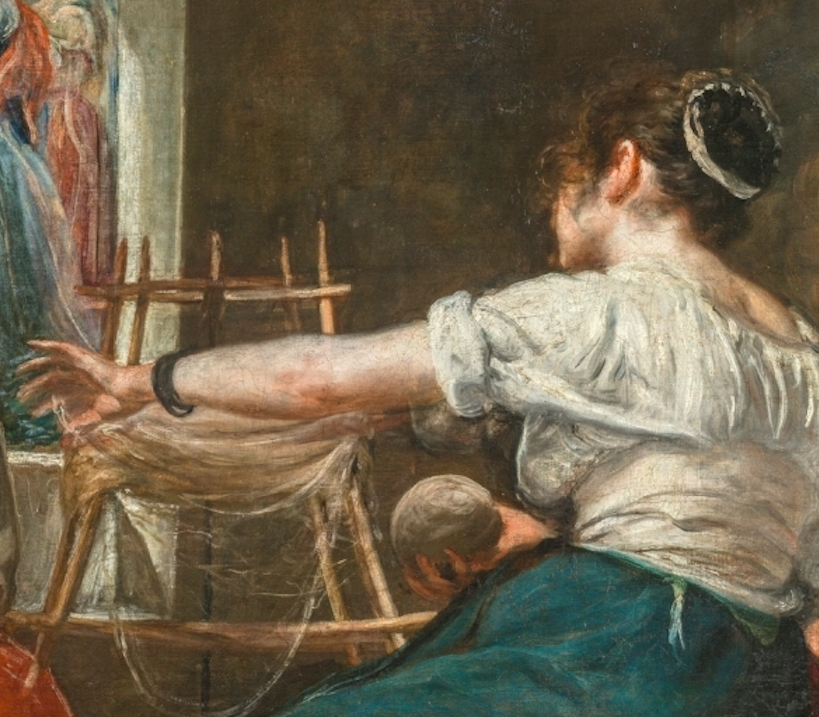
As an ex-skateboarder I understood the feeling of landing a trick that necessitated leaving the brain behind to fully embrace technique and body in a pray-to-fuck leap of faith. I was doing a lot of praying-to-fuck at the time of the Tonya Harding/ Nancy Kerrigan ‘incident’ in 1994. I especially remember watching the Winter Olympics figure skating on TV through a snowy reception and then running outside to skate for hours on a rib of road with the surface of the moon. But these Olympians were making these godless leaps into the air in front of people and cameras, while I was just a kid with my elbow self-consciously sheltering my WIP drawing from everyone.  

 
Tonya Harding skating in the Clackamas Town Center Hall in her home town. [The Library is in lights in the background, centre left

Tonya Harding skating in the Clackamas Town Center Hall in her home town. [The Library is in lights in the background, centre left


The locals I grew up with had the wrong idea about skateboarding: it was vandalism to them, even on apple crumble roads and curbs. I remember the aggression I used to receive from the GAA mafioso: “Why don’t you play football or hurling, you’re embarrassing yourself!" But what they really meant was I was embarrassing them. Odd upsets the nature and nurture of place. It threatens established identity. But if we don’t have odd all we are left with is the same.  

The day I decided to go public, in what I thought was a spectacular ‘grind’ across the full length of a bench in the village  (nothing sexual: there was no strip club unlike where Tonya Harding hailed from) I was met by disgruntled rubbernecking and finally arrested. But it was all worth it. When you landed a trick, even privately in your dad’s windowless garage, you were always surprised: your doe-eyed Bambi eyes would turn dot-punch junky. It was a feeling you wanted to experience again and again in a panoply of variations: goofy, regular, kick, hard, heel, pressure, one-foot, 180º, 360º, double, triple, back-foot, front-foot, switch-foot, ollie, nollie..... Tonya Harding’s face when she made that triple axel exhibits the ceiling of emotion and a fuck-you to everyone who was embarrassed for her or by her. 


In the days preceding, during and following the allegations made against Harding’s boyfriend after he and others were suspected of ‘taking out’ Nancy Kerrigan with a baton to the leg (but not Tonya at this juncture) the New Yorker sent a writer down to Harding’s hometown of Clackamas in a ‘Becoming Tonya’ long-form essay titled ‘Figures in a Mall’. The ekphrastic piece reads like a lover memorising every outline and crevice of their lover’s body as if for the first and last time. But in the writer’s anatomising of the environment that fostered the alleged assailants, prejudices and judgments are made in the selection and juxtaposition of certain elements that signify that Tonya’s home is not a very cultured place, like: "On the lower level of the mall, behind the bleachers, is a branch of the Clackamas County Library; a sign outside the door says, 'Yes! This Really Is a Library!'" For the local Fan Club, Harding's tucked-caterpillar-to-built-butterfly leap and landing was also their metamorphosis. 

The low and the high of this story (in life and film) is, female figure skating was High to Tonya Harding’s Low. Simple. As an art critic l am well versed in what I have come to define as the predictable relationship between high and low culture adopted by artists, as if one day the artworld appropriated the Low just to find some neither-low-nor-high middle ground. But Tonya Harding on ice in 1991 fused the physical, the theoretical and the sociological lows and highs in one moment of brilliant and brash artistry that floated high – so HIGH – above the petty prejudices of class or taste. 

 
Good Will Hunting (1997) "How do you like them apples."

Good Will Hunting (1997) "How do you like them apples."


Tonya Harding landed the triple axel, the first American woman to do so in competition, to the theme song of Tim Burton’s Batman (1989) by Danny Elfman. How’s that for low and high. No pretence, no precedent, just fucking up the standard; a rare moment when art transcends the limitations of its definition to define what comes next. She also practiced on an ice rink located in a mall in her home town. While the competition favourite, Kristi Yamaguchi, skated to the music from the opera, Samson and Delilah. Fair enough, the standard. But in one fan-club member’s words: Harding is a “stud” to Yamaguchi’s “prissy”. Anyway, Harding landed the triple axel in front of a crowded stadium and nit-picking judges. “How do you like them apples” – another low-to-high filmic trope.

According to the critically vaunted biopic I, Tonya, Harding was the permed villain of the piece well before she chose Batman to skate to, and more significantly, before she was implicated in the “incident”. Like the MAXI ZOO sign expelling its bad breath here in the Wexford sticks, an object so at odds with the environment to make those familiar things more visible through toxic association, Harding threatened the winter wonderland of American figure skating and American identity with her “trailer trash” provenance. She was never going to wear the Red, White and Blue, it was already written in the star spangled banner. Superman and Batman never got along. 

 
DVX4Jhz.jpg
 

The film I, Tonya skates over the details of the ‘incident’ so we are none the wiser as to the degree of Harding’s involvement in the ‘incident’. This, in some critical assessments, is viewed as a clever conceit, reflecting the fake world in which we now live. I’m not so sure. In one sense the film is too clever for its emotive good. The facts are: four stooges (so dumb they couldn’t add up to the numerical exemplar of stupidity) planned and executed taking out Harding’s competitive rival Nancy Kerrigan in a horribly brutal attack. Harding’s ultimate punishment for hindering the prosecution was way more severe than the 100 thousand dollar fine she also received, way more severe than the short prison terms served by her ex-boyfriend and wingmen. Harding would be banned from skating competitively for life. Never again would she experience landing the triple axel in front of the world. That’s what I call a landing. That’s what I call Low.


Postscript: The next day after watching I, Tonya I went out and bought a cheap deck after 15 years off the skateboard. Recently I have started to explore and experiment with the physical doing of things in relation to writing. You know how you can’t really be an art critic if you haven’t been an artist. Fact! Anyway, one of the reasons I gave up skateboarding and applied to art school was my talent for snapping decks due to my six-foot-six frame. I couldn’t afford it; I still can’t. This time around I was rusty at first, but after three hours of Ollies and Kickflips I tried a Pressure Flip. I was the only kid in the village and surrounding towns that could land a Pressure Flip back then. As we say the trick is all in the back, wherein you press and scoop your back foot to activate the 180º flip while simultaneously lifting your idle front foot into the air. It’s a leap of faith. On my second try I landed it. Deck snapped. But it felt Tonya Harding good. Well, almost. 

Madder Lake Editions

MADDER LAKE ED. #14 : TOWARDS ♫ GRACELAND


Logo Design by FlamingText.com
 

EDITIONS

 
Mark Geary at Subterranean Sounds, Waterford City. Sunday 18 March, 2018. Courtesy: Subterranean Sounds

Mark Geary at Subterranean Sounds, Waterford City. Sunday 18 March, 2018. Courtesy: Subterranean Sounds

...those that confuse rhetoric with reality, and the plausible with the possible, will gain the popular ascendency with their seemingly swift and simple solutions to every world problem”
— from President John F. Kennedy's undelivered speech,1963.
I don’t like the idea that people who aren’t adolescents make records. Adolescents make the best records. Except for Paul Simon. Except for ‘Graceland’. He’s hit a new plateau there, but he’s writing to his own age group. ‘Graceland’ is something new.
— Joe Strummer, The Clash, 1988.
...all I have to offer is myself
— Chris Marker, avant-garde filmmaker

SUBTERRANEAN SOUNDS is an upstairs manifestation of a basement ideal, promoting LIVE Irish and international music in Waterford City. Located up a narrow flight of stairs in Phil Grimes Bar, the venue visually drifts between dreamy opium den and Rathmines bedsit. Red Candles, yellow LEDs and pink velvet curtains are wrapped in a homemade banner wherein the two elegant A’s in SUBTERRANEAN look like a woman’s fingers. Longer than wide, the bar stools step-stone to the stage, upon which singles slouch and couples brace each other against the tide of bar and restroom restless. As an art critic the DIY aesthetic was a dialect I already spoke, the only difference here is ears are prioritised over eyes. But before Mark Geary’s voice and guitar took to the stage – the reason I came to be here in the first place for the first time – all I had were my eyes and memories to go on.  

 
Mark Geary, Lisdoonvarna 2003, RDS, Dublin. Photo: Roger Woolman

Mark Geary, Lisdoonvarna 2003, RDS, Dublin. Photo: Roger Woolman


I was an art student living in a Ranelagh bedsit with my future wife in 2003 when I first experienced Mark Geary LIVE at the RDS. That day I remember the crowd getting off on the joyous camaraderie as Irish artist Glen Hansard and American artist Josh Ritter came on stage to join Geary – a 'shaver' in a big suit on a Brobdingnagian stage. Somehow Geary elicited joy from the crowd even though his Lyricverse is in no way near the orbit of the ecstatic. As one state-the-obvious Hot Press writer offered in a review of a Geary gig (we also attended) in Whelan’s in 2009: "[Geary] suffers the curse of the pensive singer-songwriter; he’s not vying for commercial success, yet he’s unable to pack venues without it”. Seriously? But I kind of get what the writer was getting at. In an interview with Paul Simon on Late Night with David Letterman in 1986 following the release of the critically and commercially successful ‘Graceland’ (Mark Geary’s beautiful rendition of the title track being the main compulsion to write here), Letterman equated artistic success with commercial success: 

Paul Simon:  “What I’m interested in is... well, actually, whatever I’m interested in (laughs). And in this particular case (keeps laughing) the area I was interested in became a popular hit. In the early days when I had hits with Simon and Garfunkel everything that I was interested in, or wrote, was also of interest to my generation so they were hits. Then you drift off into your own area and they are not hits. But in this particular case people liked ‘Graceland’ and South African music as much as I did.”

David Letterman: And it must have been very, very satisfying to you for several reasons... and I don’t want to belabour this, but it seems to me like, that after you’ve been doing it for twenty some years, to at this stage to be able to, you know, find that magic again, that must have been very exciting.

PS: Well, my point is that, it’s not like finding magic again it’s just... I do my work because I’m interested in my work. You mean I found magic because it was a hit? 

One part of me loves Paul Simon’s response to David Letterman, but the other part sees Simon being overly defensive with a man whose job was to entertain the masses, averaging three million viewers in the mid-1980s when Letterman was the US television host with the populist mostest. Simon realises this too as he catches up with himself mid-interview with a smile of self-realisation. And anyway, can we really deduce from Simon’s logic that cultural synchronicity between the mined personal truths of the artist and the collective truth of the greater public is a card game of *SNAP* when it comes to artistic “magic” and commercial success? When on earth did these two things become a thing?

 
Screen Shot 2018-03-21 at 06.12.24.png
 

Between songs in Phil Grimes Pub, Geary shared that he “sweat blood” for his lyrics and his mother was never as happy as when she was listening to sad songs by Tammy Wynette among others. There’s a strange optimism in Geary’s baggage. But it's the generous autobiographical baggage shared within songs and between songs that ingratiates Geary with his audience. 

Rooted in Americana, but more bungalow-longing than New York skyscraper tall, Geary’s tales perform as ‘You did this’ and ‘I did that’ tête-à-têtes. Geary has an uncanny knack for grounding his songs in an intimate setting were love is found or love is lost. It’s the small, dark, after-hours world that Geary spreads his lyrics and emotions, warm and dark. Whether in New York – his fable-rich home from home – where as a young man he frequented all-night cinemas after his bartending shift to experience the dirty makeups and breakups in the indigo A.M., or Wyoming, where he shared a story of escapism and desolate isolation, that all turns out darkly comic in the end. You had to be there I suppose. And that's the point – you had to be there. People that make the effort to experience singer-songwriters LIVE like Geary, go to experience it together. It's a shared experience; especially here in the upstairs underground of Subterranean Sounds. And with Geary embracing his songs’ lyrics like he is living them in the present, releasing a smile or an ache in anticipation of his sometimes exaggerated phrasing, you feel uncensored. Yet not enough to sing along. We are modern Irish after all for whom the jig is up. 

My eyes plugged, my ears open, I was there to get out of my own head and into someone else’s. I hadn’t intended to bring my words with me, which I automatically do on entering a gallery. This was a break from all that. That is until Geary sang Paul Simon’s Graceland. At first I didn’t recognise it, but Geary’s opening riff was familiar, very familiar, too familiar, so familiar that before I knew it I was a kid of the 1980s again. I remember listening to my brother’s copy of ‘Graceland’ rustling under the needle. As David Byrne of Talking Heads observes: “'Graceland' was a Paul Simon record that rocked a little harder than some of the ones just before that. The ones before of course had great songs; this one had a little more low-end going on.”

But back then the vinyl album was a low-end experience anyway – if 'low-end' means engrained noise and latent textures: the paper sleeve that buckled in the awkward extraction of the record, the lift of the arm, the drop of the needle, the scratch, the Saturn rings and ridges that measured time all the while impossibly divining music from a flat lacquered universe. In those days I stayed put when listening to music because I had committed to this material process that had a beginning, middle and end: no shuffle. I always hated the ‘Greatest Hits’ concept.

I still listen to music from start to finish. I enjoy full albums. I mean, why would you only watch twenty minutes of a great film? So I still write like that, I write songs about love, songs about leaving, being in relationships and out of them.
— Mark Geary, interview, 2012
Simon & Garfunkel

Simon & Garfunkel


Geary singing Simon’s Graceland fits; more than fits. It felt complete the other night as the audience pressed their lips together to hmmmmmmmmm in mimesis. I won’t even try to compete by paraphrasing what Rob Tannebaum wrote in Rolling Stone in 1997 on the title track from 'Graceland': “And in the brilliant Graceland (a peak in Simon's career), Elvis Presley's gaudy, impenetrable home stands as a glorious symbol of redemption. The narrator, who's running from a broken relationship, announces he has "reason to believe" he'll be welcomed in Graceland. The knowledge that Presley died bloated, addicted and isolated doesn't deter the song's giddy faith in his legend.”

Breakups are a big subject in Geary’s and Simon’s poetics. I know nothing beyond the ‘You did this’ and ‘I did that’ relationships in Geary’s world, but Simon, since the age of 11, has spent a lifetime breaking up and making up with Art Garfunkel. And it’s no surprise that Geary has a song titled Battle of Troy, signifying the biggest mythological breakup in the ancient world among friends and countrymen, and all staged upon world-shattering LOVE.

But 'faith' also plays a part in Geary's and Simon's songwriting. Tannebaum refers to “giddy faith” in response to Simon’s Graceland, a word combination that has something uncanny lurking between; while Geary proffered “Come little fire, save my faith” upstairs in Subterranean Sounds. Between Paul Simon and Mark Geary there is a lot of ‘wanting to be saved’, to be redeemed. 

JFK never got to warn us of the perils of confusing “rhetoric with reality" because he was assassinated on the way to delivering his speech in Dallas in 1963. He was 46. His prophetic words chime with the contemporary times as we enter an increasingly rhetorical political and virtual present that seems more and more irredeemable. So I will leave you with Paul Simon’s words of individual redemption, in which hope is waiting for him on the horizon.  


Graceland

The Mississippi Delta was shining
Like a National guitar
I am following the river
Down the highway
Through the cradle of the civil war
I'm going to Graceland
Graceland
In Memphis Tennessee
I'm going to Graceland
Poor boys and pilgrims with families
And we are going to Graceland
My traveling companion is nine years old
He is the child of my first marriage
But I've reason to believe
We both will be received
In Graceland

She comes back to tell me she's gone
As if I didn't know that
As if I didn't know my own bed
As if I'd never noticed
The way she brushed her hair from her forehead
And she said losing love
Is like a window in your heart
Everybody sees you're blown apart
Everybody sees the wind blow

I'm going to Graceland
Memphis Tennessee
I'm going to Graceland
Poor boys and pilgrims with families
And we are going to Graceland

And my traveling companions
Are ghosts and empty sockets
I'm looking at ghosts and empties
But I've reason to believe
We all will be received
In Graceland

There is a girl in New York City
Who calls herself the human trampoline
And sometimes when I'm falling, flying
Or tumbling in turmoil I say
Oh, so this is what she means
She means we're bouncing into Graceland
And I see losing love
Is like a window in your heart
Everybody sees you're blown apart
Everybody sees the wind blow

In Graceland, in Graceland
I'm going to Graceland
For reasons I cannot explain
There's some part of me wants to see
Graceland
And I may be obliged to defend
Every love, every ending
Or maybe there's no obligations now
Maybe I've a reason to believe
We all will be received
In Graceland


Songwriter: Paul Simon
Graceland lyrics © Universal Music Publishing Group


Madder Lake Editions

MADDER LAKE ED. #13 : TOWARDS★EGO


Logo Design by FlamingText.com
 

EDITIONS


The people I love, the ones like Freddy Herko, the leftovers from show business, turned down at auditions all over town, they couldn’t do something more than once, but their once was better than anyone else’s. They had star quality but no star ego. They didn’t know how to push themselves. They were too gifted to lead regular lives. But they were also too unsure of themselves to ever become real professionals.
— Andy Warhol, extract from Andy Warhol Documentary, 2016.
Fred Herko dancing on the roof of the Opulent Tower, Ridge Street, New York, spring 1964. Photograph: Public domain

Fred Herko dancing on the roof of the Opulent Tower, Ridge Street, New York, spring 1964. Photograph: Public domain


But is there a line you shouldn't cross as an artist? Every artist has their thing, and that thing is all encompassing or you're just kidding yourself. Warhol’s thing was to record other people living. So what’s so remarkable, so shocking, about Warhol’s response to Freddy's fall if you are indeed, Andy Warhol? Many victims fell by Warhol’s wayside, until his own immortal body was compromised in the most violent of ways when Valerie Solanas shot him point blank in the chest in 1968. After that Warhol became like everyone else: afraid.

If you go one step farther in your mind, like Fred Herko did in his body and Warhol did in his aesthetic leaps to record life rather than live it, you can imagine Fred Herko spreadeagled over the city, his penis an imperfect love handle on the otherwise perfect architecture of his fully erect body. Warhol envisioned Fred Herko launching, not falling, leaving those with their feet firmly planted on the ground head scratching in Mission Control.

 
Artistic action Leap into the Void by Yves Klein, Gelatin silver print, 1960.

Artistic action Leap into the Void by Yves Klein, Gelatin silver print, 1960.


They say ballerinas want to fly, and in a manner of speaking they do. Artist Yves Klein’s fake intellectual Leap into the Void from a rooftop in the Paris suburb of Fontenay-aux-Roses in 1960 has nothing to do with flying. It’s cynical, it’s mortal, it’s narcissistic, on a par with a carefully choreographed moment on Instagram. But like Yves Klein’s forever falsehood I cannot imagine what the pavement looked like after Fred Herko’s body careered into it. I don't want to. I don’t think Warhol was imagining that horror either when he said what he said. He was thinking about the launch, Fred Herko’s body extended in flesh and time: “OooooH HooooooW BeautifuuuuuuuuL...”.

 
The body of 23-year-old Evelyn McHale rests atop a crumpled limousine minutes after she jumped to her death from the Empire State Building, May 1, 1947. Robert Wiles.

The body of 23-year-old Evelyn McHale rests atop a crumpled limousine minutes after she jumped to her death from the Empire State Building, May 1, 1947. Robert Wiles.


Warhol was an artist who placed himself in the right place at the right time. Talent had something to do with it, but temperament had more to do with it – as John Baldassari proffers: “Talent is cheap”. How do artists who desire to show their work in the public sphere transcend or transform talent into star ego? If Warhol had been at the foot of the Empire State Building on 34th Street in 1947 he would have surely snapped the body of Evelyn McHale, who jumped from the Observation Deck, 86 floors up, 1040 foot down. Can you say the same? 


1. Andy Warhol, 1963, Suicide (Fallen Body), silkscreen ink and silver paint on linen, 284.5 x 203.8 cm; 2. Matthew Barney, Drawing restraint 17: Evelyn Mchale , 2011, cast polycaprolactone


Robert Wiles was there, a photography student, whose now iconic photograph, the only photograph he would ever publish, achieved the tragedy belittling plaudit of “Picture of the Week” in Life magazine with the immortally brave tagline “The Most Beautiful Suicide". The photograph shows Evelyn tucked into the crumpled sheet metal of the roof of a car, alone, with no one close to kiss her goodnight or turn out the light. Still grasping her pearl necklace with one white-gloved hand, Evelyn bathes in the A.M. tide of sunlight while gimlet-eyed onlookers stand wallowing in the dark peace of the aftermath. No love handles.

 
22 May 1947. View from the top of the Empire State Building. (Bettmann/CORBIS)

22 May 1947. View from the top of the Empire State Building. (Bettmann/CORBIS)


Fifteen years later in 1963, and one year before Fred Herko’s death, Warhol silk-screened Robert Wiles’ photograph of the Cadillac-cradled Evelyn. Maybe Warhol was thinking of Evelyn when he allegedly said what he said on hearing about Freddy’s death. I'm not making excuses for him; I don’t think he needs to be defended. I believe and accept that artists who transcend themselves and art give up a part of themselves, maybe even their humanity. As a looking machine Warhol’s sacrifice may have been empathy, if he ever had it in the first place.


Madder Lake Editions

MADDER LAKE ED. #12 : TOWARDS NOSTALGIA 


Logo Design by FlamingText.com
 

EDITIONS


Battcock_top.jpg
 
 
IN APRIL 1970, Gregory Battcock appeared in his underwear on the cover of Arts Magazine, the publication he would briefly lead as editor some three years later. […]  But Battcock’s appearance on the cover... is perfectly consistent with his writings within its pages—it epitomises ‘criticism without apology’,  as he once described the writing of Village Voice critic and lesbian activist Jill Johnston.
— David Joselit, 2012

If it hasn’t happened already, one day it will. You will start to revisit the past with more frequency, becoming a graduating ghost of the present. As you jump back and forth in your joyous and tragic recollections like some ageing Time Lord, the present will become more ghostly, the past more concrete, rising up above your in situ indifference like a colossal monument basking in the glorious light of hindsight. 

I've been Time-Lording it a bit lately. It's a symptom of ageing, but also a side-effect of covering art history across two curricula. To combat the adverse effects of art-history-time-travel I pick some favourites to offset the usual suspects within the canon of art history to cover the course bases and my biases. Through the process of resurrecting such brilliant and sometimes cruelly obsessive and egomaniacal artists I start to measure their artworld-shattering moments against the dancing pebbles from the little earthquakes of the present. The past wins every time. The present hasn't become the bejewelled memory of some ageing Time Lord in the future.

The early days of being a Time Lord you already begin to glimpse ghosts as the present becomes a Bells Palsy half-world of mushy decline. And the more and more your memories decline the more and more precious and false your memories become; their cavities filled with cubic zirconia to disguise their decay.

Maybe it was a case of being snowed in these last few days, but the image of art critic Gregory Battcock sitting and smiling on an ocean liner on the front cover of Joseph Grigley’s Oceans of Love: The Uncontainable Gregory Battcock greeted my deepest cabin fever from the warm bookshelf.


I'd been waiting for the right time to write something on Battcock, who has become a hero of mine ever since making an unplanned visit to Marian Goodman Gallery London in the summer of 2016, where, to my surprise, I found myself lost in the ‘Gregory Battcock Archive’ for more than an hour. The cover image that jolted me out of snow blindness is of Battock en route to somewhere planned, Leningrad, in 1973. He’s 36 — seven years later he would end up dead, stabbed 102 times by his Puerto Rican “houseboy" in an unsolved murder committed on Christmas Day in 1980. But before all that, Battcock, at 36, had already published several art anthologies in his twenties, had a job in academia and held the editor’s job at Arts Magazine, albeit only for a year. It all sounds nice and secure. But there were two sides to Battcock: the official side was the means to support his leanings toward an underground side, where he experimented with confession and gossip in relation to art criticism, and indulged in his other loves and lusts: sex, food and cruise liners. 

Joseph Grigely (who solo exhibited on our own doorstep at the Douglas Hyde Gallery Dublin in 2009) came across Battcock’s possessions when the “Shalom” storage company was evicted from a building where his studio was located in 1992. Grigely was 36, the same age Battcock is on the front cover of his book. Grigely had just returned from the “beautiful White Mountains” (the snow metaphors keep coming) to discover Shalom gone and, amidst a paper hoard of scattered and shattered lifetimes, seven boxes (originally 48) that belonged to “Gregory Battcock”. Being an art history professor Grigely recognised the name immediately, especially his “well-known anthology on Minimalism”. It was a match made in archive heaven. But it would take 20 years or more before Grigely would get around to writing the book and exhibiting the archive at the Whitney Biennale in 2014. 

 
Eating Too Fast is a 1966 Andy Warhol film made at the Factory. It was originally titled Blow Job #2 and featuring 26 year old art critic and writer Gregory Battcock.

Eating Too Fast is a 1966 Andy Warhol film made at the Factory. It was originally titled Blow Job #2 and featuring 26 year old art critic and writer Gregory Battcock.


What Grigely discovered in the paper trail was a very complicated man. Nine years younger than Andy Warhol, Battcock graduated from the Warhol Factory, starring in a couple of his films, and was even ‘commissioned’ by Warhol to travel to Paris with fellow critic David Bourdon to take some photographs enjoying themselves in the look-don’t-touch Andy Warhol way. And it is through these ‘other’ adventures, usually on cruise liners, that the real Battcock is revealed to us in intimate detail. There’s his ‘Cruising’ diaries, where he explicitly details his sexual encounters with other men; his gossip columns, what he called his “yellow journalism” for Gay and The New York Review of Sex and Politics; and his self-published, self-edited and intentionally absurd zine Trylon and Perisphere. From paper to paper, alter-ego to alter-ego, officialdom to underground, Battcock utilised multi-personas and platforms to perform without fear of judgement or retribution by what he believed to be an increasingly moralising, market-led artworld. So nothing’s changed. 

 
Alice Neel, Gregory Battcock and David Bourdon, 1970, oil on canvas.

Alice Neel, Gregory Battcock and David Bourdon, 1970, oil on canvas.


But Battcock was as uncontainable as he was unpredictable. He didn't view art criticism as suppliant or supplementary to the art object, he believed it could breathe on its own. Crigley writes: “His reviews and essays published in Gay and the New York Review of Sex and Politics unmade and remade the genre of ‘criticism’ in a way that made the mainstream criticism seem as staid as it did unambitious. [...] As his friend, the essayist Jill Johnston, wrote after Battcock died: ‘He was a failed artist whose sour grapes were entirely original, and so absurd, such a parody on themselves, such a parody on this parody, etc. (the last hardly recognisable), that they had been dislodged from their point of reference and were functioning on their own — an art form too detached and intelligent to be called criticism.” 

If the readership wouldn't listen or the mainstream publishers wouldn't publish, Battcock would find a readership and a publisher that would. His stint as editor for Arts Magazine was short-lived because sometimes he let his underground idealism bleed into his professional life. Grigely illustrates this bleed in an exchange between critic John Perreault and Battcock in 1970: 

Perreault: You write for nefarious publication the New York Review of Sex and I understand this has gotten you into several difficulties. 

Battcock: It has. Into quite a few difficulties, as a matter of fact people are very jealous. 

Perreault: What do you mean? 

Battcock: Well, they try to put all kinds of pressure on me to stop writing. My publisher, my university, my colleagues. They all do this under the guise of reputation and scholarship. All those questionable values. 

Perreault: Yes, which you pay no attention to at all. 
Battcock: Yes, I do pay attention to them. The more pressure I get for writing in that paper, the more determined I am to continue writing for it. Very likely I would have stopped a long time ago if I hadn’t met this extraordinary hostility.
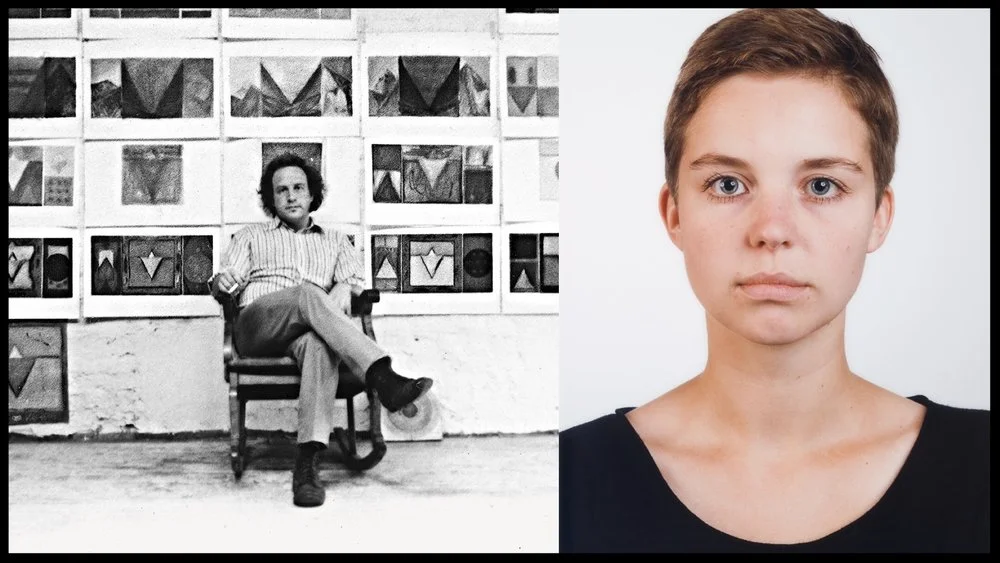
Battcock sought out and fostered critical vitality in others too, such as in the dance critic for the Village Voice, Jill Johnson, who “got Battcock in a pickle with an essay she wrote for him [as invited Editor of a special issue ‘Notes on Women and Art’] for Art & Artists magazine in London in 1972. [...] Johnston’s piece began”:

Male gallery dealers suck cockFemale gallery dealers suck cockMuseum people all suck cockCollectors suck cockArt appreciators suck cockArt historians suck cockArt critics suck cockArtists suck cockThe art world sucks cock.

But Battcock is not just embodying sex or sexuality in his writing. What is so refreshing about Battcock is, he didn’t define art criticism as this or that, definitions that have subjugated art critics to self-righteous injunctions over the last decade. “[Gregory] Battcock, like many other critics of his era, and unlike the majority of critics in our own — was more interested in broadening communication than in defining it.” (David Joselit) 

There is real humour and invention in Battcock’s subterranean and sea adventures. Battcock loved — I mean LOVED — cruise liners, perhaps for all the reasons we might hate them (as outlined in gorgeous detail in David Foster Wallace's ‘A Supposedly Fun Thing I’ll Never Do Again’). He had this whole take on a future “shift in aesthetics from attention toward the ["tyranny of the art object”] to attention toward the receiver”. His  “aesthetics of transportation” included an archive of unrealised curatorial projects based on cruise liners, cruise liner museums, etc.; not to mention his “Humourous Artist Statements” that anticipate London art collective BANK’s parodic intervention in artist statements by decades. 

 
Robert Mapplethorpe's two invites for The Perfect Moment, which opened at two spaces in 1988: Holly Solomon exhibited the commercially viable portraits and flowers, while the experimental space The Kitchen exhibited the sex pictures.

Robert Mapplethorpe's two invites for The Perfect Moment, which opened at two spaces in 1988: Holly Solomon exhibited the commercially viable portraits and flowers, while the experimental space The Kitchen exhibited the sex pictures.


Battcock’s life as a critic and his relationship with the New York art scene is best illustrated through Robert Mapplethorpe's two invites for The Perfect Moment, a dual exhibition that opened at two spaces in 1988, when Holly Solomon exhibited the commercially viable portraits and flowers, while the experimental space The Kitchen exhibited the sex pictures. Dualistic tendencies are common in the artworld as a kind of survival kit, leaving one alter-ego to take the brunt while the other blossoms. 

Grigley’s archiving is in no way academic in book or exhibition form. At times it feels like a twenty-something art graduate is recounting the details of Battcock’s life  rather than a fifty-something art history professor. There is a youthful vitality to the accounts, as if Grigley wants to believe that Battcock’s world of risk over rote is somehow possible again, if only today’s critics would take notice of the possibilities that Battcock lived and wrote on rather than theorised on. (Or maybe that's just me.) But what you do get from today's critics in their reviews of the Gregory Battcock Archive is romantic puzzlement over why Battcock’s unmaking and remaking of the genre of art criticism, and not defining it as this or that, is not explored more by today's critics, who vie for the attention of one audience. The last time I was excited by writing on art in this country, writing that hadn't been polished and preened to an inch of its life, was Hilary Murray's gossipy and confessional online blog entries for Circa Magazine at the height of the financial crisis. But vitality like Battcock's doesn't last: its nature is not to survive.

Cheers Gregrory Battcock and Joseph Grigley for the resurrection.   


*Oceans of Love: The Uncontainable Gregory Battcock, by Joseph Grigley (Editor, Preface, Introduction), Verlag der Buchhandlung Walther Konig, 2016.


Madder Lake Editions