a_flash_in_the_small_night writings (2019)

Paul Doran, 25 July

Paul Doran, 25 July

○All Night? All black? All frame? All painting? 12 offcuts play dominos in Paul Doran's painting "All Night" • posted Instagram 14 July 2019/ deleted, unknown? • And yet, light peeks through its cruciform plexus where 40-odd swathes of canvas—40 days and 40 nights—congregate like believers, marking the feast and famine of imagining everything and doing nothing all at once: waiting, praying, dreaming. Never feeling the need to screenshot a painting on Instagram before, painter Paul Doran pokes the need more than most because of his Instagram extinction-bursts, and today, most of all, because of All Night, wherein painting eclipses itself. Not sure my screenshot has the whole picture, I check to see if the original post has survived another day, another night, to imagine the painting's scale comparative to some environmental detail that might locate the painting in the physical world among things. It’s gone. Here, on my phone, All Night is manageable. The image is narrower than the breadth of my eyes so perspectives and light do not shift in the complex and frustrating ways they do in the physical world. Eyes wide open, head still, chin to chest, hand and phone doing all the masturbatory work of zoom and pinch, I imagine this painting to be less manageable in physical space, where sawn edges come splintered, perfect light and shadow do not form penumbras, and screw heads ruined by the artist's blindfolded progress. All Night's a ramshackle painting; a piece of garden shed that bore lonely undergrowth until it wrestled free through the shingles to let light in and life out... at last. Both closed off and opened out, its attraction is both obvious and familiar to me, from my favourite sentence • "A barn, in day, is a small night" (John Updike) • to its absence of colour, echoing my child's last memorable question • "Is black a colour?" • "Turn out the lights and see what you see?" • "Nothing! Scary!" • "Everything."

Liliane Puthod, 27 July

Liliane Puthod, 27 July

○Towards home, Dublin quays smell of movement, of Liffey, of exhausts, human and machine, synthesised into the disco of smells and memories and images and feelings just experienced in Liliane Puthod's unearthed time capsule of an exhibition How Long After Best Before? at Pallas Projects Dublin. Good art follows you home. •Good times, these are the good times• are the lead-in lyrics to Chic's 1970s disco track titled, you guessed it, Good Times. Liliane has Daft Punk'd + inserted Good Times into plaster board comprising *almost* first-fix fabricated wall looming tall to rewrite architecture at gallery entrance. Down low, another entrance, child height, with •mindyourhead• cast in cursive bronze relief and dressed in heavy PVC strips makes one aware of body and gravity as bending body is choked by trouser belt and PVC buckles and snaps back into position while pushing through and under into den divided by more PVC and decorated by several glazed receptacles and curious brick-elevated drain grids. What divides experiences of Liliane as part of physical group shows by Berlin Opticians and here, solo, is the prioritising of feeling and experience over the art object. It's an irony for sure as this work at Pallas is meta-reflecting on merchandising, housing, transit and consumption of goods in times past, present, future. And yet here in this not-for-profit artist-run space there is a happy conflation and complicity of critical and desiring machines #GoodTimes are being foregrounded for our attention as art objects recede into experience. When collector returns home with Liliane Puthod earthenware jug, collector realises the effect is not the same at home as here in this synthetic jungle of glint. Liliane proffers sensory possession at Pallas: the smell is synthetic rubber, the soundtrack is 70's Disco spaghettified by technique and time, the PVC and neon and galvanised metal like being inside phone looking out at dentist. Bracing. As merchandise recedes into smoke and mirrors of its reflection, its Black Lodge, its Upside Down, what keeps me here is not the tormented musak, but the sacrifice of art objects for an experience that swallows me whole●

The Art Collector, 1 Aug

The Art Collector, 1 Aug

○The crow, black and empty, drifted upon a chimney pot and, like a g○d, looked into a world of mouths that flapped about a fireplace and where, above the mantelpiece, another vision, that of the artist, hung before secret eyes that secreted opinion. 👀 A few years back in the back of a pub following the Wilhelm Sasnal opening at Lismore Castle Arts I fell into a conversation with an art collector. Rare breed. After stripping back formalities the collector felt the need to share his love for art, a love that, not too far into his confession, seemed tainted by addiction. He told me that he could afford artists in a particular price bracket—we are talking in the thousands here, not millions. He loved his private art collection, making a point of naming the artists before badly describing the artworks. This collector did not separate the artwork from the artist. You can imagine: one fine day an artist sold this collector an image, a shape, a feeling that could not be spoilt by future mehs by the same artist. He was sold, pocket and soul. Or was he? I wanted to know more. Why art? Here? Ireland? He carried on pronouncing his affected love for art, his L❤❤E excessively pronounced, as if satisfied, not really. He had travelled a considerable distance to see Wilhelm Sasnal, even though Sasnal was out of his price range: this desiring expedition was bound by a strip club etiquette, look, don't touch. He leaned over and named South African painter Marlene Dumas as his •never love• It was a lust for the unattainable that he was wanting. The art collector's Love is attained. Lust, never●

School's Out, 9 Aug

School's Out, 9 Aug

○We will refer to it in the future as "That exhibition in the school" when we forget its title, a title perfectly poised for forgetting •ₐₙd ₜₕₑ dₐyₛ ᵣᵤₙ ₐwₐy ₗᵢₖₑ wᵢₗd ₕₒᵣₛₑₛ ₒᵥₑᵣ ₜₕₑ ₕᵢₗₗₛ • again • ₐₙd ₜₕₑ dₐyₛ ᵣᵤₙ ₐwₐy ₗᵢₖₑ wᵢₗd ₕₒᵣₛₑₛ ₒᵥₑᵣ ₜₕₑ ₕᵢₗₗₛ • Gone. I smell the images on Instagram. Assumption not nearly enough, I go smell it for myself. School's out. Still • stray kids play in the school yard where burnt tarmac bakes and school doors, like a toy oven, are found wide open. Inside, kids long gone, summer almost, the smell is past its best before date▪︎ talcum-powder'd. Lots of artworks, some activate, others shy into the gradgrind of the school. Novelty comes with compromise no matter how much you try to save or survive it with your adult interpretations. Feelings abound. My six year old says something good about Lucy Andrews' sap-guzzling crafty apparatus that I can't better. It's a release. This is not about curation • even though the curator seems to know this place, maybe for a lifetime. This is about art surviving in the real world with real people without the curator, without the white walls, without a map. The rub of the world is here, all around, under Samuel Laurence Cunnane's clipped & red eroticism and Sven Sandberg's desired desireless. My kids flip through a book,  looking up now and then when women's and children's bodies are revealed literally and critically in Agnès Varda's seriously joyful feminism from '75. We're still not there, not nearly. Too much clothes telescopically shimmy up blue question mark trunk of Hannah Fitz's goofin' off sculpture that could be a real person goofin' off? No face, no eyes, no social cues, my kids wave and say hello like brave voyeurs. Round here accidental art is disregarded by adults because no paper trail, no designation. Better•Without•Map. This space's novelty, this show's hype, shows our conservatism and hunger for alternatives. The artists, mostly Kerliners, one Berliner 👓 and others swim and sink here, and that's ok. These artists in another gallery show would be just another gallery show. The lesson here • art can survive the world, art can survive us, we can survive art, barely🌒💥

Rejected, 15 Aug

Rejected, 15 Aug

○The Perpetrator slams their front door, smiles at the idiots on the bus, piously walks into the RHA Gallery to collect their work and, before stepping back out into the big • bad • stupid world, sidesteps into the restroom to hurl criticism onto the stall wall above the toilet roll. Rejected! I saw it on Instagram. The photograph of the photograph is almost illegible, even though the work necessitates reading before appreciation for composition, slant of text, or lapping tongue toilet roll waiting for the next bum note. The capture is opportunist on the part of the artist--"Ha ha ha, at last, they'll go for this!" With a collective swivel & thrust of hips the RHA selection panel agree the best way to tackle criticism, especially criticism of this sort is (1) recycle it and (2) smear it on our own walls. One-Two… a beautiful waltz 👞👠👞👠Believe me, shitting where you eat can be liberating. The cliche criticism is so cliche that it's vindication of the panel's good judgement, good taste, good standing. If you hopscotch □■□ across the photograph of the photograph you get the gist of the sentiment, something about ⱽⁱˢᵘᵃˡ ᴬʳᵗˢ i̶s̶ ᵃʳᵉ ᵇᵘˡˡˢʰⁱᵗ ⁱⁿ ᴵʳᵉˡᵃⁿᵈ… ⁱⁿˢᵘˡᵃʳ… ˢᵃᵐᵉ ᵖᵖˡ ⁱⁿ ᵖᵒʷᵉʳ… ᵒᵖᵖᵒˢⁱᵗᵉ ᵒᶠ ᵒᵖᵉⁿ ᵃⁿᵈ ᵉⁿᵍᵃᵍⁱⁿᵍ… ᵇᵒʳⁱⁿᵍ. Same old. I like to think the Perpetrator took the photograph. That they crossed out i̶s̶  for 𝙖𝙧𝙚 to make it more authentic Latrinalia, then waited a year to submit, with less rage, more smug. That would be beautiful. That would be justice. That would be art. If not, the Perpetrator made the cut anyway by being selected by proxy through the vision of another artist which, when you think about it, is kind of worse, kind of robbed, kind of Richard Prince'd, kind of a toilet bowl full of shit. The title "The Unknown Critic" bothers me. "The Unknown Artist" would have added pathos, not unnecessary description. Anyway. I cannot unsee the 𝔹𝕖𝕙𝕚𝕟𝕕 𝕋𝕙𝕖 𝕊𝕔𝕖𝕟𝕖𝕤 𝔸𝕥 𝕋𝕙𝕖 𝕊𝕖𝕝𝕖𝕔𝕥𝕚𝕠𝕟 𝕆𝕗 𝕋𝕙𝕖 ℝℍ𝔸 𝕆𝕡𝕖𝕟 𝔼𝕩𝕙𝕚𝕓𝕚𝕥𝕚𝕠𝕟. I do not know what I was expecting. Maybe more. Maybe magic. Crystal Balls. A séance. Not that. Never that●

Oisin O'Brien, 22 Aug

Oisin O'Brien, 22 Aug

○3 things. Text pinned to gallery wall. Fragments of something fossilized in ice-cream green. Dachshund made from unlikely things •glass•paper•honey dippers• stands on stack of text guarding it from F G-Torres associations. Ruff, ruff. These 3 things arm wrestle with gallery wall and floor like dismembered stick insect dipped in hard candy glowing kryptonite. Disjointed yet carefully carefree, Oisín O'Brien shares flip-flop observations from fantasy of neon and camouflaged painting screaming its presence next door to dachshund forming links in the world because it's shaped like ➳ Another artist riffing on the marvelous. Like choir singer transitioning on a syllable (!) or dog's lead visualized as hyphen measuring intimacy or lack thereof in relationship on a given day. Cₒₘₑ ₕₑᵣₑ BₒY! Maybe stick insect metaphor is a false start. Maybe language is being dismembered on gallery wall vis-à-vis anatomy of typeface •SerifShoulderSpineSpurStemStressStrokeSwash• From hyphen>em dash•security>freedom•responsibilities> boredom• these are daytime musings dreamt up when responsibility stops and shadows lengthen. 𝒜𝓃𝒹 𝓉𝒽𝑒𝓃 into the amateur night a collision between EmptyOrchestra is found in word Karaoke. Future and past imaginings become furious present longing for past and yearning for future. Ⓛⓞⓞⓟ Constant movement and displacement of meaning as contexts shift and stories never reach fulfillment or argument, just dropped and discarded like sweet wrapper to imagine its taste 🍬 Temporary tattoo of phat empty speech bubble waits for more words. Text is inside-out here, with •label•make•price•barcode•stitching•showing. Derrida rolls over and insects disperse like signatures. World I glean is world as dessert bowl licked clean by the distracted. All this torments Susan Sontag's proclamation that 🅰 🆃🅷🅸🅽🅶 🅸🆂 🅰 🆃🅷🅸🅽🅶 🅽🅾🆃 🆆🅷🅰🆃 🅸🆂 🆂🅰🅸🅳 🅾🅵 🅰 🆃🅷🅸🅽🅶 These brittle things both objects and words hiding in wrong camouflage in a kind of polite dialectics that synthesize subjects to become synthetic objects leaves brain floating in hypnotic snot of some tropical toad. This empty orchestra with no subtitles, and I sing along anyway●

The Villager, 29 Aug

The Villager, 29 Aug

○In the memories of others her lost soul was 𝓸𝓷𝓬𝓮 𝓾𝓹𝓸𝓷 𝓪 𝓽𝓲𝓶𝓮 found in a nest of prehistoric ferns○in a burnt-out car seat beside a river○at the foot of a mountain cross among campfire cinders○ The villager left the village knowing she would be remembered and retold through her transgressions. Amnesia, she learnt as a villager, is the affliction of the village○the village forgets your transgressions, no matter how big the transgression is, if you stay put in the village for life. T̶h̶a̶t̶ ̶g̶i̶r̶l̶ ̶w̶i̶t̶h̶ ̶t̶h̶e̶ ̶3̶ ̶k̶i̶d̶s̶ ̶w̶i̶t̶h̶ ̶t̶h̶a̶t̶ ̶m̶a̶n̶ was on villagers' lips until they weren't. T̶h̶a̶t̶ ̶e̶n̶c̶i̶r̶c̶l̶i̶n̶g̶ ̶t̶r̶a̶n̶s̶s̶e̶x̶u̶a̶l̶ daily○weekly○monthly○yearly lapping the village, sometimes three times a day, lassoing her with constricting dreams of b○uncing arms & elb○ws & knees & nipples & l●neliness. Those that left the village, like her, were immediately demonised, forever remembered in absentia as if time and transgression stood still, and forgetting, if not forgiveness, was dependent on your forever presence, circling, nipples○○ Now she found herself in a new village, in the city. For a long time she'd marveled at how this new village forgets its artists if they leave and have no point of contact from that point onwards. It's hard to remember artists in the flash discontinuities of their art's slow presence. 17 years ago the now superstar artist John Gerrard gave a visiting lecturer at IADT when she was a student there. As a student she connected with the artist's early explorations into the confetti remains of college notice boards... What she took away from the lecture was a comment the artist made about leaving the art scene for a year on a residency and feeling like he had to start all over again when he returned. You stay in the village and all is forgotten. You leave the art scene and all is forgotten. Villager and artist, forgiven and forgotten, it seems the world is a place to grow horns or disappear. As her horns mature, far away from the village she was born and raised, she wondered what horns were needed for artists to not disappear, to be the devils of their time, so Time remembers, if not people👹

Adam Fearon, 5 Sept

Adam Fearon, 5 Sept

○Lazy curating averted. Adam Fearon jumps the queue of expectant Irish artists waiting for day out at historically significant and scenic Kilkenny Castle where Butler Gallery will uproot next year for bigger□ yet less central and historically significant and scenic Evans' Home 💍 Butler's reception area sees small vertical screen displayed alongside digital innards documenting innards of Adam's studio gazed through 3-D animated mesh. This vérité walk-through—𝕊𝕙𝕖𝕝𝕝𝕤 𝕘𝕙𝕠𝕤𝕥𝕝𝕪 —acts as point of contact and barrier to seeing•feeling•touching imagined body of artist. Our impossible technological fate accepted, we are fully embedded. IT Iᔕ ᑎOT ᗩ ᑭᗩᖇTIᑕᑌᒪᗩᖇ ᔕᗩᗪ TᕼIᑎG Zadie Smith sadly concedes re the infirm novel. Adam's work is a sad thing. A leggy aluminum frame with mirrored encasing sneakily hides streamlined screen wherein artist is found troweling curtain of plaster from the bowels of screen. Distant and enigmatic💭Pollock dripping paint behind glass 60-odd years ago💭Dan Graham through the looking glass 20 years later. Bright mirrors yesteryear, black mirrors today. Same difference. In our airports, our hospitals, our homes, our most intimate relationships are impregnated by technology. Technology is persona here, heart here🖤Adam Fearon the artist retreats into chrome & mirrors & permeable membranes of technology and its housing. In this surgical and clinically excoriated jungle gym I feel I might cut myself for fear of not feeling. Everything swims underneath. An amorphous and translucent bath of water wallows beneath 👁level like a decapitated iceberg • bas reliefs try hard to find sculptural forms that approximate human or animal, traces and gestures of the body. No birth here, no afterbirth, no blood and guts, sweat and tears, fingerprints, joy, relief (ₛᵢgₕ) just the feeling of an infinite pregnancy, of never again being touched•loved•kissed or held... with love. An anti-Siren or Siri orates from a centrally located video installation about myth & technology & something. Hand releases grip of bedsheet. Surface bubbles stop p○ping. Swimmer stops kicking. Ba-dum. Beeeeeeeeeeeeeeeep💔●

Genieve Figgis, 12 Sept

Genieve Figgis, 12 Sept

○In a put-on cockney accent Geoffrey Bennington--philosopher and best buddies to Jacques Derrida's deconstruction--performs a scene to students. He picks up a bottle of water and asks 📢 𝕎𝕙𝕒𝕥'𝕝𝕝 𝕨𝕖 𝕔𝕒𝕝𝕝 𝕥𝕙𝕚𝕤 𝕥𝕙𝕖𝕟? The inherent critique in this facetious tableau is an assault on the Idea that a person or persons sat around a table and came up with words for things. Thing is, we'd 1st need words to come up with more words for more things. Philosophy tells us that language is already there before us💥Noam Chomsky tells us a child devours 1 word every hour on 1 exposure. Like the big bang of language 𝔊enieve 𝔉iggis' paintings must have already existed in the dark matter of consciousness, hers & ours & theirs, for them to assault culture the way they have🦄fashion designer Marc Jacobs is latest to fall under the candyflipping wings of her influence. Abducted 5 years ago, the wait for 𝔊enieve's paintings in Ireland has been tantric♋except for Irish Arts Council eyes only, whom I like to think had a n̶i̶g̶h̶t̶ t̶o̶ f̶o̶r̶g̶e̶t̶ when they purchased 1 recently. Following her MFA 𝔊enieve went from relative obscurity participating in solo & group shows in Dublin at artist-run Talbot Gallery and curator-run Flood Gallery to stateside introductions by artist-provocateur RichardⒸPrince & Bill Powers of Half Gallery (& Instagram) and a catalogue essay by one of the best, David Rimanelli. Since then the multiverse of artworld meets celebrity world meets fashion world has coalesced into an et al. of etc. affiliations & flirtations online. The 𝔉𝔦𝔤𝔤𝔦𝔰 Effect placed on social media as a potential legup into the uddered heavens has kept artists keeping on with their social media image dumps even though the dream is by now a sunken cadaver in our image engorged social media times🐄 5 years ago I stood beside 𝔊enieve and her paintings on opening night at Flood Gallery wondering what's next, never imagining I wouldn't get to see her work up close for another 5 years. Yet better to miss artists than tolerate them.【Withholding】you could say, is the edifice and garden of desire🍆🍑

Niamh O'Malley, 18 Sept

Niamh O'Malley, 18 Sept

○We are tourists. Necks arched back to take in height & distance. Maps aren't tall. Things are both bodily & mathematical here—Archimedes splashing in bath before a thought that changes the world .ssǝɹɓoɹԀ Artist Niamh O'Malley measured here, maybe twice, three times, countless times in her head. All artists, past & future, measure in the governing largeness of RHA's main space that takes dominion over artist in their head & artwork in reality. Upon entering head lost to distances and displacement of things as usual 56cm-centred artwork is lost to air like a child's balloon. Leaden tones & shapes ○crescent○half○full○ capture the moon of vision like a cancer, dark and shadowy. Other governing presence of museum-sized artist statement is blurred in distance. Good. Distance between art & institution dissolves in this arena of distances, wall to wall, floor to ceiling, art to institution░L░e░t░t░e░r░ to eye. Hardest thing to do in art is to siphon then spur feelings from a thing that perverts the nature of a thing. Steel & glass & wood range and draw distance to pour into fuller more compressed poetic moments where white brush strokes sleep on a bunk bed of glass panes or viral pencil marks pollinate to a burnished metal finish🐝 Memories propel in silent gaps, all made up or made wrong—dumb dreams dreamt-up in language. Twigs of memories spliced from the world of named nature & Big other ■ Leggy LED screen swipes away fugitive captures of silvery grass believers ● Big shield of frosted glass wars with its name, its shape, its use, half projecting memories inward inside a home, a history of closed doors, and half outward to let the light & image in. Beyond the barley yellow RHA floor, up high, past petalled metal into framed blue sky, up up up above this after-harvest children might envision crop circles of a Third Kind. We make up impossible things in our minds so they cannot be committed to the material world. Niamh O'Malley wants to still the world, or us to stay still before the stillnesses of her lissome gestures. This overarching gesture seems an aesthetic afterthought with the harvest over and our fate fait accompli. Swipe🤳

What is an Artist, 25 Sept

What is an Artist, 25 Sept

○Gorgeous writer George Saunders shares something gorgeous with gorgeous listener Paul Holdengräber of  𝕃𝕚𝕧𝕖 𝕒𝕥 𝕥𝕙𝕖 ℕ𝕖𝕨 𝕐𝕠𝕣𝕜 ℙ𝕦𝕓𝕝𝕚𝕔 𝕃𝕚𝕓𝕣𝕒𝕣𝕪 Something about his first 4 self-proclaimed failed novels trying to be High when in fact he was Low. So following 4 George Saunders dug deep for 5 to become the writer he is today without further need for future soul○beating■  Soul○beating is a phrase taken from the autobiographically intimate essay of the same name by the American painter David Reed, who had the strange aspiration to be, of all things, a "bedroom painter". Reed heard the phrase from Milton Resnick whom he studied under at the New York Studio School in the 1960s. 𝙸𝚝 𝚠𝚊𝚜 𝚊 𝚙𝚑𝚛𝚊𝚜𝚎 𝚝𝚑𝚊𝚝 𝚁𝚎𝚜𝚗𝚒𝚌𝚔 𝚞𝚜𝚎𝚍 𝚝𝚘 𝚍𝚎𝚜𝚌𝚛𝚒𝚋𝚎 𝚝𝚑𝚎 𝚖𝚎𝚝𝚑𝚘𝚍 𝚊𝚗𝚍 𝚍𝚒𝚏𝚏𝚒𝚌𝚞𝚕𝚝𝚒𝚎𝚜 𝚘𝚏 𝚊𝚗 𝚊𝚛𝚝𝚒𝚜𝚝 𝚌𝚑𝚊𝚗𝚐𝚒𝚗𝚐 𝚑𝚒𝚜 𝚘𝚛 𝚑𝚎𝚛 𝚠𝚘𝚛𝚔■ George Saunders made one big, thunderous, traumatic, rupturing, King-Kong-beating-upon-the-soul change. Little earthquakes are not nearly enough to go from High to Low fₐ ₛₒ ₗₐ ₜᵢ dₒ■ Painter Chris Evans took five years to "puke up" art school. I can see him in his studio, heaving against the glimmer of newborn rainbows; heaving day in, day out, mostly dry retching on all fours, bit by bit coughing up a person, all white & hollow & silent & almost brand new. What is an artist?○

BYOB, 2 Oct

BYOB, 2 Oct

○Hello artist-run space. I've missed you. Your nostril-blossoming damp. Your blunt corners. Your half-licked-white walls. Your electric dentistry. BYOB. This time you've cleaned yourself to within a spec of your life. Mesmerizing absence of dust conjures cinderella flash flood came in a bucket, mop, vacuum, hands & knees. Your giant pumice floor awaits the circular indecision of tiny art feet. No shadows of spilt beer. No flaking or spat paint. Didn't expect your big, smudge-free glass entrance, the vinyl epigraph, the seated welcome desk, the cleanliness. Godly. That's okay: we're all insecure about what we are in the beginning. Endings we know too well, too late. Just Wait(!) Phone in hand I frame my feet against your floor ignoring the presence of art all around. 4 inhabit you until next time. Art might be temporary but you are dead. ░I░ ░w░o░z░ ░e░r░e░ nowhere to be found… yet the thought prophesizes future nostalgias that the short-lived always perpetuate. Just Wait(!) I wander over your floor, walls, raftered heights before I w○nder over your delinquent inhabitants. You & them & everything entwined. Over their shoulders it's you I see this time, standing side-by-side with others long gone but not forgotten: Monster Truck, The Joinery, thisisnotashop, Broadstone, others close by, elsewhere. This is the first and last time I will see you. Your short but lived presence will be haunted by wagging tongues and boom silences for the time being. I will come again but next time you won't mesmerize like now, subjugate like now. You'll disappear under the cover of familiarly, comparison, ambition, history, art. Even now, standing here, art already haunts the future: remember how Sibyl Montague's nursed abject cultures transformed you into a fridge for a sec; how Richard Proffit's homeless shrine transcended your thick walls turning bunker mood into celestial night; How Glenn Fitzgerald's big paintings where big good; How Liliane Puthod's eternal BACK IN FIVE collapsed in on itself to high 🖐 your memory🍌 before you left the building. Bye●

Aileen Murphy, 10 Oct

Aileen Murphy, 10 Oct

○Upstairs [on Instagram] 2 chairs are joined at knees by Paul Hallahan. Downstairs (in person) 2 paintings are joined at hips by Aileen Murphy. Half or whole, we are passengers. Art, in the gallery [not on Instagram] in its best sense, & nature, is awkward. It oughtn't be negotiable--better if it's missing a limb, wearing a patch, stubbornly resisting every desire to be whole, either for itself, artist, you, words. Especially words! Even though split down the centre the throb of the heart can be seen in the physical redaction that plays out like a blind spasmic phantom organ in AM's twitchy tichy dypyness👁 Like Flannery O'Connor's deep south fleshy & wounded words that compose bit-parts of body & mystic, AM too wants body & mystic in paint🙏We all do, makers & onlookers. There's lots of baring one's breathless frustrations on canvas here. Open, exposed, wounded, one painting with juggernaut window-wiper marks spreads itself wide like a muddy windshield👁 another blacked-out by silly silhouettes 👁and yet another, the shoutiest and most resolved of the lot, speaks more literally than its lippy tongues & split nose & lips might proclaim from across the gallery. The passengers of these paintings, before they were thrown from the car, have been lost & found & lost again to the exhausted instinct of destroy & leave. Do they work? Don't know. Left in the gallery they proffer question marks of different sizes and orientations? OᑎE Oᖴ TᕼE ᑕOᑎᒍOIᑎEᗪ ᕼᗩᔕ ᗷEEᑎ TᑌᖇᑎEᗪ 90° ᗩᔕ ᗪᖇIᑭᔕ ᖇᗩIᑎ ᔕIᗪEᗯᗩYᔕ. Words are silly silhouettes here, shadow puppets. Like phone in hand before art in gallery, words manage to manage. First time Big & Solo in Dublin, AM shows us how things have been made--glue holding the angles of tubular perspex frame--and unmade--raw paint clings like baby slugs to window during storm of wrong moves. More wrong moves… more wrong words. It's never been clearer to me than here today that words fail, even though words are more assertive than you or me or painting, to elucidate art. Words ride shotgun while painting blows its brains out all over the dashboard. Drive●

Psychoanalysis & Art, 16 Oct

Psychoanalysis & Art, 16 Oct

○Psychoanalysis is better in a relationship, like all us narcissists. 7 years teaching Psychoanalysis & Art at Trinity College Dublin I have come to know it intimately through conversations that take place around that most excessively shy object, the contemporary artwork.These intimate experiences have proffered the suspended belief that the artwork is healthy and we are ill. Like Derrida's dictionary there's no *signified* in psychoanalysis, just chain-smoking signifiers💭💭💭💭💭 It is a system of words that continually rewrites itself in the presence of art, of human. It is not a Top 10 symptomatology 🅲🅰🆂🆃🆁🅰🆃🅸🅾🅽🅰🅽🆇🅸🅴🆃🆈 🅾🅴🅳🅸🅿🆄🆂🅲🅾🅼🅿🅻🅴🆇 🅿🅴🅽🅸🆂🅴🅽🆅🆈…(I forget). Psychoanalysis is best left under the covers so you don’t see it writhing with another body under the brightest, noisiest, skin & hair scalding fluorescent lights and cameras📷📷📷📷📷📷📷📷📷📷 This is the picture of psychoanalysis I hold, not the porn picture, but the under-the-covers picture. The suggestion of two bodies, opposites and the same, working each other out of an unworkable knot with care and ears👂👂 Listen, that ruffle of something under the covers--u̾n̾d̾e̾r̾c̾o̾v̾e̾r̾--be it the unconscious making shapes or the shy art object fee🄻ing and f🄻eeing from the wor🄻🄳 of wor🄳🅂. Psychoanalysis' wordy relationships are sometimes twisted—Feminism, Derrida, Lacan, Kristeva, Jung, Deleuze & Guattari. It's an orgy out there of nay and yay. It breeds argument for those bound to another cause. Out of relationships, good and bad, psychoanalysis produces as much words through its friends as its enemies. It's a word factory. And yet unlike dissemination under the grip of capitalism it ought to stay suspicious of its vociferous product, its own wordy system, revisioning its misfires towards justice or justification over Truth. THANK YOU—R.MUTT● H.BELLMER● M.KELLEY● EOIN.MC.HUGH● G.CREWDSON● SACHER-MASOCH● JOANNE.REID● TOTES.HAUS.R● BRUCE.N● P.ROTH● P.MCCARTHY● S.SONTAG● CINDY.S● R.GOBER● D.ARBUS● U.BURKE● DAVID.L● ALFRED.H● 𝕁.𝕄𝔸𝕐ℍ𝔼𝕎 [𝕋𝕆𝔻𝔸𝕐]● MORE● OTHERS● DEFINITELY ⓄⓉⒽⒺⓇⓈ. I'm learning●
The Little Wood, 23 Oct

The Little Wood, 23 Oct

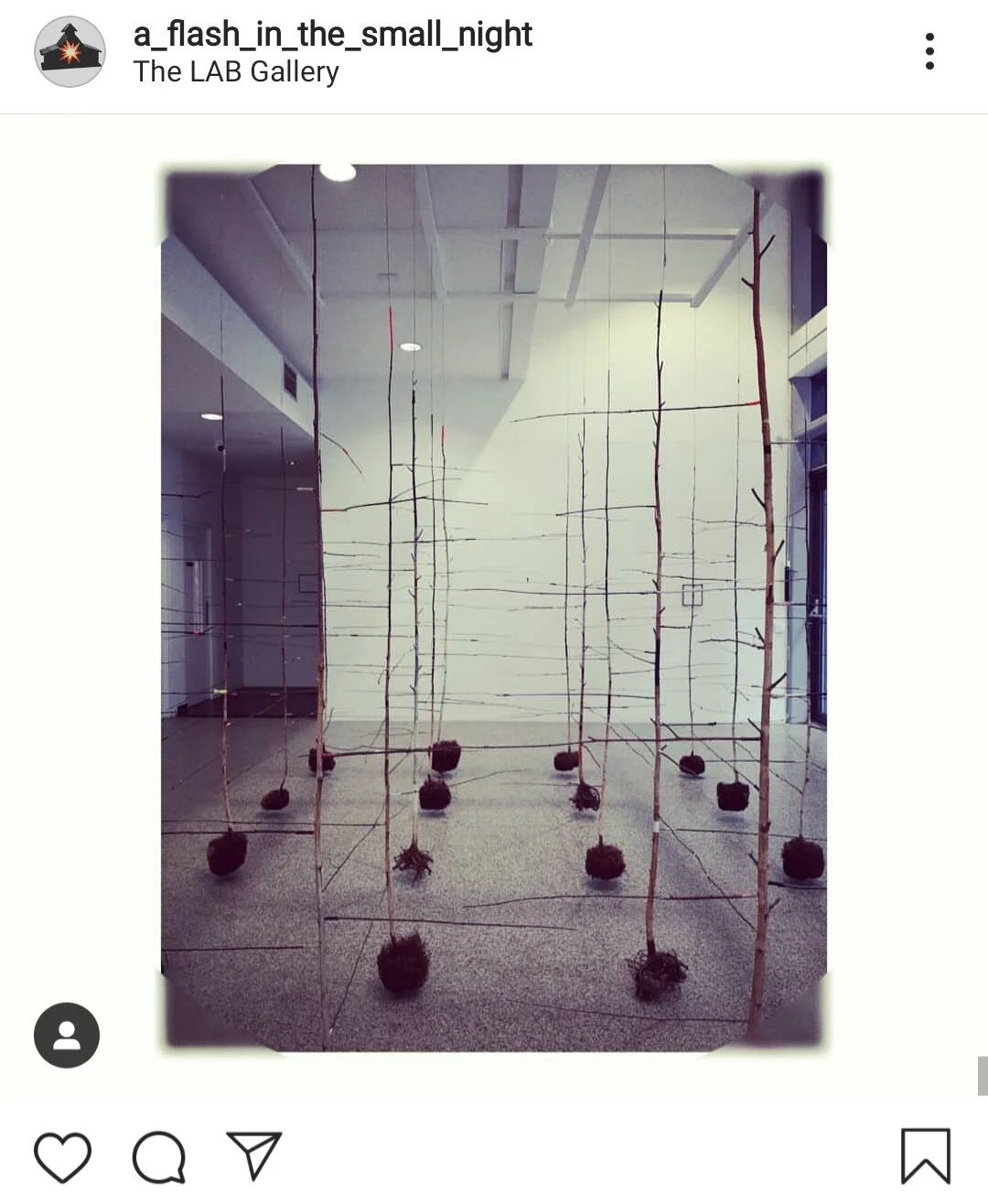
○The little wood cradles itself against the gallery as if born into a world without a mother. It's a sad little big thing with branches for arms for architecture to form floating reaching 🤳synonym.com 🄲🄾🄿🅂🄴 🄱🄾🅂🄲🄰🄶🄴 🅃🄷🄸🄲🄺🄴🅃 🄱🄾🅂🄺 Let's go with 🄶🅁🄾🅅🄴 short for Grover from the Muppets, & next upstairs to children's testimonials from the broken ground of Syria. I get Anita Groener's multiform approach to get me to look & look again in formal signatures • among them by children • that I recognise in myself—empathy being a mirror of the self found in external reality. And yet I cannot fully empathise with the *subject* of Syria the way I might empathise with, let's say, art. I have two young kids. Bad grammar, spacing issues, tangential madness, humongous full stops● marking the pleasure after the pain of the stupid sentence are signatures I empathise with upstairs, but not Syria. I have no experience like that experience. I get the 🄶🅁🄾🅅🄴 downstairs with its modernist sensibility & whimsical coloured twine to help grid and measure its self-consciousness, its shame, its vulnerability, its formal pride. It floats, or seems to float, with nested feet trying to be birds, to fly, hovering, uprooted from the world to have its branches nurpl'd to form a house, a home, with no solid footing, destitute, but pretty. I like it. I like the drawings too, drawings that gather marks, not make them. I did my homework on Syria a year ago toward a review of Brian Maguire's Syrian paintings at IMMA. Nothing but Syria on my mind, image after image, white helmets, children caked in grey dust & dark blood. I did the work obsessively and released it, like a PhD student, onto others when I got the chance, and moved on. I can hear your psychological riposte but it's not that. Here two woods press against one another, one soft, one hard. There's a monograph. I won't be reading it. Deeper meaning will not be achieved there. Perspective and empathy are worlds apart. The grove, the drawings, like poetry, the only things that slow me here, pointing inward to a truth that's not found in language. The artist holding herself in this little wood is message enough●

Jonathan Mayhew, 30 Oct

Jonathan Mayhew, 30 Oct

○"He does his own thing" is the reply after sharing my experience of Jonathan Mayhew's work at Pallas Projects Dublin. What's it mean to 'do your own thing' in an art scene that professes freedom to 'do your own thing'? Does it mean that everyone else is doing the same thing? (Seems like that sometimes.) Or at the very least conforming to a language & its execution that is legit, agreeable & understood as art by the given community? Art was never what the artist said art is; art is always what the given art community says art is. To speak of an artist 'doing their own thing' says so much about, if not consciously so, of the homogeneous language of art that we have inherited from tradition and learnt from our peer communities. The statement "He does his own thing" is rife with ironies & contradictions like all commentary on art ought to be. Especially if we consider JM's work being a memento mori of other artists' & culture's things. In fact JM "does his own thing" by not *doing* "his own thing". We don't invoke the names of other artists in the presence of JM's selfless work because they're already named or intimated in the title or execution of the works. Other artists doing their own thing exist bi-proxy as bi-product. We are given everything here except "Jonathan Mayhew". Conceptual coyness is not on the cards, just the readymade happenings (ticking clocks & Live & Let Die flowers) or tributes & nods to tradition from which JM's "own thing" springs forth. The sediments of originality, of doing your "own thing" were never sourced from the unspoilt self anyway, but from the spoils of tradition. Original artists have always been legendary 'stealers' (P.Picasso) legendary 'borrowers' (J.F.Handel) legendary 'plagiarists' (W.Shakespeare). The formation of the stylist is indebted to other voices. No smoke, but mirrors aplenty embed JM's work in his repurposing of Love & Death & Time through the resurrection of a cast of artists for whom Love comes easily—F.G-Torres • Kathy Acker • Mark Fisher. Today it’s easier to think sincerity is being p̲e̲r̲f̲o̲r̲m̲e̲d̲ by contemporary artists. JM's observational tragedies show the world is more than its stage. Bow🙏●

Cafe Painting, 6 Nov

Cafe Painting, 6 Nov

○My wife sees it. I see it. We see it. After securing respite from rain and riot in crowded café, our rioters wrestle with hot chocolate from adult mugs. A painting • a snow-scape. Nothing extraordinary beyond weight and symmetry of composition and tête-à-tête between off-centre this and that. But backward step from perceived clichés tells us something different. Foregrounded fence, a somewhat silly retention, real or imagined, challenges first impressions beyond and before the pale: the painter that painted it, the covert context that cradles it, us as observers coveting it, and the price tag €85 tethered to it. (FYI: the image does not wrap around the edges as café paintings seldom don’t.) Phew! What painter hurdles a timber fence to take a photograph from such a sheepish sentiment in the bᵣᵣᵣ of winter... and then commit it to paint, to public scrutiny, to time? Not a friend. No, a stranger, penned in before a paradise, or an image of a paradise chosen because it's exactly what it’s not, what it cannot ever be. Even if the painter didn’t hurdle, even if the painter chanced upon this scene in the snow or upon some cosy kitchen table, this painted image of something lost and out of reach is paradise found, painting figured. Sure, another detached painter living off flat images of flat images with deep, liquid intentions—abjection comes in white too, as absence, as possibility. Pew! But how deep a thread of canvas can be if a painter is not so... so-so. 🍼There There🍼 Here the details are entrenched. Here—there—where the fence meets the painter’s lovingly gabled initials 𝗠𝗠 (Like 𝐿𝑜𝓁𝒾𝓉𝒶’𝓈 𝗛𝗛); where the pure shadows thrust against the lying snow; where the evergreens pose a problem; where the Y-fronts trail comes skidding from the house—exit and entrance, a past and a present as arbitrary and innocent as brown fingerprints decorating two white mugs●
The Painters, 25 Nov

The Painters, 25 Nov

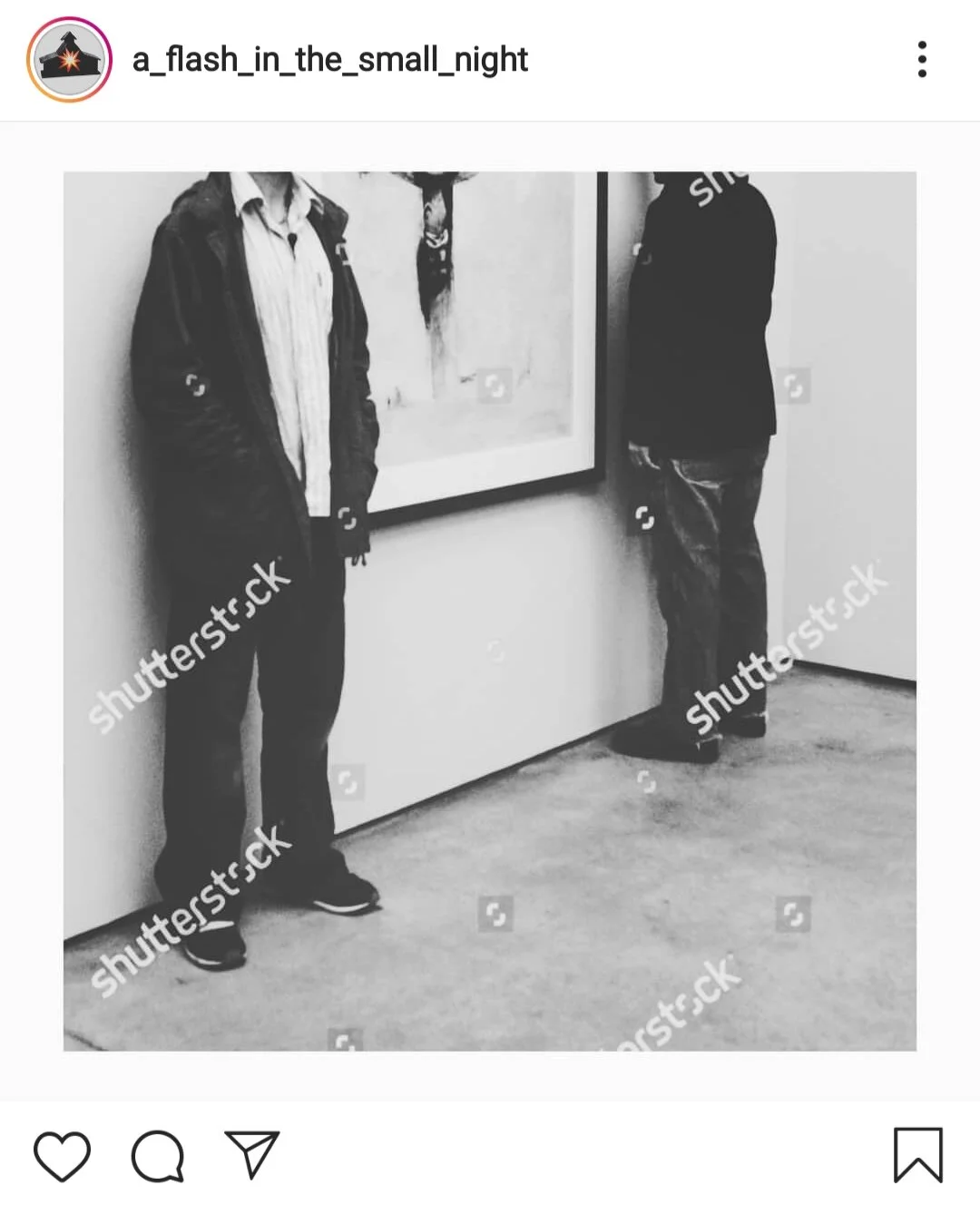
OPENING NIGHT🍻💪💪💪💪💪💪💪💪💪💪💪💪💪💪💪💪💪💪💪💪💪💪💪💪💪💪💪💪💪💪💪💪💪💪💪💪💪💪💪💪💪💪💪💪💪💪💪💪💪💪💪💪💪💪💪💪💪💪💪💪💪💪💪💪💪💪💪💪💪💪💪💪💪💪💪💪💪💪💪💪💪💪💪💪💪💪💪💪💪💪💪💪💪💪💪💪💪💪💪💪💪💪💪💪💪💪💪💪💪💪💪💪💪💪💪💪💪💪💪💪💪💪💪💪💪💪💪💪💪💪💪💪💪💪💪💪💪💪💪💪💪💪💪💪💪💪💪💪💪💪💪💪💪💪💪💪💪💪💪💪💪💪💪💪💪💪💪💪💪💪💪💪💪💪💪💪💪💪💪💪💪💪💪💪💪💪💪💪💪💪💪💪💪💪💪💪💪💪💪💪💪💪💪💪💪💪💪💪💪💪💪💪💪💪💪💪💪💪💪💪💪💪💪💪💪💪💪💪💪💪💪💪💪💪💪💪💪💪💪💪💪💪💪💪💪💪💪💪💪💪💪💪💪💪💪💪💪💪💪💪💪💪💪💪💪💪💪💪💪💪💪💪💪💪💪💪💪💪💪💪💪💪💪💪💪💪💪💪💪💪💪💪💪💪💪💪💪💪💪💪💪💪💪💪💪💪💪💪💪💪💪💪💪💪💪💪💪💪💪💪💪💪💪💪💪💪💪💪💪💪💪💪💪💪💪💪💪💪💪💪💪💪💪💪💪💪💪💪💪💪💪💪💪💪💪💪💪💪💪💪💪💪💪💪💪💪💪💪💪💪💪💪💪💪💪💪💪💪💪💪💪💪💪💪💪💪💪💪💪💪💪💪💪💪💪💪💪💪💪💪💪💪💪💪💪💪💪💪💪💪💪💪💪💪💪💪💪💪💪💪💪💪💪💪💪💪💪💪💪💪💪💪💪💪💪💪💪💪💪💪💪💪💪💪💪💪💪💪💪💪💪💪💪💪💪💪💪💪💪💪💪💪💪💪💪💪💪💪💪💪💪💪💪💪💪💪💪💪💪💪💪💪💪💪💪💪💪💪💪💪💪💪💪💪💪💪💪💪💪💪💪💪💪💪💪💪💪💪💪💪💪💪💪💪💪💪💪💪💪💪💪💪💪💪💪💪💪💪💪💪💪💪💪💪💪💪💪💪💪💪💪💪💪💪💪💪💪💪💪💪💪💪💪💪💪💪💪💪💪💪💪💪💪💪💪💪💪💪💪💪💪💪💪💪💪💪💪💪💪💪💪💪💪💪💪💪💪💪💪💪💪💪💪💪💪💪💪💪💪💪💪💪💪💪💪💪💪💪💪💪💪💪💪💪💪💪💪💪💪💪💪💪💪💪💪💪💪💪💪💪💪💪💪💪💪💪💪💪💪💪💪💪💪💪💪💪💪💪💪💪💪💪💪💪💪💪💪💪💪💪💪💪💪💪💪💪💪💪💪💪💪💪💪💪💪💪💪💪💪💪💪💪💪💪💪💪💪💪💪💪💪💪💪💪💪💪💪💪💪💪💪💪💪💪💪💪💪💪💪💪💪💪💪💪💪💪💪💪💪💪💪💪💪💪💪💪💪💪💪💪💪💪💪💪💪💪💪💪💪💪💪💪💪💪💪💪💪💪💪💪💪💪💪💪💪💪💪💪💪💪💪💪💪💪💪💪💪💪💪💪💪💪💪💪💪💪💪💪💪💪💪💪💪💪💪💪💪💪💪💪💪💪💪💪💪💪💪💪💪💪💪💪💪💪💪💪💪💪💪💪💪💪💪💪💪💪💪💪💪💪💪💪💪💪💪💪💪💪💪💪💪💪💪💪💪💪💪💪💪💪💪💪💪💪💪💪💪💪💪💪💪💪💪💪💪💪💪💪💪💪💪💪💪💪💪💪💪💪💪💪💪💪💪💪💪💪💪💪💪💪💪💪💪💪💪💪💪💪💪Diptych of painters walk into gallery to shoulder air & forced sociability that perfumes it. Silently they separate as if preplanned maneuver. One turns back to everything but crowd. Other swoops close to everything but crowd. Black-head close. Then pulls away to find his lean. Shoulder to shoulder they muppet something quick & absolute. Their eyes, now lazy, fall back on the crowd. Oorah💪

Surf's Up, 29 Nov

Surf's Up, 29 Nov

○Artists today are surfers, surfing under a moon of typeset & paper. You're in or you're out. Don't bicker. Bickering is loaded with want. Choose. Choo choo chooosing (or is it choice..?) changes with age, with responsibility, with time, with those that hang on or hang back for the next wave. Artists surf, and the surf is changeable. The twenty something surfer is fine, no questions, having fun. Blonde. Thirty something & big questions are asked by the surfer & surf. Forty something & the questions stop and a freewheeling, toe-grasping longboard acceptance coasts the artist into a waking dream of nostalgia & regret & sometimes, bickering. If you're lucky you'll catch a wave of opportunities for two years to swim under a trickle of funding, ink, groping hands to temporarily beach on yellow under blue. Then you’ll find your feet digging their heels into the sinking sand. Opportunity turns autumnal as leaves drift across a chalky grey surface to freeze later in the navy winter. Nice. You could wade back out on your longboard & sandals & grey for a smaller wave, but why? Why bother? They're just going to judge you comparatively, generationaly, historically. You're older now. Thirty something. Remember: big questions being asked by the surfer & surf. You bicker, youth don't; you want a specific want, youth are want. (Or maybe you'll get a mama early on & entertain the smoke & mirrors veiling the empty vehicle of visibility into an accepted & tolerated quantity, unchanging, never to be visited upon by the real necessity to wipeout, again & again & again.) Change might be overrated though. Breaking stuff too. What’s wrong with cementing a future, a legacy, mama's mortgage, the nuance of you which you broke first in art school to end up mending over a lifetime. Trauma has a lot to answer for. Waves end🌊

Banana-gaf, 17 Dec

Banana-gaf, 17 Dec

○TOO MANY ART OBJECTS; NOT ENOUGH ART. Maurizio Cattelan's banana with gaffer tape is an erect reminder of the dedication of the contemporary artist to reify their art & identity as objects, cropped from life, from setting, from context, from history, from flesh, from social & aesthetic awkwardness, on Instagram. If your burning issue with Maurizio's banana-gaf is the use of banana & gaffer tape over art & hobby then your definition of art lies somewhere between medium & craft; if the vulgar sums of money exchanged get your goat then your definition of art lies in the monetary; if the invisible lack of effort frustrates then your definition of art lies in visible labour; if the lack of meaning tongue-ties your appreciation then your definition of art lies in its message; if you put it down to "your taste" then you might as well deal art the mother of coffee-table-book blows and proclaim "all art is subjective"; if Maurizio is your problem then Maurizio is your problem; if you're angry then you're looking in the wrong direction; if you're nonplussed then you never had faith in art trade fairs and still wonder why art colleges continue to drag students to suffer them. Any one of these singular responses or definitions or values is lacking. We know in the next couple of years, if not months, Maurizio's banana-gaf will bless the covers of coffee-table art books that sum up contemporary art in one sweeping title like ART TODAY. This is a certainty. Banana-gaf is made for books like that. This perfect, instantaneous, front on, yellow erection--"Unicorn of the Art World" its first collectors christened it--is deepthroat before you've tempted to parse its context or intent. To do so would be as dumb as parsing a joke so as to peel back its funny. Banana-gaf is titled 𝘊𝘰𝘮𝘦𝘥𝘪𝘢𝘯. The not-so-funny thing is, all those not invested in art, or not part of a community of art that take art seriously, will ascribe this momentary and temporary gaf--albeit its canonical legacy already written on the spoilt & eaten bananas that make up its week-long history--to all contemporary art. Last week's hugfest at the Turner Prize was all a bit much anyway. Reset🍌
On Berlin Opticians.

From screenprinted zine Summer 2019

From screenprinted zine Summer 2019


Up until recently, the bane of my writing existence was the group show. When writing on group shows you are obliged—in avoidance of what David Foster Wallace called “the asshole problem”—to mention every artist in the review. The solo show liberated me from obligation, from inclusiveness, from the curator, from the institution, and to some extent, from myself, to focus solely on the artist and their work and see where the cumulative identity of the artist via the artworks might take me in terms of writing. As you might have noticed, the solo show has been out of fashion for some time; that is, except for the 1% museum retrospectives of Wolfgang Tillmans and the established male cohort et al. Thing is, ever since a bigger than 1% chunk of would-be artists turned coat to become would-be curators (probably because the latter are realists), the group show has become our staple diet. The group show is more communitarian, more pluralist, less careerist than the solo, even though it’s a byway to getting a solo show down the line. (After experiencing Eva Rothchild at the Venice Biennale last month I started to feel for the first time that the “mid-career” reasoning behind the selection of a solo artist for Venice feeds into everything that is bad and poisonous about the catapulting of solo careers over the promise of art, the championing of art.) And yet, even though the solo show is the dream, the group show the compromise, it’s lonely going solo. The whole original Star Wars narrative hangs in the balance between Han Solo being independent but lonely, all the while repeatedly joining the tribe at the moment of most need and being needed, their need, his neediness. I loved him for that; orphaned Batman too with his attachment issues and silly reluctance to join faux family, The Justice League. The wah wah-idealist in me says, It all comes back to subcultures in the end, which art was once part of but, today’s artists—according to crazy and calculating Sean Scully in the infamously entertaining 2019 BBC documentary—embrace the mainstream with a crazy and calculated image on Instagram. I was part of a subculture for 11 years of adolescence-cum-adulthood: skateboarding. Being a skateboarder you end up hating institutions, from banks to police to parents who never got fed up of saying “grow up” from year 10 to 21. What I learnt during some 4000 days of being a skateboarder was, it can be fun and full of purpose being outside the mainstream. Skateboarders speak the same language, on and off the board, just like artists speak the same language, which mainly frustrates the mainstream. I did my very best to annoy and frustrate during those skateboarding days, and less in terms of words (gift of the teenage grunt) and more in terms of personal aesthetics (DIY face piercings with a combo of mullet, skinhead and long fringe holding skateboard and wearing a Napalm Death T-shirt shouting “NAZI PUNKS FUCK OFF”). See, subcultures are neither the resistance nor the rebellion. Subcultures celebrate difference in their retreat from the sameness of the mainstream, but their difference is based on similarity and like-minded ideals. We are tribe. (Here I had written a brilliant critique of the curator, bla bla bla, but why bother, the same way a critique of technology, social media or Trump is pointless.) So: solo shows suck because “it’s all about me”, while group shows feign “it’s good to share”—something I repeatedly mantra to my six-year-old son who hasn’t yet caught on since his hairy head emerged from my wife. Oxymoronically: We are selfish. Which brings me beautifully to Berlin Opticians. Even though I had a nice chat with Marysia Wieckiewicz-Carroll—the Director of Berlin Opticians—yesterday, at the Assembly Hall Dublin amidst her troupe of represented artists, I feel I can write with integrity about what I really feel about Berlin Opticians as an art experiment. First: What is it about Berlin Opticians that makes it so attractive? Against mountains of creased foreheads looming over black lakes stickered Instagram, Berlin Opticians slid off the top shelf last year, all sexy, like it was pre-packaged and still in its cellophane. The name, Berlin Opticians, seemed pretentious, even when its provenance became known—the simple repurposing of a retired opticians on Dublin’s Capel Street which reads today (in red) on Google Maps, “Permanently Closed.” Alas, the questions followed: What is Berlin Opticians? A gallery? Promotional engine? Conceptual conceit? Marketable ploy? Wolf in drag? Berlin Opticians is, for lack of a better definition, a nomadic gallery, whose home is almost exclusively online, except for a few flirtations with physical space to keep the old in with the new—the two physical iterations so far have been at heritage sites. Berlin Opticians exists as a group in physical space and solo through online presentations. Online is business, offline is communitarian; cold vs warm respectively. It’s a brave move; and it took a curator to make the move: MW-C. That’s how it’s been since we came out of recession—artists with one hand in their pocket and the other panhandling to the curator. “Why were they picked?” other artists ask. The 10 artists Berlin Opticians represent, or make up Berlin Opticians, are primarily respected, socially connected and professionally networked artists with a few token new-kids-on-the-block. Unsurprisingly for a commercially driven enterprise, Berlin Opticians is made up chiefly of painters—”there’s a lot of painting” (intimating too much painting) at Assembly Hall one artist tells me. The majority of the ‘blessed 10’ have been around the block a few times, and like most Irish/ Ireland-based artists, have completed the urban and regional artist-run back allies and art centre cul de sacs to the point of toleration—it’s a short circuit. After a year of teasing the physical art scene and saturating the “Instagram scene” (in the causal words of a young photographer), the nomadism of Berlin Opticians, this collective entity in its plural singular, is the antithesis of what we expect from private or public art institutions in Ireland. Berlin Opticians’ dalliances with physical space are just that, dalliances, teasing out its online presence on Instagram and a dedicated website. Conscious of the image economy, it leans heavily on Instagram and produces online exhibitions wherein tastefully staged photographs tease out a marketable fantasy, or, in business terms, market potential beyond the provincial where the private art market is like 5 people. After only a year, Berlin Opticians roles off the tongue without much thought. As an image it has saturated the art scene with the virtual promise of something more that the physical experience of art, something that has become a fact in the fleeting interactions with art as image on Instagram. The director and artists involved are pretty much saying: This is how we experience art now, online, so get with the image, “grow up”. Of course, this new direction has been provoked by the external reality that art is really on its own. So here I find myself excited by Berlin Opticians’ promise—the virtual teasing and physical flirtations have massaged skeptical shoulders. Although I have experienced these artists solo or in different group contexts, the Berlin Opticians’ experience is more umbilically tied to an entity, a mothership, a welcome invasion of collective art enterprise. Berlin Opticians reminds me of Andrea Fraser’s artist-run for-profit space “Orchard Projects” which, according to Brandon Joseph—“treaded a fine—and perhaps ultimately impossible—line between self-reflexivity and (to use a barbaric neologism) self-complicity, which could veer at times into self-promotion”. (Disclaimer: All Orchard’s apples fell out of friendship.) Or John Kelsey’s and Emily Sunblad’s Reena Spaulings with its collective sensibility and marketable critique that today still treads a similar impossible line with conceptual tightrope walkers like Merlin Carpenter (Truth tell, I’ve always wanted a local Reena Spaulings). Except for its acronym, BO, Berlin Opticians is less punk than those critically self-reflexive and complicit New York iterations of ironical resistance to and compliance with the artworld, a world that recycles market critique to its own promotional and monetary needs. Unlike New York, we have no art market to critique, so Berlin Opticians sits pretty on the rounded edges of the swimming pool in a motel, desert side of Trump’s Mexican wall, with its little piggies sloshing in the blue yonder, waiting, wishing, as shooting stars scratch the celestial chalkboard. That said Berlin Opticians propose an alternative vehicle to the tunnel vision of the art scene which, like meth in Fresno, has become overly dependent on the 5 or so Dublin galleries, and on public funding in particular, which conditions a certain type of art, artist and administration aware of audience strategies and project outcomes that is overly self-serving, self-protective and sociopathic—when the funding boxes are ticked ties are invariably cut. Since Berlin’s arrival there’s been a sexy smoothness to it all, marketability, a collective marketability that has activated the art scene and, in my rare social interactions with artists, garnered acceptance after just two public exhibitions (If you don’t count the spin-off show of selected Berliners at Garter Lane Arts Centre Waterford as I write this). [Timeline infractions ahead if you have been reading this closely.] I write this on the eve of the next physical manifestation in the Assembly House Dublin which, no doubt, will be fending off the curious and, let’s call a spade a hammer, the cynical. There’s a lot of love out there for Berlin, but that means there’s a lot of the insidious other. For me, I’m interested in the t-e-a-s-e-d—out, short-lived physical events than the online solo exhibitions. The exhibitions at Assembly Hall and Merrion Square managed to yank the Dublin art scene away from their mobile screens to come together under one roof on opening night to celebrate this thing that is new and experimental and comes from necessity rather than privileged notion. Like music groups, Berlin’s strengths and desires lie in its collective smoothing over individual ego and ambition. In such a small and competitive art scene that, on the surface at least, hums with good will, such a collective entity has the potential to last and grow, like all upstarts, into—god forbid—something more concrete and established. There’s possibility in its current liquid state. There’s a flattening of the field so one artist bleeds into the other, into Berlin, without recourse to offend, a perennial group show of Stepford Husbands and their assimilated Wives. At Garter Lane Arts Centre it feels more punk (Maybe it’s the white walls); at Assembly Hall it’s more civilized, like history has already been indelibly written—bet artists on the opening night of the latter became more self-aware of what they were wearing! Image is everything. Artists never owned the physical ground on which they exhibited anyway. Never. It was a lease, temporary, virtual, that twist of capitalism. The Instagram scene is a veritable mixed tape of love songs that cannot really offend. As Berlin grows and hopefully takes more risks it will offend, if it hasn’t already, with its branding and smooth business plan. But Berlin is more than a galley or a business plan, it’s a spark that that is enlivening the art scene, and hopefully other artists to take their hands out of their pockets, stop panhandling curators, and encourage a real community that stops being about ME, my art, my career, getting Venice, and contributes to a like-minded subculture that involves groups, not private reading or seething groups, but groups that break into the public sphere and shout and laugh and cry and do something brave and bold that leaves everyone open, vulnerable, wounded,  agasp, angry, but still fucking alive. 

Others.


On the Poetic Life.


From screenprinted zine Summer 2019

From screenprinted zine Summer 2019

The poetic life? There’s two ways of looking at this: one, I believe most artists end up living the poetic life; two, most artists want more than the poetic life can ever promise--desire and conflict is a means to continuity, to living, to a life. What does the poetic life offer anyway? It is my contention that the poetic life is the life we ought to be living as artists, no matter how threadbare that life might be. And the ‘more’ beyond the poetic life will never live up to its billing. Let me tell you why. In recent years I’ve had several conversations with artists who have retreated from the art scene proper: Dublin. Some feel betrayed by the art scene as if it didn’t live up to its promise, a promise of the artist’s ideological making; others just got fed up of what they grew to perceive as the smell of bullshit. The art scene is something you come to understand and know over a period of time. If exposed to the centre for long enough you get to know its players and its patterns, its synaptic connections like a big fat tender brain. Overexposure stitches you into this fat tender brain. Tenderised, the studio life of an artist is crossed with the social life of the artist, so work and play become indivisible in an instrumental way of thinking and desiring about becoming an artist. In an environment lacking in resources and opportunities, it’s only common Darwinian, Marxist, Freudian sense that the same environment will not be lacking in opportunists. Artists will dismiss their networking capabilities offhand, but they have no real choice or insight into the hydraulics of their own desires and ambitions in an environment that is machined by professional sociability. The question is what is the alternative to the ice white casino at the centre with its redwoods and weeping willows and perennial weeds? Let me answer by telling you a story about a story. Last week I watched Jim Jarmusch’s film Paterson, wherein the poetic life is portrayed as symbiotic and synergistic with the workaday life. Paterson’s protagonist is a young bus driver named Paterson living in the city of Paterson. Duality plays out like a Superhero movie here as our poet/ bus driver heroically performs (without cape or spectacles) what David Foster Wallace calls the “day in/ day out” of ordinary life against the backdrop of what Adam Phillips calls the fantasy of the “unlived life”. His stay-at-home wife paints her house and clothes. She is a black and white reincarnation of another poet, Hilda Doolittle, who inspired William Carlos Williams, yet another poet, who wrote an epic poem titled, you guessed it, Paterson. She dreams about having kids (twins!), being a famous country and western singer, and seeing Paterson’s poetry read by the world. She’s more the mother figure of a slow-cooked son who never left home, or the retrograde portrait of the good wife. I find the scenario comforting, like back in the womb of home sweet home—I’m a mama’s boy it seems. Their world seems smothered as I write it down here, but it’s not. A temporal whole opens up in their world when we are proffered a glimpse of a photograph of Paterson as a Marine on the couple’s bedside table in uniform in the opening sequence, which nudges us to speculate on or melodramatize a history just out of frame. The poet/ bus driver combo could never have come fully formed into this world. Something must have made Paterson the way he is to notice and pen down the minutiae of life and memory in such precious throwaway detail. PTSD from being a Marine is as good a reason as any. Poetry comes from trauma that shakes words loose from their regimental purpose. The fact is, the photograph of the Marine sits pride of place beside the couple’s love and intimacy every morning and night for the seven days of the film. Their life is normal: bad dinners, good cupcakes, walking the dog, having a pint, waking up together, dreaming of the future, the silent solitude of being a bus driver surrounded by people but not obliged to perform, against the loose ends of domesticity—there’s a feminist critique in there <<both ways>> but I’m not going there. Through a neoliberal lens you would call their life stair-less, contributing nothing outside their own bungalow’d ambition. Thing is, the lovely couple seem contented happy: her with a smartphone and projects that stave off the vertigo of freetime in the home; him with his secret notebook and simple lunchbox. They are artists: one reaching out, the other in retreat—a balancing act: equilibrium. The repeated references to William Carlos Williams in Paterson is important here; a poet (according to Linda Welshimer) “willing to live the kind of rushed existence that would be necessary, crowding two full lifetimes into one... learning from the first and then understanding through the second”. William Carlos Williams was a doctor for 40-odd years. What’s poetic about being a doctor or a bus driver if (in your secret journal) you are a poet/ doctor or poet/ bus driver? It is the dual life that is poetic, one “rushing” into the other, one public, one under-the-arm private, both in plain sight if you are willing to acknowledge the possibility of normalcy being the seedbed of something poetic, something more, as the curious and empathetic Chinese man (and poet) does in the penultimate scene of the film, where we find Paterson wallowing in the trauma of her dog eating his journal with all that poetry that has infused the seven days of the film. It’s poetic to this fellow poet that this young man sits here, on this bench, kindred souls, lost in thought monitoring the mundane for something extra. This is poetic: taking silent stock of last night, this morning, this life, so a line can be bled from the day. It’s as if poetry—New York School poetry á la Frank O’Hara and John Ashbery—is nobler than the everyday, even though contingent on the everyday. The poet’s job is to stroke the knot that is the present. I like Howard Nemerov’s definition of poetry: “Poetry is the other way of using language. Perhaps in some hypothetical beginning of things it was the only way of using language or simply was language tout court, prose being the derivative and younger rival.” The language we speak today is not art speak, it’s institutionalised speak, something that Derrida’s Deconstruction was hoping to undermine down to the molecular paradoxes and frailties of language. I summon up the Texan painter Forrest Bess when I think about the poetic life. A fisherman by day, a painter of visions by night. But unlike Paterson—who is a unique case for some unique reason—Bess wanted more than the poetic life could give as he simultaneously dropped the hand on the New York art scene. Bess was conflicted for a purpose beyond painting, beyond professionalism, beyond the good life. Today you are an enigma if you retreat from the artworld—Martin Herbert wrote a book, Tell Them I said No, on enigmatic artists who withdrew from the artworld. On the ground the poetic life is about just getting by, threadbare, once removed from the world, although touching it, bringing us a little closer to it at the same time. Everything promises more. The artistic life is designated as an alternative life to the mainstream life. The poetic life, as portrayed in Jim Jarmusch’s Paterson, reinforces the values inherent in fostering the alternative life of the artist, free from the constraints, conditioning, and self-censorship of instrumental professionalism. Does the artist go underground (or embrace a poetic life above ground) as Marcel Duchamp called on the future artist to go in the 1960s, or does the artist keep on knock-knock knocking on the joke door of the art institution? Retreat! 

Podcast.

Others.


For Generosity; Against Speed Curating

In the mid–1980s, somewhere in movie suburbia, a sexy vampire flexes like an umbrella on a doorstep while two teenagers defend their home with scalded cheeks. In without an invitation, I spy from my submissive couch through the ghostly blue glare of the TV set the lives of teenage boys and girls possessed by fantasies of sex next door while overprotective parents make bad watch outs. The shadows, long and awkward, scissor one another under jittery street lamps and midget clusters as the world comes to an end under the vigil of electricity. I don’t know why this coming-of-age, -of-night, -of-end, of-beginning scene is the setting for my critical feelings binding *speed curating* with a clenched fist, but there you go: a vampire, a home, an invitation, day falling into night, reality into fantasy, childhood into adulthood, and back again. Certainly this constructed daydream is drenched in the loss of anticipating experiences yet to be experienced, and futures of desire that adolescence can only dream or imagine through screens. Youth is always waiting for the future, willing it forward, waiting for things to happen, as teenage me did in church, in school, in the disco, on the corner of the pretty village I grew up in as a boy. I bullied a future into being before I was ready to experience it. The future never comes quick enough as a kid, and when it does... you want more future. Speed curating arrived at my doorstep a few years back. Like the doorstep vampire it arrived out of the blue, eclipsing my attention, as it pitched a quickie over something more generous. You can hear the artist reciting to himself the self-harming excuse, “No harm in trying." Speed curating proffers a fast track way past the bullshit into bigger bullshit (note: my experience of speed curating is second-hand artists’ regret—I am sure some artists have had a good time, some curators the worst time). What artist could deny an invitation to discuss their work with those at the doorstep of power: curators. What I first appreciated as a playful contrivance, or ironical expropriation, or even critical commentary on the mainstream and its fondling of speed over substance, speed curating, nothing less than an abomination, has become an annual tradition with more and more curators signing up, something that makes power relations between artist and curator more visible and more real. “No harm” you might say (again), let’s show the art scene for what it really is, vampires and mirrors. But what if I say, “Look in the mirror.” Unlike the morally free and mirror-free vampire, artists indeed have a reflection, a self, a soul—in the empathetic sense. If anything, artists are soulful mirrors. What do you see? What I see is a gangway of artists waiting to be invited en masse into a social Get Together, something that would never happen naturally because the art scene is split between those that are visible and those that are not, those at the centre and those that are not, those who are not here and those that are. It’s all good; democratic. It’s like this: when the vampire crosses the doorstep they suck your blood, the blush of childhood transfused into a greedy gush—a glamorous death for the short-lived. The immortal vampire, not under the pinch of death, is morally free; the mortal artist with the possibility of bi-proxy immortality via the legacy of the artwork is free? if not morally. We invited the soulless and mirrored mainstream in at the advent of the internet. We came out of our subcultural closets, tore down our bad-mannered posters and straightened our Darwinian slouches—evolved from the beautiful shouldering of narcissism that is the artist’s pain and pleasure—overnight, to meet the mainstream with open arms, a world that we had retreated from at the advent of becoming artists. Now we commandeer such mainstream stock phrases as “Sorry for cross posting”. We beg for acceptance. We worry about the unsolicited, the impolite. GDPR. Bollox. “Sorry for cross posting” is an apology with a silent ‘but’ at the end of a beginning. If you lob on another t you get ‘butt’. “Sorry for cross posting” is the implication of an arse without the shitstorm; or with the shitstorm depending how far an artist will implicate their tongue in the arse of an apology that is neither sincere nor lives up to what an artist should never do—apologise. Sorry! What happened was: once upon a time an artist or few went to a professional workshop for artists (laughs), then another, and another, before every artist went and shared the good professional advice delivered by curators and other career apologists until we were left with artists making apologies en route to discrediting themselves by continuing on with their whispering but(t)s. This is just the tip of the shit pile. Over the past two years I have mentioned ‘speed curating’ in passing as a critical example of how the contemporary artist has come to see themself as a passive pawn in terms of the art administration that holds sway over the dissemination and display of their work. Speed curating is a depressing outcome of the hyper-professionalisation of the artist and our art scene; being professional meaning, you get in line and wait for the ding-dong of the bell. Dong. Dong. Dong. Previous mentions of speed curating in my writing were propagandist in delivery and tone, sneering (it’s an indefensible and easy target), never explicating why speed curating is wrong and should not be supported or facilitated by artist or curator or institution. I write this now on the night I receive an update on the forthcoming VAI Get Together where, we are told, 40 curators (named and profiled) lay in waiting for the unnamed or unprofiled in the arid, salty, cracked desperation of the opportunity dessert at the next event in June. We can make lemonade from this lemon but the effort would make us look old and wrinkled, saving ourselves from something like conviction. The moral imperatives of generosity and kindness are lost to the self-serving lies of confirmation bias when money and careers are at stake. Kindness is a big word, generosity even bigger. Artists sometimes use the word ‘generosity’ in relation to time and attention given to them by other artists during their education or just the day to day of being an artist. Generosity is rare. When given or received it is spoken almost like a surprise, as if time and energy given over to someone else is a rare thing in this commodifying and on-the-clock culture. Generosity has nothing to do with money; generosity is good, one-sided, an act of kindness, of sacrifice that, most of the time, is hidden from view. Generosity is about levelling the playing field, making everyone else into invisible men and women, even yourself, so that the receiver hears and trusts themselves in your empty presence, void of agenda or instrument. Generosity is all or nothing; it puts the giver on hold, and the receiver at risk as they bleed out. With our blushing cheeks drained by the vampire of experience, maybe growing up is the real problem for the artist whose childhood blush made they retreat under the covers of art where being out of place was a virtue not a shaming. Blush on. 


Podcast.

Others.

The New Collectivism (2011)

From Visual Arts Workers Forum.

From Visual Arts Workers Forum.


I will do anything for you I can but I am afraid it will not be a great deal. The chief use I can be, though probably you will not believe this, will be to introduce you to some other writers who are starting out just like yourself, one always learns one’s business from one’s fellow workers...
— Letter to James Joyce from W.B. Yeats, 1902

Over the last few years a burgeoning climate of collectivism has emerged in Dublin. Although the backdrop to this discussion is Dublin, it would be short-sighted to define ‘new collectivism’ only within the concrete parameters of Dublin city; as Ralph Waldo Emerson wrote: “The city is always recruited from the country.”(2) Nicholas Bourriaud used a similar loophole when he avoided the strong tradition of ‘British only’ artists showing work at the Tate Britain’s Triennial in 2009, by defending his international cohort of artists for his Alter modern curatorial with the words “passing through,” making them somehow eligible because they fit the profile of his “radicant” transient artist. (3) The same can be said for these collectives – the original Francis Street version of Monster Truck Gallery is one exception in this sense, as it is still going strong after five years in Dublin – I will give my reasons later why I define Monster Truck Gallery as a collective. After much legwork, that included conversations with individuals from collectives and attending symposiums – where one individual would ‘represent’ the collective – what was common among the majority of collectives was an ill-defined, scatterbrained ideology that had no centre. This is an understandable side effect of the collective brain, where a Borg-like consensus (4) will replace the usually strong convictions of the individual. I must also state that my definition of collectivism is not tied to the amateur, DIY definition of the word in the context of visual art initiatives on the fringes of the established, but includes the professional state funded institutions that form other types of collective cliques. The collaborations, collectives, events and exhibitions, which are the focus of this text are included because they represent a subtle form of collectivism, that is on the verge of changing how art is made, or breaking the ‘bad’ habit of individualism and art. I will signal instances when collaborations have happened by the equal measures of chance and intent, or when collectivism has been a symptom of the institution. The groups I talked to included The Good Hatchery and Visual Artists Workers Forum, while I also profile Monster Truck Gallery and past collective initiatives such as the Defastenism Movement. Perhaps a good place to start from is a point in time when everything in the Dublin art scene seemed to be changing for the good – if you believe the hype. In 2009 Brian Dillon and Maeve Connolly wrote an overview of Dublin’s art scene in the City Report for Frieze Magazine. At the time the country was economically punch drunk – two years later we are still staggering. Dillon and Connolly’s report was optimistic, running under the by-line “Despite the decline of Ireland’s ‘Celtic Tiger’ economy, Dublin’s artist-run and institutional spaces are thriving.”(5) In 2011, Gemma Tipton wrote a similar overview of the “thriving...grass roots” art scene for the Irish Times. (6) Soon after Dillon and Connolly’s report, Lee Welch’s FOUR Gallery shut shop. This was followed by the closure of the Benburb Street art space, thisisnotashop. The clichéd claim that was banded around was recession was good for art, and that new DIY energies would develop alternative ways to negotiate the less bustled Dublin streets in the shared formation of ‘collectivity’. Looking further back, the first ‘local’ and visible instance of what could be termed the ‘new collectivism’ was the Defastenism movement – founded by undergraduate students at the National College of Art & Design in 2004. “Defastenism” has the twang of college politics and institutional revolt, the ‘ism’ harking back to an era of art manifestoes – not, by the way in a post-modern ironic way; but via serious post war artists such as Mondrian and Rothko. Collectives like Defastenism rarely spring out of the institution – fundamentally, art colleges promote the spirit of competition and individual progress. I’ve defined Monster Truck as a collective. My reasoning behind this description is based on the Francis Street version of Monster Truck Gallery and Studios, which between 2006 and 2010 had a core group of individuals who ran, curated, rented the studios and showed periodically at the space. I am not saying that this was an nepotistic arrangement, rather that it was a necessity to keep the core group of hardworking and determined individuals together in order to survive. Monster Truck relocated to Temple bar Dublin in 2009. The ‘new’ Monster Truck is a different animal, inviting new energies in the form of curators and emerging artists into the Monster Truck family. In essence, we could say that the ‘amateur collective’ at Francis Street provided the groundwork for their more professionally minded incarnation at Temple Bar, which neighbours Temple Bar Gallery & Studios, and does not seem out of place or out of its depth. It must also be said the sustainability of Monster Truck was not based on the anti-establishment ideology of many of these amateur organisations. Monster Truck fertilised a relationship with the Royal Hibernian Academy (RHA) in 2008, one of the oldest and respected arts institutions in Dublin. Patrick T. Murphy, RHA Director summed up their initial exchanges by saying: “What we decided to do was take the spare capacity that exists in the RHA during the redevelopment of Ely Place in areas such as administration, marketing, curating, educational activity, financial management and Friends events and offer those services to Monster Truck to help them get across the message of the great work they are doing.” (7) Since then, the Monster Truck/ RHA collaboration has manifested into exhibitions such as Let’s Go, which was curated by RHA Exhibitions Curator Ruth Carroll. In 2011, the group exhibition entitled 'Life Vividly Lived (Part 2)' was manifested from a week-long residency on the Island of Inish Turk Beg in September of 2010. The artists were jointly selected by Peter Prendergast (Director of Monster Truck) and Patrick T Murphy, giving new credence to their ongoing and future collaborative exchanges. Collective gathering, debate and networking seems to be the main focus of the Visual Artists Workers Forum (VAWF), which “was initiated at VISUAL Centre for Contemporary Art, Carlow, by Carissa Farrell and Emma Lucy O’Brien in 2010.” (8) It would be ‘recruited’ by the city through Tessa Giblin (Curator, Project Arts Centre, Dublin), Rachael Gilbourne (Artist/Assistant Curator, Project Arts Centre, Dublin), Anne Lynott (Curatorial Fellow, MAVIS, Dublin), Emma Lucy O’Brien (VISUAL Centre for Contemporary Art, Carlow), and Ruairí Ó Cuív (Public Art Manager, Dublin City Council).” Speaking with Gilbourne in July of this year, the word “networking” was mentioned as a big part of the VAWF meetings, while her answer to my question regarding a VAWF “ideology” was an outright “No.” (9) I wrongly deduced left-wing intonations from VAWF’s initial forum entitled WORK IT in April 2011 at the Project Arts Centre Dublin. The awkward juxtaposition of ‘worker’ with ‘Visual’ is provocative, but it is too early to tell whether the voices will the heard beyond the site of the forum. There have been recent instances in Dublin when individual artists have given up their individual art practice for the collective, such as the group show 'Offline' – curated by Rayne Booth, at Temple Bar Gallery & Studios Dublin, where Eilis McDonald’s overarching presence amongst the other five artists through her scatter installation of ‘found objects’, called in to play the position of the individual within the collective. Also in 2011, Michelle Browne’s solo show at the LAB, Dublin, entitled ‘out on the sea was a boat full of people singing & other stories’, was headed by Browne’s name in the literature and advertising for the exhibition, but the most prominent aspect of the solo show was the ‘collective voice’ heard from Browne’s videos. The activities of Ruth E. Lyons and Carl Giffney of the Good Hatchery can be discussed here through my “loophole” of Emerson’s recruitment of the country to fuel the elements in the city. Lyons and Giffney literally illustrated this in their timber and photographic portraits of rural water towers found in the midlands for Paul Murnaghan and Sally Timmons’ group show entitled This Must Be The Place at IMOCA Dublin in 2009. Lyons and Giffney were invited to make a work on the back of their efforts in which they “offer studios and workshop spaces to artists for the realisation of ambitious art works free of charge” at a 19th Century hayloft in rural County Offaly.(10) The show at IMOCA could be termed a collective endeavour as it brought together ten artist-led organisations currently working in Ireland and asked them to consider the question, “how do we think?” For the context of this text, The Good Hatchery represent a less subtle and rare form of collectivism with a strong ideology that ironically speaks of sustainability (what other amateur collectives strive for) in their use of base materials and elements such as light and water. Speaking with Lyons and Giffney at the Fire Station Studios Dublin in May of this year they disclosed that they had been invited to make six works under the ‘Brand’ of the “Good Hatchery,” not to mention the invites they turned down.(11) What I deduced from our conversation was the pairing of Lyons and Giffney as a collaborative art practice happened by chance through the initial invitation for the IMOCA show. More significantly, for the five projects that have followed, ownership and responsibility has been placed on the shoulders of the ‘Brand’ of The Good Hatchery rather than the individual. In July of this year the Photo Ireland and Gradcam symposium Collaborative Change – commons, networks, exchange, questioned this new collectivist mindset of free co-operation in the exchange of education, funding and distribution of the arts. A Skype presentation by Michel Bauwens at the Collaborative Exchange symposium provided a brilliant overview of the underpinnings of collective networks, beyond the city to encompass a global scale – what he described as a tri-archy of “peer production, governance, property.”(12) Bauwens convincingly presented the business of sharing and producing on a global scale. However, there were issues he voiced himself to do with the sustainability of these models – specifically the reality of the state and other large institutions as “unmovable presences”. Sustainability was also called into question regarding the presentation by Dublin based Provisional University who voiced their opinion concerning capitalist forces promoting the ‘marketability’ of the education system. The fact is, without private funding alternative positions such as theirs, will always depend on the resources of state universities, not to mention the accreditation that ‘proper’ universities offer the individual to further their career in the arts. Further afield, the New York art collective The Bruce High Quality Foundation has managed to manufacture an unaccredited ‘art school’ through private benefactors and miniscule public funding. However, its actions are packaged as art rather than empty rhetoric. Roberta Smith has described ‘The Bruces’ provocative antics as “sharp, well-aimed and unusually entertaining form of institutional critique.”(13) There are two reasons why I included Yeats’ letter to Joyce at the start of this text. The first is the context of Dublin Contemporary 2011. In a perverse way the letter intentionally references the recent reshuffling of Joyce for Yeats – who is the new creative mascot in the relay to Dublin Contemporary. The late Irish Taoiseach Garret FitzGerald once said that “tribalism” in this country was borne from the provincialism promoted by the GAA. In the context of Dublin city, the tribalism that is evident amongst the art institutions amidst the reshuffling of more than just mascots in the roll out of Dublin Contemporary, has unveiled a Dublin art scene that is more tribal than ever, and as one anonymous commentator said, has triggered a welcome cull. So just like the amateur organisations in Dublin city – who I like to call the ‘timber frame proletariat’ – who continually shift and evolve in their ambition to survive one more day, the established institutions and artists have realised for the good that their foundations are not fully set after all, and the need for change is long overdue. Secondly, the letter illustrates a need for community in the formation of the individual’s career. Jean-Luc Nancy tells us that the ‘limit’ of the individual determines the emergence of the “community.”(14) The “limit” in Joyce’s case was Dublin, until he would recruit Dublin as the site for Ulysses. In a sense, Joyce is the epitome of individualism: Joycean being a term that tests the limitations of the collective as a source of creative output. Today, individualism is a bad word – it is whispered rather than shouted aloud. Personally, I think a bit more tribalism and individualism would be good for art in Dublin; for the reasons I have already outlined. The truth is, behind the ‘lemming revolt’ of collective cliff diving there could be individuals, like Joyce or Yeats waiting on the collective’s shoulders to make their mark.

James Merrigan is the winner of City Limits, a visual art writing award devised and run in collaboration by Dublin City Arts Office & Visual Artists Ireland. City Limits was devised as a developmental opportunity for writers, as part of Dublin City Council Arts Office and Visual Artists Ireland’s commitment to encouraging and supporting critical dialogue around contemporary visual arts practices. THIS ARTICLE WAS ORIGINALLY PUBLISHED IN VAN, 2011: EDITED BY JASON OAKLEY.

Notes

1. John Kelly and Ronald Schuchard, The Collected Letters of W.B. Yeats, Volume 3:1901-1904, (Clarendon Press 1994) p249

2. Ralph Waldo Emerson, Farming, 1870, from The Collected Works of Ralph Waldo Emerson: Society and solitude, (Eds) Douglas Emory Wilson, Ronald A. Bosco, (Harvard University Press, 2007)

3. Tom Morton interview with Nicolas Bourriaud, Tate Triennial 2009, (Frieze Magazine, Issue 120, Jan-Feb, 2009)

4. “The Borg are a fictional pseudo-race of cybernetic organisms depicted in the Star Trek universe… organised as an interconnected collective, the decisions of which are made by a hive mind, linked by subspace radio frequencies.”

5. Brian Dillon and Maeve Connolly, City Report, (Frieze Magazine, Issue 124, June-August 2009)

6. Gemma Tipton, Leaving space for the grassroots, (The Irish Times, Monday, May 16, 2011)

7. Monster Truck website.

8. Visual Artists Workers Website.

9. Conversation with Rachael Gilbourne, Temple Bar, Dublin, June 2011.

10. Conversations with Ruth E. Lyons and Carl Giffney of The Good Hatchery at the Mermaid Arts Centre Bray and Fire Station Studios, Dublin, March and April of 2011.

12. Quoted in literature for Collaborative Change – commons, networks, exchange, (Gradcam, July 2011)

13. Roberta Smith, The New York Times, Artists Without Mortarboards, (September 9, 2009)

14. Jean-Luc Nancy, The Inoperative Community, (University of Minnesota Press, 1991) p4


On Paul Hallahan & Lee Welch.

From screenprinted zine Summer 2019.

From screenprinted zine Summer 2019.

To bear a name is both terrible and necessary. The child emerging from the space-filling chaos of names, comes eventually to see that an escape from verbal designation is never complete, never more than a delay in meeting one’s substitute, that alphabetic shadow abstracted from its physical source. 
— Don DeLillo, Ratner's Star, 1976

No symbols where none intended, Silly renditions of human behaviour, like a string we can only see the middle of, and being swept along is not enough, the acceptance of solitude, a “favourite” of Bergé, some long ascent, A sudden softness, where nothing is allowed to be itself, like light and cloud-shadows, the seemingly uneventful and motionless moment, through the abundance of its pasts, the frighteningly silent abyss, Future Primitive I, & II, the song of a bird that has come to love its cage, Keeping your head up, True level digging comes up, goes down, This is how we walk on the moon, Another isolated incident, what else can I say I’m still waiting for this moment to be gone,. LEE WELCH’s and PAUL HALLAHAN’s painting titles have epic ambitions and cosmic proportions. Sealed with dangling commas, they suggest more is on the literary horizon but, the present painting, painted before its title, is just about enough—for now. This way? or that way? we are caught in a shower of choice littered with compromise. Looking forward into the sky, these painting titles encompass time, space, dream and the tormenting nature of language as it confronts the felt discrepancy between solitude and isolation, up and down, or the “middle of a string”. We are prompted to relate the unrelatable relationship between painting and its title—the painting saying one thing, the title saying quiet another—in this garble of ventriloquism that is doll but not in synch. Everything echoes here in the infinite present. Similar in grammar and sentiment but sealed with a full stop, and the tide was way out., are the last words from David Foster Wallace’s Infinite Jest (1996), and the first words we entertain at the entrance to Lee Welch’s and Paul Hallahan’s two-man exhibition at dlr Lexicon Gallery (on second thoughts maybe we should have started with these…). It’s almost perverse to have the last words of a novel as the epigraph for an exhibition. Not that and the tide was way out. is a spoiler. No. DFW’s Infinite Jest is immune to spoilers—you have to read Infinite Jest to not get it. The last words turned first words here have the same effect as a rainbow trout’s tail catching its own splash above the water, and then gone, still, just like that… The end. Against the young-white-male-reader stereotype, my wife just finished Infinite Jest. One night last week before she came to ...and the tide was way out., she found herself adrift after accidentally swiping forward into the book’s infamous endnotes on her Kindle. The morning after she quizzed me about the ending: “Does it end here, when Gately…?” There was a sense that she didn’t want it to end, that the end (that was not the end) was okay, for now, and the swipe forward was a way of prolonging the conversations we’d been having for the past two months. I called Infinite Jest an experience; she said she didn’t want it to end. History is all about ends. (We forget our beginnings.) Lee Welch and Paul Hallahan—neither one a synecdoche of the other, like Deleuze for Guattari—present work that is meant to be felt rather than seen. That’s my first and last thought which, from here on in, is just being coloured in. The present is an important thing to think about when you walk the length of the dlr Lexicon among this room full of paintings that, centurian-like, guard the white walls. We can divide this colourful guard into two artists for sure. Lee is the figurative painter, using paint to mount tanned polyester (and history) with deliberate brushstrokes in a heavy palette of soft viridans and peachy pinks and mallow whites and glinting silvers “and so on” (an expression of maximalist Wallace’s as if et cetera was not nearly enough to sum up the excess of life); Paul is a process painter, meeting the canvas horizontal, letting paint pool and loll and stain where a human or brush cannot sink. As a divider the semicolon is fragile between these two; the semicolon being uncertain of its function anyway. Beckett didn’t like the semicolon. Let’s go deeper. Lee’s painting activity is ‘young’ as a recently turned painter. Without the weight of history in terms of toil and waste that is valued as legacy, as sacrifice in the painter’s commitment to the long game. There is something valuable about being a newly born. Everything’s new to the touch; the hold and curse of language is a long way off. Lee’s paint lies on the surface, rebounding off the threads in fat strokes that are meant to be. Paint feels like it’s being pushed through from the backside of the brown canvas like at-hand Sudocrem in a house with kids. Medicinally clean paint comes smeared on the abject tan of the canvas as if the artist is wearing surgical green gloves before the shit hits the fan: a clean Mike Kelley is always more complicated than a dirty Mike Kelley. References to other painters abound here, from the late starters to the mystical. Alas all are being forgotten in their recruitment--traces in the sand before the sandstorm. These paintings are the pulsing negatives we see floating on the landscape after we turn away from a blinding flash of light. If Lee is a surface painter—the glimpse of the rainbow trout’s tail—then Paul is the fish that disappeared, deep beneath. Paul’s paintings look like submerged survivors of an abandoned artist’s studio where the leaking roof finally gave way to the sky, sun, and moon unabated for several hundred winters and so on. These are night and day paintings as seen from outer space. They don’t have markers of sun or moon because eyes have been long lost to the long and flat cosmos. Time is embedded as paint, deep set in the fibres, put there by gravity and slant. Paul’s digital projection of sequential circular images of the lush and alive natural world is thrown from the inside of the exhaust-pipe-black depths of an almost obsolescent overhead projector. This tautological contraption is something you might make if you were lost and had time to stop getting lost further in time. It’s a giant step back, a pin-prick view from inside some dark closet on the moon that has been riddled by the shrapnel of deep space and time. This is the view of our echo. A beginning, an ending, or just a moment between, Lee and Paul collide at the centre of the gallery in two collaborative paintings, two portraits, that summon other art historical ménage à deux on paper and canvas by Willem & Robert or Andy & Jean-Michel. Why? I’m intrigued. They are paintings that are less adrift, less lost, less isolated or in need of solitude. They momentarily hold each other, a parenthetical break in this yearning sentence that has no full stop


Podcast.

Others.

On Maggie & Roland & Me.

From screenprinted zine Summer 2019.

From screenprinted zine Summer 2019.

I love real artists. I love how they assert themselves very early on to dream and then brave the economic and psychological shortfalls of forever becoming an artist. I love how, undeterred by systemic obstacles and cruel responses to that dream, they continue on in education, in life, in love, in family, in frustration, in rage, in their unfurling to a defenseless openness where senses and memories, theirs and culture’s, leave them petalless to assaults that wound and scar from the inside out. Not unlike the closet of sexuality—with the addition of an ironical winking light bulb—artists come out in their assertion of life, of A life, as something to be lived not denied. The real artist’s destructive capacity equals that of the workaday accumulation of everyone else, and that, if you think about it, in terms of numbers of artists vs. everyone else, is superhuman-destructive. I came out as an artist—that is, came out of childhood finding myself clinging to the artistic affirmation I’d received as a child from friends and family, to find myself stranded between the naive dream of being an artist and the workaday reality that my father represented to me as a coal miner, a forester, a security guard, followed by his forced early retirement due to a DUI that ploughed grill-first into his unfurled car and body at 5.55pm—five minutes from home. From that dinner time on, that GBH borrowed holes in the workaday ethic of my father—cats have nine lives but don’t live on with eight traumas; humans carry on with carry-on. For the last week I have been reading three memoirs: Jean-Bertrand Pontalis’ Love of Beginnings, Maggie Nelson’s The Argonauts, and Roland Barthes by Roland Barthes. The good difference between eyes meeting across a crowded bar and ‘I’s’ meeting on the written page is the the possibly lack of performativity and the psychic excess in the latter. Here I am riding passenger to these drivers in boxer shorts and T-shirt in bed beside my wife. The Word can give all-access to the private you. Reading you—Jean and Maggie (my mother’s name which I have learnt to repeat here without sadness) and Roland—I am the most unflinching and attentive and assertive me without being conscious of the fact. Reading—like Proust wrote and is read—coldly attends to life and intimately denies it. Last night, in my boxer shorts, it was Maggie Nelson’s turn. I came across this passage—this ‘fragment’ in Barthes’ terminology—where Barthes is referenced in one of those embedded quotations of Maggie’s wherein she somehow manages to ventriloquize with a megaphone whilst still keeping her voice. The Argonauts is a novel, a memoir, an essay spilling out on the page with Maggie’s family looking on and Maggie looking in, wielding assertive language behind her back with a gaping hole in her chest. Here she writes and thinks and shares as if her parents will never read it, even though, in so many words, they wrote it, or, at the very least proffered the experiences that activate the white space between Maggie’s words. Here Maggie is breaking the rules laid down by her parents—and all the other mothers and fathers we appoint and anoint over a lifetime. Here Maggie is putting her body on the line en route to putting her relationship, family, privacy and other writers on the line. Her quotation-dropping is not a case of ‘Look what I’ve read!’ but ‘Look how I have read you, them, me!’ Excerpt: [Afraid of assertion. Always trying to get out of “totalizing” language, i.e., language that rides roughshod over specificity; realising this is another form of paranoia. Barthes found the exit of this merry-go-round by reminding himself that “it is language that is assertive, not he.” It is absurd, Barthes says, to try to flee from language’s assertive nature by add[ing] to each sentence some little phrase of uncertainty, as if anything that came out of language could make language tremble.” ] Reading this I start to think about the unassertive languages of the art scene, not just the press releases and art writing but the body language of the artist as s/he retreats back to the closet where the light bulb is full of want not need—need being the ingredient for action. I realise what I’m missing when reading Maggie. Her invocation of Barthes is not a theory extinguished in some ideology of want to leave the grey plume of the poetic; she is not fleeing “language’s assertive nature”, she is letting language fold through her in her contracted and bold prose that, without arrogance or closet-sightedness, just is. Be assertive, but not too assertive! The artist finds herself in a environment lacking in resources, just the bare minimum. And that’s okay—to want more is to need less, act less. Questions at professional skills seminars go something like this: Should I contact a curator? What should I say? How long should I give them to respond? Should I attach my CV? Should I ask them to meet for a coffee, dinner, desert? And so on. As I read Maggie I notice no ‘perhaps’ or ‘maybes’, no apologies for thinking or opining or repurposing in a certain way. Maggie opens up with the exclamatory joy of anal sex and anticipatory pleasure of dildos in the shower. This is not to say her prose is arrogant, vulgar, there is vulnerability here in the boldness, wounded, and not the castrated wounded woman—what my son at four years after catching my wife naked in the shower severed with “You have no willy! Poor you.” The male ego is not assertive, it is established by an external riptide that carries it along without the choice of getting drowned in it. Poor him! Maggie’s ego is a wounded one, whether that wound is inflicted by society or her mother, who knows but Maggie, but woman, for whom putting her body on the line is nature, not nurture. “I nodded, shyly lifting my breast out of my bra. In one stunning gesture, she took my breast into her hand-beak and clamped down hard. A bloom of custard-coloured drops rose in a ring, indifferent to my doubts.” Just now I received an email from mother’s tankstation Dublin. My feelings about it are fizzing so I thought this the best time to be assertive in my feelings about what I think is an assertive verbal gesture on the part of Mothers’ writer that, in this current press release for the solo exhibition ‘Jessie Homer French: Paintings 1978 - 2018’ comes part way out of the closet with the light bulb winking again: “The Dublin gallery of mother’s tankstation has a sort of hallway or cuboid antichamber from which one enters directly from Watling Street, positioned pretty immediately below the desk from where most of these writings magically appear…” Alchemy? Assertive? Assertive Alchemy? I’ve always enjoyed MT's press releases even if I thought I didn’t (like a lot of people) in the very act of reading them, sometimes re-reading them. They create consternation, and are always assertive in their support for their artists, obvs, wielding a manifesto (that was rewritten recently) but in its first edition proclaimed what “Mothers” did not mean, which probably meant just that, or that and more. As the weight and lightness of images topple the physical art scene online, MT’s assertive language here gives me hope that I am in the right game, writing for art. That writing, that language, can be assertive where artists cannot, and it shouldn’t be tamed because, as Barthes reminds us (and Maggie performs), language doesn’t tremble, we do. 


Podcast.

Others.

On Eva O'Leary.

From screenprinted zine Summer 2019.

From screenprinted zine Summer 2019.

Ever painted self portraits? I did. Lots when I was a painter. Hour upon hour looking at me, failing likeness of me (for me, or how others perceived me). Jacques Lacan’s psychoanalysis pivots on ‘me-ness’, especially when looking in the mirror, that diptych of self, hinged or unhinged, me. Before self realisation in the mirror as infants we are happy, language free, unaware of the other, integrated in the world as a whole without desire to know oneself outside oneself because no split between here/here and over there/there exists, happy at the warm breast of the mother in a plump landscape until language wholly-holy-holey fucks it up. Our ‘likeness’ in the mirror is the difference between sepia Kansas and Technicolor Oz, home but not home, heimlich but unheimlich. Eva O’Leary’s photography brings all this home in the Technicolor of early adolescence sourced from her childhood home, Happy Valley, Pennsylvania. Yes, “Happy Valley”! Photographing adolescence—“female identifying” as the press release states in the gender-burdened vernacular of today—sets the stage for the expected: shuffling in seats, downward gazes, the battle with electric locks of hair that no scrunchie will ever tame. An accompanying film does all this like a lab experiment, cornering the subjects with focused denial; the way photographer Diane Arbus did when she skipped down to Washington Square Park N.Y. from her high-rise life to corner the subcultural basement of homeless winos and prostitutes described in the un-PC 1970s as “Freaks”. Sometimes when an artist corners a subject the artist gets cornered too. Subcultures reside in the corners of society, and artists are drawn to the little corners of society for their marvelous subjects. In some corner of some barn in Happy Valley—by the artist’s accounts a hyper-masculine jock and cock culture—O’Leary corners something so-so sweet—Wayne Thiebaud sweet—that the psychic excess that Judith Butler performs in terms of the performativity of gender and sexuality, and David Lynch aestheticizes in film from the abject soil of the American suburban pastoral, sours our gaze. These are photographs that aesthetically ripple outwards, strawberry and peach and ultramarine, dipping their toes in the cultural reservoir from which we now drink. Poison or not, these images are for drinking. Closely cropped photographic portraits give face, the face of early adolescence, that seedbed of adulthood and wet dream of sexuality we all pass through with retrospective astonishment at how we made it through in the first place. How? The confusion. The secrets. The pubic hair. The bubbling acne. The blood. Masturbation in theory. Braces. Pimples. B.O. Yes, that’s what we are smelling and looking at here, the biological gauge overheating, simmering to boil, to pop on the mirror. Not yet. Just yet. And yet, adolescence is nostalgia for those that made it through. The hope. The naiveté. The mistakes. The ripe innocence waiting to be spoilt. Not looking back, but forward, always forward. And what of innocence? To shelter from experience, good or bad, spoils in another way. Spoilt goes two ways: parents spoil and society spoils, the familial subjectivity of one vs. the cruel objectivity of the other. The spoilt will fly the nest to be spoilt. Inevitably. Waiting, waiting, waiting for the click of the camera, Eva O’Leary’s adolescent subjects have some control over their image as directors of the moment the photographer clicks the camera to capture their chosen pose reflected back at them in a two-way mirror. How do you pick yourself? It’s cruel. We don’t pick our name, our parents, our class. The other picks us—in the school yard. Here there’s no escape from me. You have to choose. Lips closed, parted, pearly whites, demented cheese. The body never fits never. Sugary seductive on the surface, the cavities of contemporary culture snarl through the American pie rictus of these in-limbo girls waiting to be photographed, waiting to be consumed, waiting for consummation. We look at these photographs of adolescent Americanness through the lens of contemporary adolescent culture which finds itself gazing at itself with an obsessiveness that would repel Narcissus. It’s the nowness of it all that gets you first; adolescent girls looking at themselves with thousand-yard stares in a two-way mirror (fit for the guilty until proven innocent). 10 years after Lacan’s mirror stage. 10 years off adulthood. 10 years off the future-mediated self that technology and society wills into being. Time transcends stillness as girl after girl after girl—in a Warholian sameness and multiplicity that draws out comparison and favourites—gets herself made up in front of the camera. “Identity is not personal” observed Deleuze. These are in-person photographs, in-the-flesh photographs, in-the-gallery photographs. Up close last night’s dreams flake in the corners of bejeweled eyes that in Millie’s case reflects her mirror image in one teensy, oily pupil. You might think that photography transcends medium-specificity; a photograph is the same in a book as it is on the cover of a magazine as it is on Instagram as it is, here, in the gallery, but you’d be wrong. Here the physically large format and display confronts. Here we are confronted by a double gaze, one that turns innards outwards. Larger than life, girl after girl blindly looks at herself, over the shoulder of shrunken-head you in the gallery. Their gazes are slightly off, as if contact lens have shifted and eyes are trying to focus on two things at once. Here, in the gallery, the hair and accessories that frame their faces have an aristocratic sparkle as they fade into pools of deep blue. We are a long way from the greys of German photographer Thomas Ruff’s new objectivity of the 1980s. Although here too an emotional blankness presents itself—a gunner-eye stare—as the world remotely holds itself in its hand. Ruff’s portraits are of his friends and peers who knew the score—they are making art, they are making a statement about themselves, their culture, what they see beyond the mirror. O’Leary’s subjects can’t look beyond the mirror. What they see in the mirror bounces back, hitting them hard in the midriff of identity, and a self in flux since the first day it toddled in front of the mirror and the world cracked in two. 


Podcast.

Others.

On a Model Art Scene

S &amp; L, from screenprinted zine Summer 2019.

S & L, from screenprinted zine Summer 2019.

Playing Snakes & Ladders the other day with my wife and kids I realise in split moment I’m having fun, before returning to having fun again. Flatness of the board game and crab-like race to the top—full of oxymoron and irony—made me think of Jacques Derrida and his deconstructive freeplay in terms of language, competition, centres and agents of influence, and artistic freedom in the art scene. I love Derrida, almost irrationally, somewhere between head and heart and head. I have read and reread him for 20-odd years, from the purity of Of Grammatology to its opposite—biography, and never really caught the tail never mind the body and head of his thought. He haunts with his ontology; ladders always lead to snakes to ladders, excessive signifiers reproducing like rabbits, cotton and cruel. It’s always Spring in Derrida. Birth, family, wild abandon of language both reproductive and pleasurable, but always surgical, forever suspicious. Lambs give birth here too; to more lambs. Language never grows up; establishes itself, institutes itself. Meaning and understanding and truth, those things we are most committed to, suspicious of and insecure about, in art, in life, are always elusive (or illusive) in Derrida because the excess of meaning in language—inside and outside the text, as much as written as spoken—and the mannerist spine of signifiers—never signified, sidewinding with arabesque patterns blurring with helical and horizontal movement and turns in time towards a tail (stay with me) weaving side-to-side in the blue-haze future of space and time, farther and further, leaving textural traces in the sand. I love the dance of Derrida because concrete meaning is oversubscribed to. We want meaning from life the same way we want careers from art. Not gonna happen! Derrida’s difficult language was invented to intervene and exploit and draw out the insecurities of language, the thing we place too much stress on to find the presence of meaning and measurement of value to fill the absence of understanding and function in art. On the night of the birth of my son—the most visceral of dreams—I was reading Derrida. The other night—5-years on—I posed a question to some Dublin-based artists (with Derrida in mind) when I attended the exhibition opening and pub-afters of Periodical Review #8, which I was invited to co-curate this year by Pallas Projects Dublin directors and artists Mark Cullen and Gavin Murphy. “A new model for the art scene?” I said. The question was not altogether rhetorical, and did not come out of the experience of curating Periodical Review, although being named in the mission statement an “agent within the field” like every Periodical Review curator for the last 8 years did get me thinking about power and agency and how artists, more often than not, are not named agents themselves. We are in a moment, it seems, that power is not equated with artist; when artists speed curate. Ugh. I'd been thinking for some time about the model of being an artist, and the toy model of the art scene in which the model artist moves and shakes, from art school to rented studio to exhibition to bare-faced whiteness of the gallery. Lie? It seems to me to be a toy model beset by corners and angles of influence; L-shaped without the Knight’s move. Art, for the most part, becomes art when it is seen by others, the long-haired process trimmed square leaving the buzz-cut results exhibited squarely against a clean white wall in front of eyes that know or are in the know. Art with a capital A is not a hobby shoehorned into a bedroom, a windowless garage, a domestic or rural life... underground. Art is an urbanite, a socialite, a careerist, a sacrifice. Art is all these things until it becomes bound by a certain shape that loses its malleability and mobility to become, inevitably, over the grind of time and cumulative responsibilities, self-imitation. When artists achieve something they have something to lose. Vladimir Nabokov, the exquisite writer of Lolita, said somewhere that his favourite chess piece was the Knight with its L-shaped movement. Vladimir’s love and respect for the Knight’s unusual attack and defense wasn’t exclusive to chess, but to literature too, Lolita being a house of sharp left and right turns, from past to present to future to bedroom to bathroom to love to abuse. We have lots of movers and shakers in our art scene but most choose the same narrow and vertical path, online and off—the only paths at their disposal? I don’t know… Year on year more and more artists emerge from the college woodwork to first wriggle and crawl, left and right, their flesh visible beneath the loose articulation of their newly formed shells, until they secure homes a little more solid, sturdy, architectonic, established, institutional (you see where I am going) with studs and struts that lead this way and that, that way and this—upwardly mobile—to form a house with L-shapes that become more □, more structural, as if the uncanny corner of freeplay were nailed shut. This is the model of the artist, to first make L-shape movements and then build a house with them. With Snakes & Ladders spread out before me and the Derridean trace of childhood and now fatherhood drawing out a curvature of time that bites its own tail, I wonder about the possibility of flatness, that gorgeous Snakes & Ladders flatness spanning 100 squares and games over a lifetime. Is it all a game? and if so, why did our art game become so vertical. Vertiginous social media has made its own high-rise institutions and reputations and flat-pack artists. But I have to trust the integrity of the artist who has chosen this impossible life with an impossible vernacular that buckles and bends our view of the world. Artists that make the Knight’s move. 3 snakes await my son on this board on the top row; 180 applications for a 10-slot annual programme await the artist-directors of Pallas Projects Dublin where the shadow of capitalism makes its encroaching presence felt in the faceless hotels and matchbox student accommodation that looms large over the future of our art scene. We move on, move on up. But we ought to aspire to a horizontal art scene where tables are turned and artists are doing the turning, not just in their work, but on the art scene, turning tables that tilt and flip the pieces, the players, the curators, flattening expectation and fostering a horizontal growth outwards, expanding, thinning, balding, prostrate, looking up at the sun where clouds make temporary shapes against the blue, where possibility is wispy, upward, not built of blocks, of reputations, but of vision. See how far I can see, not how far I can piss gold. Come the day when every agent-artist, with their own relative agency, contributes their time and energy and power outside of their own concentrated circle to other circles and other circles and other circles until the sky is teeming and the liquid field is flat and unified by recessed centres—lots and lots and lots of centres of influence and the artist’s tide is the thing that comes to shore and inevitably razes what has gone before and what is to come. A reproductive community. Lambs lambing. Unity.


Podcast.

Others.

On Jessie Homer French.

From screenprinted zine Summer 2019.

From screenprinted zine Summer 2019.

I exited Mother’s Tankstation Dublin with a firm handshake and declaration to artist David Godbold: “Here’s to small gigs!” It had been an hour of generous discussion that led to this…. “small gigs”! I walked away thinking that I’d just experienced a small gig, one that I would return to time and again to sublimate the next big gig. It went something like this… The painter looks down upon BERNICE, MONTECITO HEIGHTS. We know this is the name of the place because it’s plainly and purposefully written on the bottom left-hand corner of a painting by JESSIE HOMER FRENCH found written on the opposite corner. ALL in CAPS—these are not signatures! These are gravestones, planted on the walls of the gallery; and on the floor, oversized cut-out dogs inact lean-tos to another unique cultural lean-to on the Dublin quays, Mother’s Tankstation. Jessie Homer French’s paintings are testaments to a shouldering of Time, and a life lived and loved through painting. We can almost feel the breath of the painter on our cheek as we look down at lives being monitored with a brush that toys with the toy world that comes and goes and goes. The past is behind us but, here, face forward, cheek to cheek with the painter, it plays out before our eyes. These comings and goings are emphasised by boomerang highways drenched in tenebrist pools of alien twilight. Light burns into light to leave nature cowering under the glow of a dinky civilization as it gives one last push into the night. Left and right, place and name—‘place-name’ if they met in the centre—make you rethink the nature of the painter’s signature written in the corners of every café painting as not just convention but as an indelible reclaiming of the object the artist orphaned into the world to be possessed by other people. My personal references to this view of L.A. are not, self-surprisingly, from TV, but from literature. Thomas Pynchon’s The Crying of Lot 49 and Jack Kerouac’s On the Road similarly haunt similar hills in lonely and yearning arias amidst window-sill-cooling American pies and tear-gas clouds that wrench the ghostly social and romantic past into the disembodied present in rolling-with-hope verse towards the ever-nothing. Words have been composed, dreamt-up, experienced here—Ed Ruscha resides in GIANT LETTERS in the sky. It seems painting (undercover) has wandered these hills too, for yonks, all the way back to Pynchon (b. 1937) if not Kerouac (b. 1922). But Who Knows? Jessie Homer French (b. 1940) has just emerged from the Who Knows? of these hills onto another platform, one that has the highs and lows of a Super Mario game (b. 1981)—the international artworld proper. And these paintings look a little 8-bit, with their ping and pong formalism. Kids would get them because they are kids; adults might get them because they were once kids. They are the paintings we wanted to paint before we went to art school. They are made-up, and made-down—folding berths for the eyes to sleep and dream. They shine with a forcefield of lacquer as if the painter needed to protect them from the outside world, to seal them in, to stop them in their tracks, like gravestones that mark time, mark death, mark a life. Where there is life there is death there is life—we move on. The artist is feeling something with paint rather than speaking the languages of paint for its own sake. The technique is not exactly naive, but it’s not knowing either. It has purpose towards a certain storytelling. The flat patterning of perspectives of fauna and flora of this little bitty elemental world—flowers, fish, dogs, cars, forest fires, people—range across the paintings and walls of the gallery as if about to fall into our lap (not floor). A guy in a river hatchery vibrating with colour walks tightrope between two manmade ponds dancing with fish. Beyond, stick trees like stick people vie with the silhouettes of mountains in the distance; up close those same sticks and silhouettes weave together in paint like reeds caught in a flood. We are drenched. Perversely, but effectively, placed beside this hatchery humming with life (and adjacent a gallery door signed PRIVATE) we are brought down to earth to take perspective and wrestle with priorities in a graveyard where the mourning of a child, aged 4—the artist’s own daughter, plays out in a green field of 8-bit simplicity and childhood directness. This is not a game. A tree, spikey like a palm, like the one that Roland Barthes introduces his autobiography with, stands solitary and big and dark and One above an occupied bed of flowers, flowers that are given the most attention in paint. Life tucks in death. But it is those that have come here to mourn—black and white scarecrows willing away the black, not in a scrum under Hollywood rain and umbrellas, but set back at a peculiar distance, as if peeling away from the scene—that gets into your bones. Once again we are looking from the hills of L.A. and genuflecting to a life that we can only experience from afar. As humans we dream of the big gigs whilst living and reliving the small gigs. Strangely, when the big gigs arrive in our lives we end up reliving the small gigs. It makes you think that desire can only be lived through or reflected upon, but never appreciated in the present. Desire is HERE and NOW, we just don’t know it yet. I return to the here and now with David Godbold and the press release for this Dublin edition of this Jessie Homer French ‘survey’ (a London edition runs concurrently in Mother’s Tankstation London) and wonder, prompted by our discussion, why this exhibition has captured imaginations locally and internationally, as both make what has become the physical pilgrimage to the gallery, and not just take the easier virtual route and go online? It’s simple. Besides the intrigue that Jessie Homer French presents—if we can get past the artworld’s recruitment and resurrection of similar forgotten fairytales—in the press release Mothers’ ghost writer talks directly to us about the private comings and goings of the gallery via the post. The gallery is unlocked through the CONFIDENTIAL. As I stand (with David Godbold) in what the ghost writer describes in the press release as a “sort of hallway or cuboid anti-chamber from which one enters directly from Watling Street, positioned pretty immediately below the desk from where most of these writings magically appear…”,  both of us admiring Jessie Homer French’s L.A. wind turbines stamped with three stealth bombers, and what looks like a little Camille Corot pentimonto’d by a bored kid left to her own devices in the same “anti-chamber”, I admit to David that Mothers’ (and this exhibition) has been unlocked through the worded passion for this artist that infuses the press release. Nathan Zuckerman has left the building. 


Podcast.

Others.

On The Image

Renata Adler, from screenprinted zine Summer 2019.

Renata Adler, from screenprinted zine Summer 2019.

It’s 1969. The brilliant intellect, writer and infamous critic, Renata Adler, writes how over the course of “two and a half years... five days out of seven”, she’s watched soap operas “nearly always when I thought I should be doing other things”. She admits almost shamefully, almost—before qualifying that soap operas were a critical reflection of a new mediated America—that “I saw the characters in them more often than my friends, I knew their relationships, the towns.” We have all succumbed to addictions that were too comforting for criticality. Mine was a depressive lull in any ambition whatsoever in my early 20s when I would sleep in till 11am and awake to find myself downstairs slouched in front of Days of our Lives which, interestingly enough, was one of Renata Adler’s soap addictions in the late 60s. Christmas week 2018 I found myself reflecting on why Netflix serial dramas, a timely replacement for Days of our Lives, are so much closer to the intimacy we experience in real life. Maybe more so. The all-access serial drama, where life unfolds and doubles over on a flat screen that compresses the gaze so tight that diamonds grow in our eyes make the people we see walking and driving parallel on the commute home into pulp, with no existence outside of our narrow searchlight gaze. My latest Netflix binge is the German drama, Dark (2018), with its Heideggerian temporal simultaneity of past, present and future against the heavy palette and textures of an Anselm Kiefer. In other words, it’s German to the primordial bone. In the first few episodes we get to know the characters generationally as children, as adults, as parents, and as grandparents, as they travel back and forth through time from 2019 to 1986—the most ’80s of years—via flashback and time travel, meeting themselves and relevant others in the then and now of a small town in the middle of nowhere, where and when nobody in this temporal and geographic enclave seemingly leaves home because they have bonded in this “festering wound” of a place where relationships become traumas because of the incestuous nature of time travel. The best writers and critics are time travellers. In ’69 Renata Adler observed while ‘couching’ her potato actuality that “Perhaps they [soap operas] are what personal life was like, before the violent, flash discontinuities of media news and personal air travel came along.” 50 years on our mediated lives are more mediated than ever as we try desperately to make flesh and sense of our digital lives through our continuous and persistent presence on social media where we double down on our identity. But we know this and have accepted this virtual and violently narcissistic fate. What I am interested in here is not what social media is doing to our real lives but what the image, shared on social media, is doing to our art lives, as artists, writers or just lovers of art. Appetite for the real is my real question against this mirror reality that we proliferate all to generously in how we are engaging with art exclusively in the virtual field. Photogenic art, that’s where we’re at; we judge and experience everything now through the one mediated filter, the mobile phone. I am near the end of my commute and the audiobook On Photography (1977) by that other giant intellect, Susan Sontag. As I listen and dodgem Sontag hits home on something time and again in her time-travelling theories that reiterate the contemporary sensibility and relationship to images in their proliferation, their dissemination, and how images are becoming more and more less and less as the image field becomes increasingly homogeneous and flat and there is neither the feel of a ripple or splash in the real world of art. There’s a flattening of cultural experience but not of cultural capital. Whatever criticisms are lobbed at social media it seems we are in it for the long haul as artists, especially artists. When you bring up the Instagram experience of art most artists smile and admit it’s an unavoidable means to an end… but to what end? There is a serious yearning and want in artists’ participation on social media. Looking from the outside-in as a writer on art, an activity that necessitates a deeper engagement and criticality than other observers of art, including artists, I see social media having wide-ranging effects on the mentality of the artist and the physical nature of the art scene, which we do not give near the same attention or energy to as we do to composing the building blocks of our promotional hashtags on Instagram. The art scene has transitioned online. We do not have the appetite for going to galleries anymore, and when we do we manage our experiences with a phone and a photograph. Images are posted on the night or next day following the forced sociability of the opening. Why bother, eh! Install shots manage art better than in person, where and when we conceptually and emotionally stagger between thing and thought and time. We do not re-experience art as shock or new when the clinking wine glasses have long staggered home and we return to the gallery for a “proper look”. “Art is a self-consciousness act” Sontag claims across the sound and time waves. How self-conscious is Instagram? Is this the new consciousness? A digital consciousness? An art consciousness? Cigars drawn, Yosemite Sam shoots Sigmund Freud. If the art gallery isn’t a place we experience art in the flesh anymore, then what has the art gallery become, a showroom, a stage that facilitates the proliferation of more images? Galleries are not the end all of art, far from it. As witnesses to the shift from offline to online, from DIY to FYI, Instagram cannot be waived off as a harmless supplement to real art in the gallery. It’s way too pervasive, too convincing, too manipulative, too easy. Instagram does not excite physical appetite, it diminishes it. (I still want the fragmented experience of art where we confront art askew; or to use a word from Dostoyevsky, catercorner.) Contemporary art is difficult to manage in person. It’s not sociable, even when it tries in theory and practice. We always miss something in art in person. We are bad witnesses on the move in physical space. Art spread eagles itself across our vision to evade and elude our conviction to unify. We want metaphor, we get metonymy. We are intellectually agasp in front of art. We cannot hold art in our eyes’ grasp. Our blind spots dilate in our capacity to take everything in but not in any great detail. Art is bigger than the breadth of our eyes, grander than the small stories we shape the world with. We fill in where memory fails us; we gossip-in the details. We leave the gallery with traces of our experience; ontology is hauntology as Bennington said of Derrida’s deconstruction. We bring those images that we tried and failed to grasp in the physical setting into the real world; images that break down as new senses, new sentences form reflective facets on real experience. Diamonds in our eyes again. Images are starry in our memory, never still. The photograph, the image, the pic, is deconstructing our art scene in its stillness; we don’t live in the world (Dasein in Heideggerian). Instagram is just another institution of self, with its protective propaganda, distant and distracted and without instinct: “man has no instincts, he makes institutions” (Deleuze). From the dashboard Sontag’s says something about the lack of participation in the act of photography. It begs the question what does participation mean right now in the art scene if the art scene has migrated online to leave the physical setting of art to breathe in the fresh air of non-participation in this institution of self where no physical community can mingle, shoulder to shoulder in the accidents and errors of physical sociability. Are we participating when we go to a gallery to feel the air between art, us, and its context? Are we participating when we post an image or validate other images online? Are we participating when we divulge something personal about our other lives as artists? Are we participating when we theorise about participation in practice? What are we contributing? What are we sacrificing? Meaning of words change as the world turns on its vertical axis. It always goes back to the vertical: hierarchy, inequality, envy. Is the physical setting just an institution of display that has had its time and we are prolonging its execution, as new ways of experiencing art, claimed as secondary, are in virtuality, primary? The gallery is a Procrustean bed for the artist to lie in and get waterboarded by the ebb and flow of the economy? I know from talking and listening to artists that the pure experience of the studio and the desire and want dreamt up in the space of art-making never lives up to its display in the gallery. The paradox is, without the gallery, without the physical setting and the gaze of the public sphere, no matter how small that gaze is, the artist has no real desire to exist in process in perpetuity. Does an image posted of our work on social media at least momentarily pause the destructive force of process without end? Sontag says “porn”. Innocence is defined here on the basis of what we are exposed to through images rather than experience, and how that first shock image can never be re-experienced. Art that shocks only shocks once. Not cheap shocks, but shock in terms of a shockingly new physical perspective on the world, askew, catercorner, us and it. I remember an art history lecturer who filled his teaching time by inserting a clunky VHS tape of Robert Hughes’ art series The Shock of the New and sitting back while Hughes did his thing. It worked, it really did, because we had to sit through Hughes week after week, and some of those that did would go on to be artists and all of those that slept, well. The memory that stayed with me is Hughes’ verbal musculature overlaid on the image of a vertiginous Eiffel Tower, his symbol for burgeoning modernism against his believable narrative of Parisians climbing up the Tower for the first time in the late 1800s and seeing the city for the first time as a patchwork, what Jacques Lacan would call a quilt, something metaphoric and manageable. Life and art has become about distance rather than integration and participation; no more nudging opinions in the public sphere. We can look at Instagram as a platform for the artist to play or propagandise, a tool to expand the singularity of their vision or to distract from their black hole style. Susan Sontag wrote On Photography in 1977. As I arrive home to people who are not cardboard cut-outs, her words from the car stereo speak volumes, then and now:

Today everything exists to end in a photograph. 


Podcast.

Others.