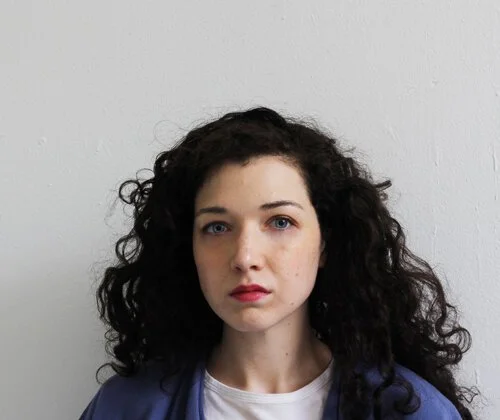
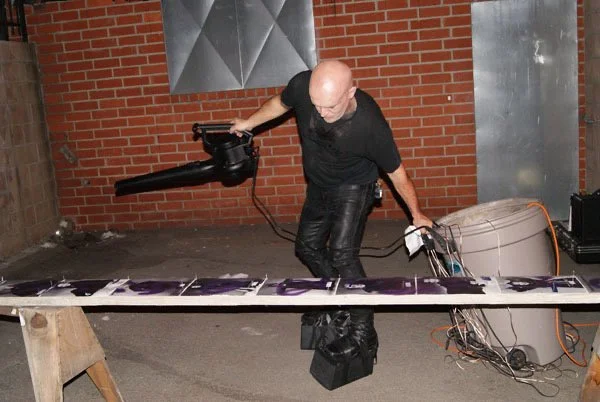
LEE WELCH

Lee Welch was born in Louisville, Kentucky in 1975 and currently lives and works in Dublin, Ireland. Welch creates gestural, atmospheric paintings that attest to the psychical and emotional depths of his chosen subjects and map out delicate negotiations between beauty, desire, and the painted image. Depicting figures from his own milieu, as well as from history, literature, music, and tennis, Welch finds feeling in that which he depicts, always rendered with the intensity of his particular humanism; a close looking akin to love. In each subject’s specificity, the artist reveals the universal feelings that connect us to each other, and that stretch from our present moment back through time.

Welch received his BFA from the National College of Art and Design (NCAD) in 2009 and his MFA from Piet Zwart Institute, Rotterdam in 2011. He has since been widely exhibited internationally and received numerous awards. Recent exhibitions have taken place at the Eli and Edythe Broad Art Museum, Michigan State University; Dublin City Gallery The Hugh Lane; Museo de Arte Contemporáneo de Castilla y León (MUSAC), León, Spain; Glucksman Gallery, Cork; Objectif Exhibitions, Antwerp and Kerlin Gallery, Dublin. His paintings are in private and public collections such as the Arts Council, Dublin City Gallery, The Hugh Lane and the OPW - State Art Collection.

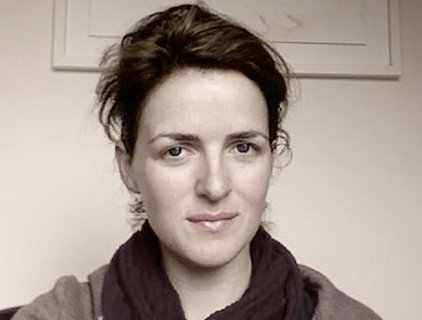
SUSAN MACWILLIAM

Born in Belfast in 1969, Susan MacWilliam represented Northern Ireland at the 2009 Venice Biennale. Susan is a lecturer in Fine Art at the National College of Art and Design, Dublin. Her video works are held in the British Library Sound Archive. Solo exhibitions include Highlanes Gallery, Drogheda (2017), FE McWilliam Gallery, Banbridge (2016); QUAD, Derby (2014); NN Contemporary Art, Northampton (2013); Open Space, Victoria, BC (2012); aceart inc, Winnipeg (2010); Gimpel Fils, London (2008); Jack The Pelican, New York (2008); Temple Bar Gallery, Dublin (2004); Cornerhouse, Manchester (2001) and Project Arts, Dublin (1997). Group exhibitions include Jan van Eyck Academie, Maastricht (2015); The Agency, London (2015); Heidelberger Kunstverein, Heidelberg (2014); NGBK, Berlin (2013); Kunsthalle Krems (2012); Deichtorhallen, Hamburg (2011); Kino Kino, Sandnes (2011); Presentation House Gallery, Vancouver (2010); Villa Merkel, Esslingen (2010); The Photographers’ Gallery, London (2007) and Chapter Arts, Cardiff (2003). 

NAOMI SEX

Naomi Sex is a Dublin-based visual artist. She has been practicing for over fifteen years and has exhibited on an on-going basis both nationally and internationally. Her work has received numerous awards, residencies and state commissions. She has lectured for many years in the Fine Art Department at The Dublin Institute of Technology and is a director on the Board of The Visual Artists of Ireland.

In 2012, she completed a practice-based PhD. Based on an extensive period of research she developed a new strand of practice and now uses performance to produce understated theatrical gallery-based situations to articulate her ideas. She works with actors and scripted material to produce these works. In 2013 she produced a per formative event entitled, The Synchronised Lecture Series. The performance featured in nine key Irish educational institutions simultaneously. In each location a different actor performed to scripted dialogue, actions and a minimal use of prop enacting a complex, composite staged piece. This unprecedented event was awarded The Irish Arts Council of Ireland's "Visual Art Project Award, 2013" and The Dublin City Council "Incubation Space Award”.

In 2014 she was selected for The Artist in Residency Program at The Irish Museum of Modern Art (IMMA) where her she produced several new projects. This included curating the 6iX DEGREES event and scripting a major new performance entitled Cheek By Jowl. This new performance was recently awarded ‘The Touring Visual Arts Award, 2016’ by The Artscouncil of Ireland. Cheek By Jowl will be performed and tour throughout 2016 in conjunction with state portrait collections at The Model Sligo, Limerick City Gallery, Crawford Art Gallery and IMMA. In 2017, she will have a solo exhibition encompassing all of her recent performance works at The Royal Hibernian Academy (RHA).

JOHN LATHAM

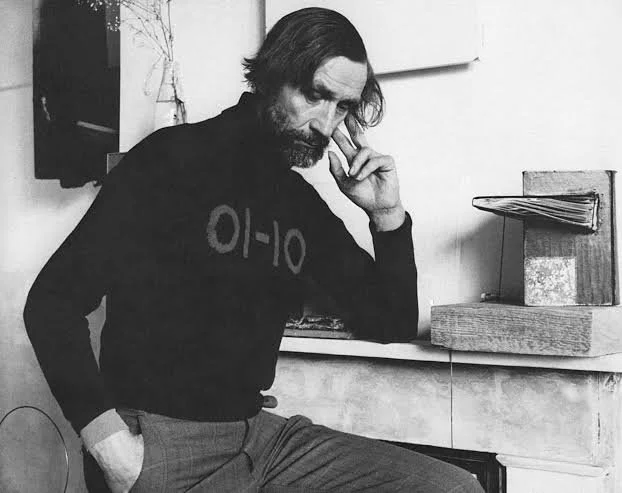
John Latham (1921–2006) was a pioneer of British conceptual art, who, through painting, sculpture, performances, assemblages, films, installation and extensive writings, fuelled controversy and continues to inspire. A visionary in mapping systems of knowledge, whether scientific or religious, he developed his own philosophy of time, known as ‘Event Structure.’ In this doctrine he proposed that the most basic component of reality is not the particle, as implied by physics, but the ‘least event,’ or the shortest departure from the state of nothing. The entire universe is to be viewed as a system of events in time, rather than objects in space. Thus, for Latham all artworks were considered events and were activated as such through diverse processes ranging from spraying, chewing, shredding or spitting to simply declaring. For instance, his seminal 'skoob' happened in 1966, while Latham was teaching at St Martins School of Art. Latham borrowed a copy of Clement Greenberg’s recently published art history opus, Art and Culture, from the school’s library, and invited his students to join him in a ritualistic ceremony: the chewing and spitting out of select pages of the book. Latham decanted the vestiges into a phial, doused it in acid and yeast, and fermented it for a year, then returning the liquid he described as ‘Essence of Greenberg’ to the school. The Spit and Chew event poked at Greenberg’s emphasis on space and form, which was contradictory to Latham’s focus on the function of time in art, and cemented itself as a key example of conceptual art. The resulting artwork, Spit and Chew: Art and Culture (1966-69) is now owned by the Museum of Modern Art in New York. Whether in his early spray paintings and One-Second Drawings, to the book reliefs he created in the 1960s, the roller paintings of the 1970s and the late glass towers works which incorporated bits of all theorems, John Latham maintained steadfast devotion to exploring the most complex cosmological ideas and questioning the traditional notions and structures of art, science and philosophy. 

In 2003, John Latham declared his house and studio a living sculpture, naming it FTHo after his theory of time, ‘Flat Time.’ Until his death, Latham opened his door to anyone interested in thinking about art. It is in this spirit that Flat Time House opened in 2008 as a gallery with a program of exhibitions and events exploring the artist's practice, his theoretical ideas and their continued relevance. It also provides a centre for alternative learning, which includes the John Latham archive, and an artist's residency space. 

JOHN GIORNO

John Giorno was a poet, performer, visual artist, practicing Buddhist in the Tibetan Nyingma lineage, and founder of the non-profit and media label Giorno Poetry Systems. By 1963, he had established himself as an active presence in New York’s art scene, lauded for his starring role in Andy Warhol’s eight-hour film Sleep. Other collaborations followed: with Brion Gysin on Subway Sound in 1965, Robert Rauschenberg at 9 Evenings of Theater & Engineering in 1966, and Bob Moog on Giorno’s “electronic sensory poetry environments” of 1967–1969. He published his first monograph, Poems, and his first LP in 1967, collaborating with Rauschenberg and Les Levine on the artwork and designs for both. He originated Dial-A-Poemat The Architectural League of New York in 1968, which was subsequently included in the group exhibition Information at the Museum of Modern Art in 1969-70.

ADRIAN PIPER

Adrian Margaret Smith Piper (b. 1948) is a first-generation Conceptual artist and analytic philosopher. She attended the New Lincoln School throughout grammar school and high school, and the Art Students’ League during high school. She began exhibiting her artwork internationally at the age of twenty, and graduated from the School of Visual Arts in 1969. While continuing to produce and exhibit her artwork, she received a B.A. in Philosophy with a minor in Medieval and Renaissance Musicology from the City College of New York in 1974 and a Ph.D. in Philosophy from Harvard University in 1981 under the supervision of John Rawls. She studied Kant and Hegel with Dieter Henrich at the University of Heidelberg in 1977-1978.

Adrian Piper produces artwork in a variety of traditional and nontraditional media, including photo-text collage, drawing on pre- printed paper, video installation, site-specific sculptural installation, digital imagery, performance and sound works. Piper’s works locate the viewer in a direct, unmediated and indexical relation to the concrete specificity of the object of awareness. They consistently explore the nature of subjecthood and agency, the limits of the self, and the continuities and discontinuities of individual identity in the metaphysical, social and political contexts. In 1968 Piper’s Parallel Grid Proposal for Dugway Proving Grounds introduced explicit political content into Minimalism. In 1970-73, her Catalysis andMythic Being series introduced issues of race and gender into the vocabulary of Conceptual art. In 2000 her Color Wheel Series introduced Vedic philosophical concepts into political art. Her mixed media installation + participatory group performance, The Probable Trust Registry (2013-15), won the Golden Lion Award for Best Artist in the 56th Venice Biennale 2015 .

CEM A.

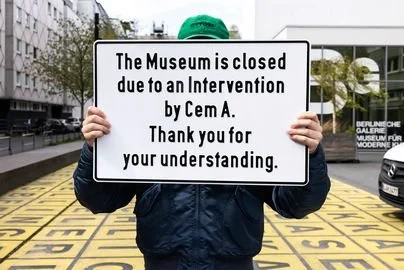
Cem A. is an artist and curator with a background in digital art and anthropology. For documenta fifteen he harvests his experience through digital and situated memes. In addition to his work as curatorial assistant for documenta, he exhibits as an artist, publishes, and gives lectures and workshops. He is known for running the art meme page @freeze_magazine on Instagram. Since its inception in 2019, @freeze_magazine has become a tool for artistic and curatorial collaborations between Cem and fellow artists, researchers, and organisations. His work explores topics such as survival and alienation in the art world, often through a hyper-reflexive lens. His work has been featured in Kunstforum, The New York Times, The Art Newspaper and Monopol Magazin. Selected exhibitions include the solo exhibition Hope You See Me as a Friend at Barbican Centre, London (2022); The Party at Weserhalle, Berlin (2021); and IV. Peligros de la Amista at Palacio Barolo, Buenos Aires (2021). He has held lectures at Universität der Künste, Berlin; Royal College of Art; Sotheby’s Institute of Art, Central Saint Martins; and Barbican Centre, London.

ERIK VAN LIESHOUT

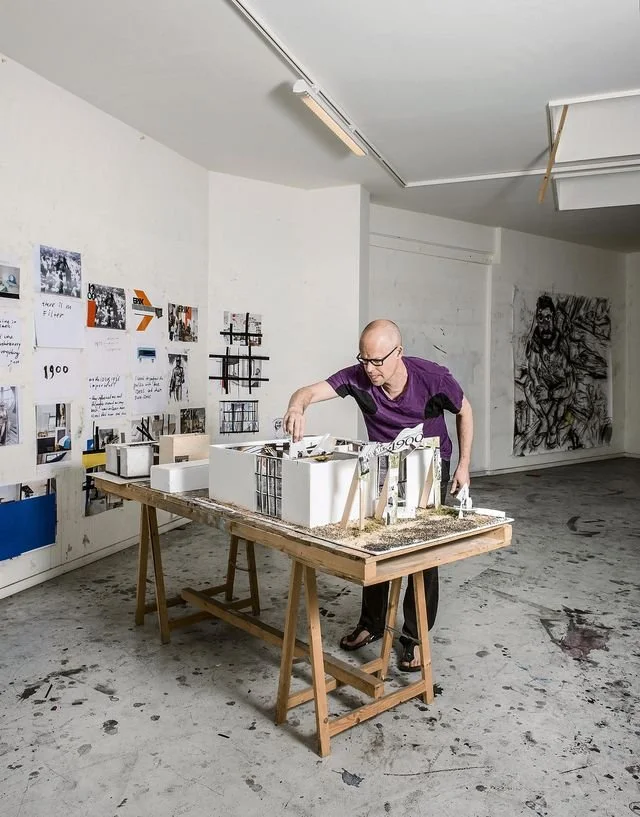
Erik van Lieshout (1968, Deurne, The Netherlands) is a Dutch artist whose projects are multi-media installations encompassing video presented in specially built video rooms/installations, often encircled by collages of drawings and paintings. In his work van Lieshout addresses a multitude of contemporary socio-political issues such as multiculturalism, right-wingers, the position of minorities and outsiders as well as the modern consumer society. Van Lieshout looks at these issues from a radically personal point of view, putting himself into the actual environment at hand. By typically not adapting to the general behavior of his surrounding he becomes an active player in the action which causes many humoristic situations but also provokes strong reactions of others. 


Erik van Lieshout studied at the Academy of Art and design in ‘s-Hertogenbosch and Ateliers '63 both situated in the Netherlands. His work has been internationally shown, featuring large solo and group exhibitions at the International Film Festival Rotterdam (2021), Annet Gelink Gallery, 2020), Anton Kern Gallery, New York (2019), South London Gallery (2017), Hannover Kunstverein (2017), Contemporary Art Centre, Brussels (2016), TENT Rotterdam, Pauluskerk, Rotterdam (2016), Tessaloniki Biennale, Tessaloniki (2015), FRAC - Nord - Pas de Calais, Dunkerque (2014), Center for Contemporary Culture - GCCC, Moscow (2014), Moscow Bienale, Moscow (2013), 55th Venice Biennale, Venice (2013), Colombo Art Biennale, Colombo (2012), Art Unlimited, Basel (2011), Centre d'édition contemporaine, Geneva (2009), The Museum Boijmans van Beunigen, Rotterdam (2006) and many other.

TONY COKES

Tony Cokes lives and works in Providence, Rhode Island, where he serves as Professor in the Department of Modern Culture and Media at Brown University. Solo shows of his work are currently on view at the Hessel Museum, Bard College, through February 25, 2024, and Dia Bridgehampton, The Dan Flavin Art Institute, through May 2024. Cokes was awarded the 2022-23 Carla Fendi Rome Prize in Art and Technology. In 2022, he was the subject of a major survey jointly organized by the Haus der Kunst and Kunstverein in Munich. Other recent solo exhibitions include De Balie, Amsterdam (2022); Greene Naftali, New York (2022, 2018); Memorial Art Gallery, University of Rochester, Rochester (2021); MACRO Contemporary Art Museum, Rome (2021); CIRCA, London (2021); Museu d’Art Contemporani de Barcelona, Barcelona (2020); ARGOS centre for audiovisual arts, Brussels (2020); Carpenter Center for the Visual Arts, Harvard University, Cambridge, Massachusetts (2020); BAK – basis voor actuele kunst, Utrecht, Netherlands (2020); Luma Westbau, Zurich (2019); Goldsmiths Centre for Contemporary Art, London (2019); The Shed, New York (2019); Kunsthall Bergen, Norway (2018); and REDCAT, Los Angeles (2012).

His work is in the collections of the Art Institute of Chicago; Carnegie Museum of Art, Pittsburgh; Centre Pompidou, Paris; FRAC Lorraine, Metz; Hammer Museum, Los Angeles; Kunsthallen, Copenhagen; Los Angeles County Museum of Art; The Museum of Modern Art, New York; Queensland Art Gallery, Brisbane; San Francisco Museum of Modern Art; The Studio Museum in Harlem, New York; Wexner Center for the Visual Arts, Columbus; and the Whitney Museum of American Art, New York, among others.

ORLA BARRY

Orla Barry is both visual artist and shepherd. She lived in Brussels for sixteen years and now lives and works on the south coast of rural Wexford where she runs a successful pedigree Lleyn flock alongside her art practice. Barry writes, makes performances, video and sound installations.

Her work focuses on language, both written and spoken, as well as its visual deconstruction and displacement— via frequently associative techniques. Fiction, auto ethnography and oral history are blended to reflect on the culture of disconnection from the natural environment and the boundaries of art and the rural everyday.

Barry plays with the fractured relationship between agriculture, gender and the natural world. But her work also deals with the materiality of words and approaches to writing and speaking to accentuate this physical and embodied understanding of language as visual form.

 She has recently had performances at WoWmen Festival KAAI (2020) Playground, Museum M & TAZ, Ostend (2019) Performatik 17,Brussels. Crawford Art Gallery, Cork, Argos, Brussels TBG&S, Dublin. She has also performed at The Project Arts Centre, Dublin, The South London Gallery & Tate Modern, London, If I cant dance, Amsterdam. and De Appel in Amsterdam.

DARRAN MCGLYNN

Darran McGlynn is an artist from Inishowen, Co. Donegal who lives in Galway where he is based at ArtSpace Studios. His multi-disciplinary practice incorporates sculpture, text, installation and printed media, often combining these elements together. Recent activity includes Leaves Ground, a solo exhibition at Roscommon Arts Centre in 2023. Recent publications include Mopus Operandi (2022), an 8-page text work printed in TOLD screen printed text art journal published by Small Night Projects, launched at the RHA, Dublin, 2022 and featured at the Dublin Art Book Fair.

Darran is interested in investigating the contemporary condition - contemporary Being - in the globalised landscape through the lenses of history, culture, psychology, philosophy and politics. He combines this with an interest in concepts of time, creating works that juxtapose the traditional and contemporary. Informed by conceptual art, minimalism, land art, classical, modernist and ready-made sculpture, his work brings together materials such as marble, steel, neon, animal skin and various printed media. There's an underlying characteristic humour in the work - a dark playfulness - informed by his own personal experiences merged with a deeper social and philosophical reflection that is somehow gentle and simultaneously quite savage. Darran likes to develop his exhibitions in a site-specific, installation based format but also produces unique standalone sculptures.

JAKI IRVINE

Jaki Irvine works with video installation, photography, music composition and writing. Her immersive video and sound installations tell stories through fragmented, elliptical and open-ended narratives informed by rigorous research. Irvine picks out evocative details from the landscape or cityscape, in particular honing in on Dublin and Mexico City, two cities that have shaped and informed her practice. Contested histories, sonic bricolage, the built environment, and the customs and communities of a city’s residents have all found their way into Irving’s deep-reaching and polyphonic work: songs that filter through a city’s streets, overheard conversations, the flap of a hummingbird’s wings are given equal gravitas. Her attention is often turned to the peripheral or the undervalued: recentring stories or figures written out of history, particularly female figures, or presenting an alternative approach to the present, making space for strangeness. Humans and nature become intertwined in her imaginative worldview, with plants, birds and creatures permeating her practice, and adding to the sense of the unknown and unknowable, and blurring the boundary between the real and the imagined. Jaki Irvine lives and works in Dublin and Mexico City, and is a regular artist advisor at the Rijksakademie, Amsterdam.

CLAIRE FONTAINE

CLAIRE FONTAINE is a collective feminist conceptual artist founded by Fulvia Carnevale and James Thornhill in Paris in 2004. Since 2017 she lives and works in Palermo. Her name is inspired by Duchamp’s iconic ready-made, the urinal entitled Fontaine, and a famous brand of French notebooks (Clairefontaine); it defines a space where the biographies of the artist is not directly connected to their artworks allowing their research to become a space of freedom and desubjectivisation. The use of appropriation and hijacking in her work stems from the same intention: not highlighting the excellence of the artist’s unique singularity but activating the forms and the forces within visual culture and underlining their political content. Claire Fontaine works in video, sculpture, painting and writing. 

The upcoming 60th Venice Biennale in 2024 will be entitled Foreigners Everywhere after a seminal series of works by Claire Fontaine. Adriano Pedrosa, the curator of the biennale, took inspiration from the artist’s ongoing series of neons, declaring in the press conference: “The backdrop for the work is a world rife with multifarious crisis and challenges around the movement and existence of people across countries, nations, territories and borders, which reflect the perils and pitfalls of language, translation, nationality, expressing differences and disparities conditioned by identity, race, gender, sexuality, freedom, and human development.”

GARDAR EIDE EINARSSON

Gardar Eide Einarsson (born 1976, Oslo) lives and works in Tokyo, Japan. He received his education from National Academy of Fine Art in Bergen, Norway, Städelschule in Frankfurt am Main, Germany; Whitney ISP, New York, and Cooper Union School of Architecture, New York. 

 "Gardar Eide Einarsson’s works commonly appear to be as motivated by humanism as they stem from cynicism. On the one hand, Einarsson’s artistic production has predominantly been addressing the utmost basic aspect of human condition: the concept of individual freedom and the various attempts at accomplishing that. On the other hand, these works present us with failed attempts. Even more so, they are mechanically measuring the distance between the ideals imagined and the results of fairly futile attempts. Adding to this cynicism is the very appearance of Einarsson’s works; muted, excerpted and always borne out of the same limited palette. While the viewer may recognize these objects as contingent – capable of conveying meaning – they are rarely apparently readable. The willing restraint of information gives these works the appearance of inept and provisional props – reenacting how things went wrong." 

ALAN PHELAN

[Co-editor at Small Night Projects] After completing an MFA in the US, Alan Phelan returned to Ireland in the mid-90s with a practice informed by conceptual photography that expanded into all media. His practice therefore includes exhibition making, both as artist and curator; critical writing in various art publications; public art projects; film making; and various attempts at participatory practice learned from the early heady days of relational aesthetics. His commitment to collaborative making found a good fit with Small Night Projects, where the exchanges between the artist editors provided a non-hierarchical and non-institutional space to commission text art from world renowned practitioners. He also continues to work as an archivist, which has shaped his relationship to truth, history and empire.

Phelan studied at DCU (1989) and RIT; New York (1994) under a Fulbright scholarship. He has had significant solo exhibitions at Casino Marino (2024); CCI Paris (2021); Void Derry (2020); RHA (2020); Dublin City Gallery; The Hugh Lane (2016) and the IMMA (2009). Gallery solos also include the Molesworth Gallery (2023); Oonagh Young Gallery (2015 and 2013); Golden Thread Belfast (2014); The Black Mariah Cork (2011) and Mother's Tankstation Dublin (2007). Group exhibitions/projects include: Self-Determination; IMMA (2023); MOE Communal (2023-24); TONE/TOLD/TEXT/TALK (2022-23); EcoShowBoat (2022-23); PhotoIreland Festival (2022 and 2021); CCA Derry (2021); Garage Rotterdam (2020); EVA International (2016); Bonn Kunstmuseum (2015); Treignac Projet (2014); Bozar Brussels (2013); Feinkost Berlin (2007); The Whitney Museum of American Art (2004). His work is included in the collections of the Irish Museum of Modern Art; The Arts Council; Trinity College Dublin; Limerick City Gallery of Art; The National Self-Portrait Collection; the Office of Public Works; Dublin City Council; and several private collections. Residencies include Wilton Park Studios RHA/IPUT; NCAD Dublin; CCI Paris; HIAP Helsinki; URRA Argentina and FSAS Dublin. Recent awards include an Arts Council Bursary (2021 and 2017); Creative Ireland MCCCS (2019); and the Hotron Éigse Art Prize (2016). Public works include DCC/Sculpture Dublin, the O'Connell Plinth Commission, City Hall (2021-23); Dublin; Void Offsites Derry (2022); Kevin Street Library (2016); Fr Collins Park (2011); IMMA formal gardens (2009).

LAURA FITZGERALD

[Co-editor at Small Night Projects] Laura is a visual artist working in drawing, painting, installation, video, text and audio. She is graduate of both the National College of Art & Design, Dublin and Royal College of Art, London. She is a recipient of the Visual Arts Bursary Award (Arts Council of Ireland) for 2023-24 and received the Golden Fleece award in 2020. Recent exhibitions include: Strange Weather, February 15th – April 20th 2024 at Ormston House, Limerick, Ireland, curated and produced by Niamh Brown; OTHER WORLDS, at the Regional Cultural Centre Letterkenny including artists

Richard Ashrowan, Barrie Cooke, Martin Gale, Tom Haran, Sandra Johnston, Vera Klute, Louis le Brocquy, Christine Mackey, Theresa McKenna, Aileen McKeogh, William McKeown, Maria McKinney, Miriam O’Connor, Tony O’Shea, Alan Phelan, Bennie Reilly, Nigel Rolfe and others; and This Rural, including Ailbhe Ní Bhriain, Brian Mac Domhnaill, Caoimhe Kilfeather, Ciarán Óg Arnold, Patrick Hogan, Erica van Horn, Tom Keeley, Laura Fitzgerald, Michele Horrigan, Samuel Laurence Cunnane, Ruby Wallis, Katie Watchorn. The Mill, Lismore Co. Waterford, Ireland, curated by Miriam O’Connor and Paul McAree, 20 May - 16 July 2023. She completed a three-month residency at the Bemis Center for Contemporary Arts, in Omaha, Nebraska, USA in January 2023. She is currently working towards a solo exhibition in Lismore Castle Arts in 2025.

ISOBEL WOHL

Isobel Wohl is a Brooklyn-based writer. A native New Yorker, she lived in London for seven years before returning to her home city. Her first novel, Cold New Climate, was published by Weatherglass Books in April 2021 to excellent reviews. Lamorna Ash, writing in the TLS, described the book as “exceptionally good” and Wohl’s writing as “beautifully delicate.” In the Guardian, Lara Feigel wrote, “We’re left asking with pleasure: what will Isobel Wohl do next?” Wohl is also the author of a short story collection, Winter Strangers (MA BIBLIOTHÈQUE, 2019). Her essays have appeared in Emerge, The Irish Times,and LitHub. She is also a visual artist. She is currently working on her second novel.

MARK VERABIOFF

Prior to his move to Los Angeles in 2001, Mark Verabioff lived and worked for the greater part of a decade in New York, where he regularly performed “guerrilla actions” in public spaces, alongside screenings of seminal single-channel videotapes in galleries throughout the city. In large part, Verabioff’s activities were aligned with the artist’s own brand of “cultural insurgency,” which he has continued to develop in his practice as an antagonism toward the dominant structures of power that continue to flourish in the field of contemporary art. Identifying with a generation of socially minded artists who came to maturity in the 1990s amid racial and gender politics, activism and art around the AIDS crisis, and a widespread distrust of institutions, Verabioff often reuses materials and sources from art history and popular culture to provoke a response through the lens of feminist discourse.

Verabioff’s installation envelops the gallery in a large vinyl wall decal over which new paintings and collages have been installed. Pulled from iconic advertising campaigns from magazines and books of commercial photography, these works are referred to by the artist as “page tears.” The sources for the three distinct projects represented include What Becomes a Legend Most: The Blackglama Story, a chronicle of the famous advertisements that were introduced in 1968 to promote Blackglama furs; Scavullo Men, a coffee table book on the photographs of iconic men taken by Francesco Scavullo; and selections from a recent photo shoot with Nick Jonas that originally appeared in Flauntmagazine. Pairing these materials with slogans and phrases culled from the history of feminist art, Verabioff attempts to reinhabit some of the strategies that were made famous by such figures as Hannah Wilke, Barbara Kruger, and the Guerrilla Girls, who are all referenced throughout his work. Verabioff’s practice considers the legacy of art history’s most notable women to engage in a conversation about a male-centered art world and the production of culture at large.